



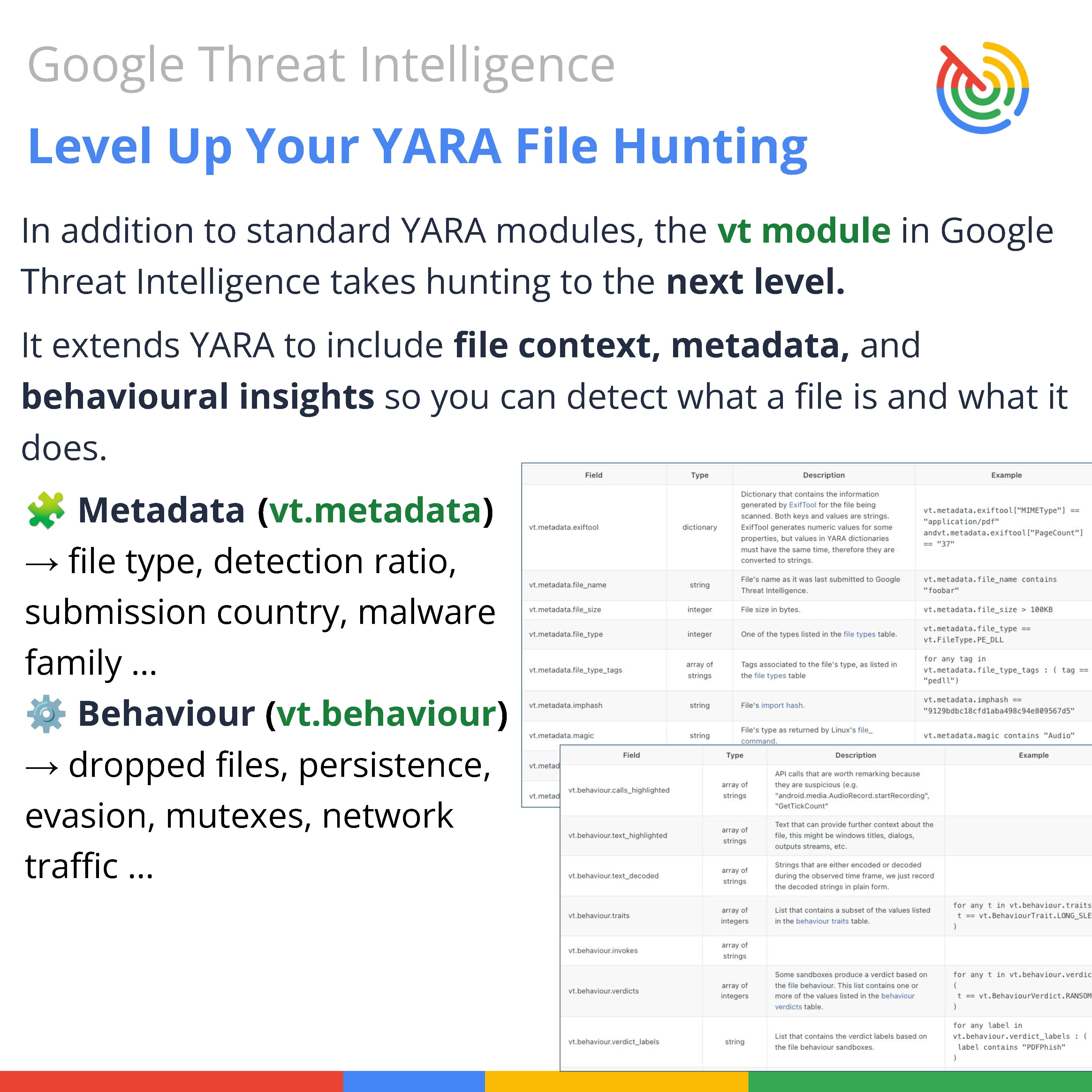
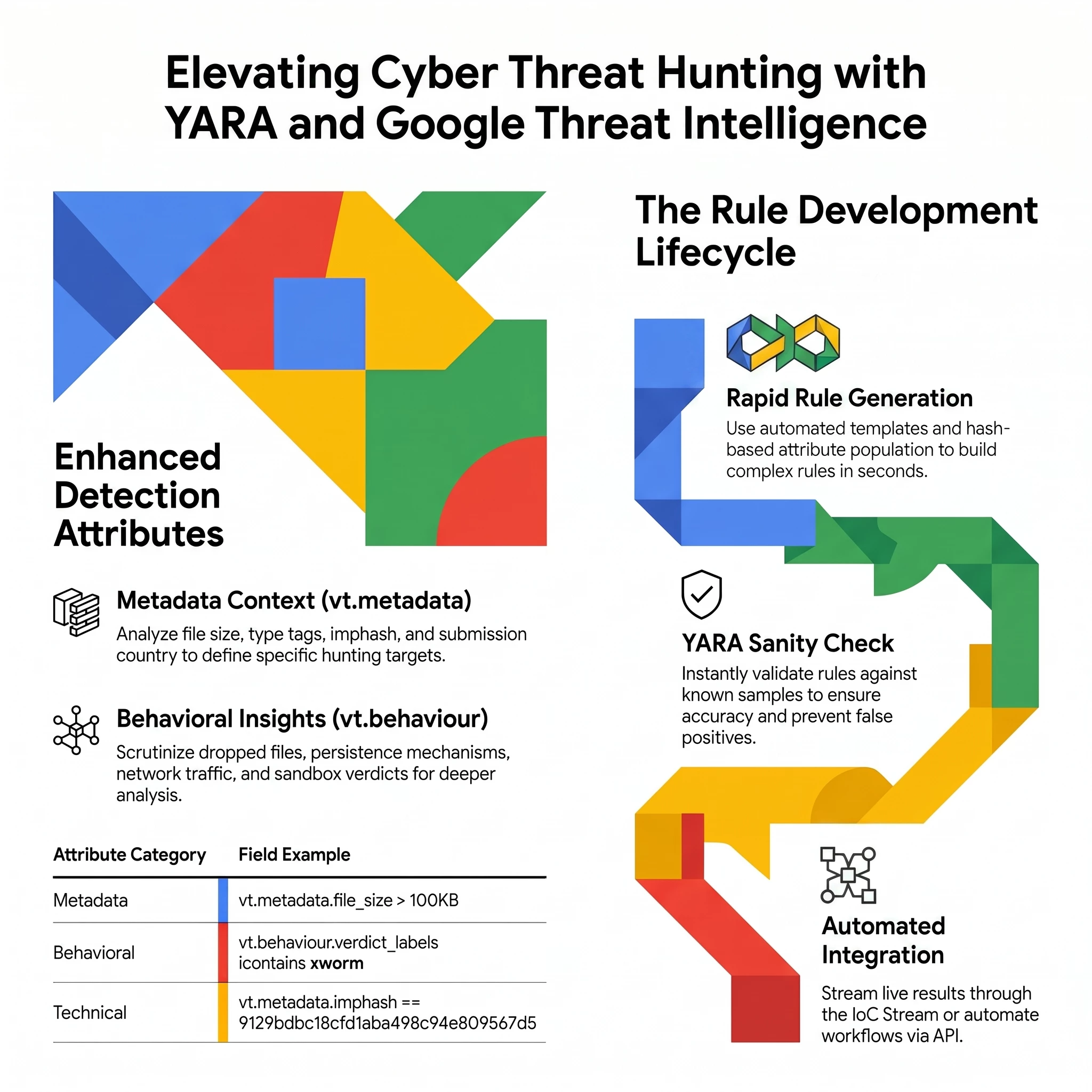
In the rapidly evolving landscape of cybersecurity, defenders require advanced tools to stay ahead of sophisticated adversaries. A recent instructional overview from Google Threat Intelligence outlines how security operations teams can significantly enhance their detection capabilities by leveraging the advanced features of the vt module within YARA rules. By extending standard YARA scanning capabilities, this integrated module injects rich file context, comprehensive metadata, and deep behavioral insights directly into active threat hunting workflows.
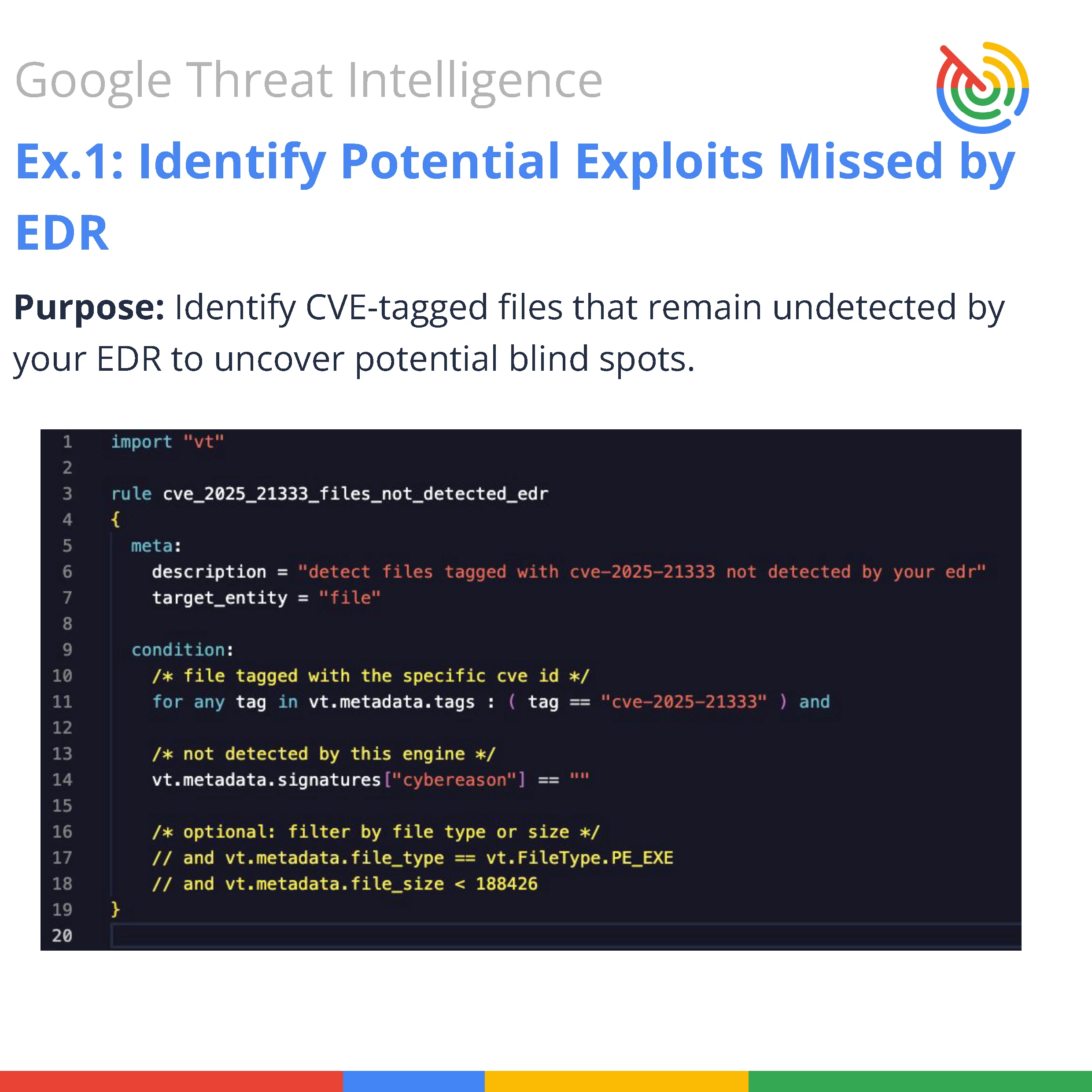
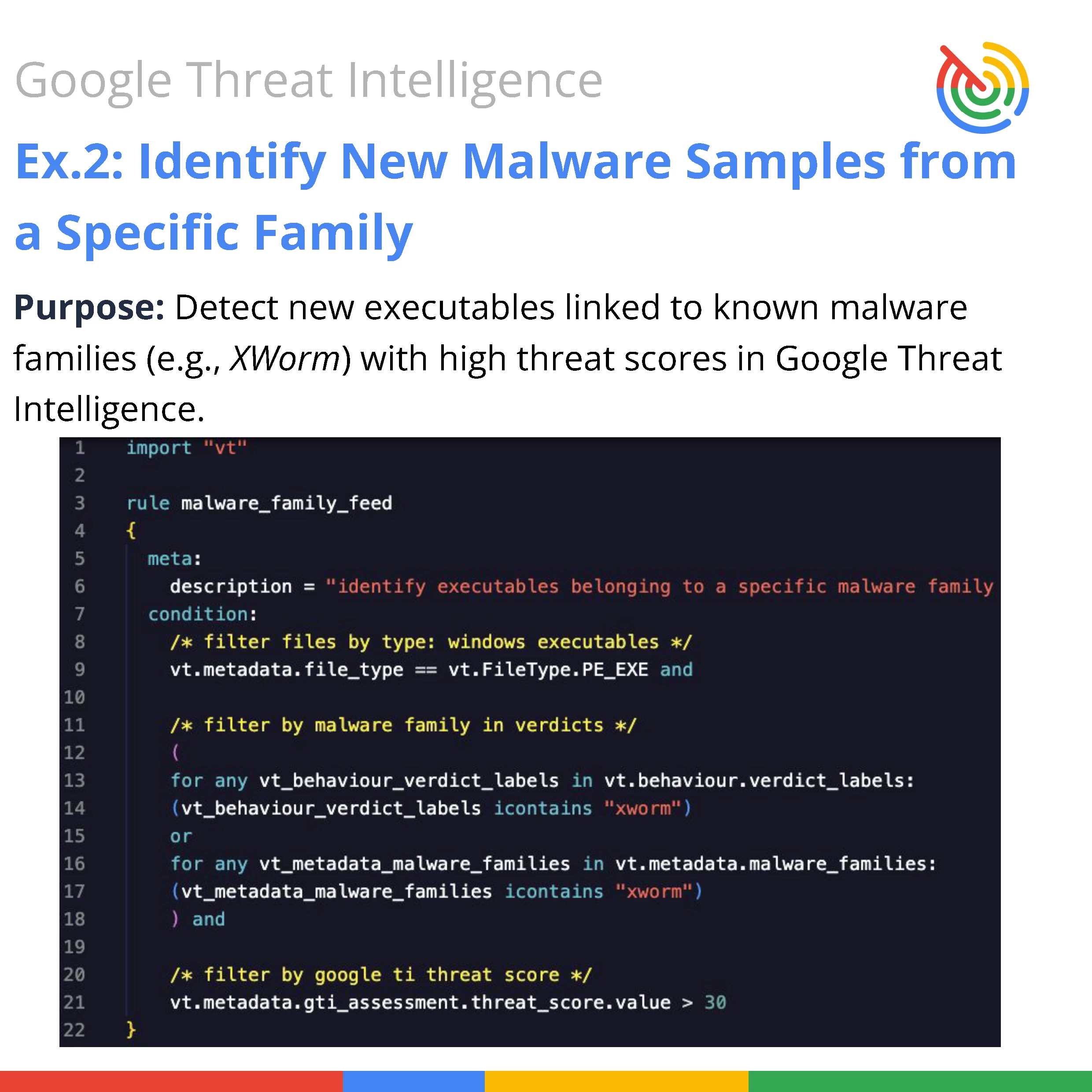
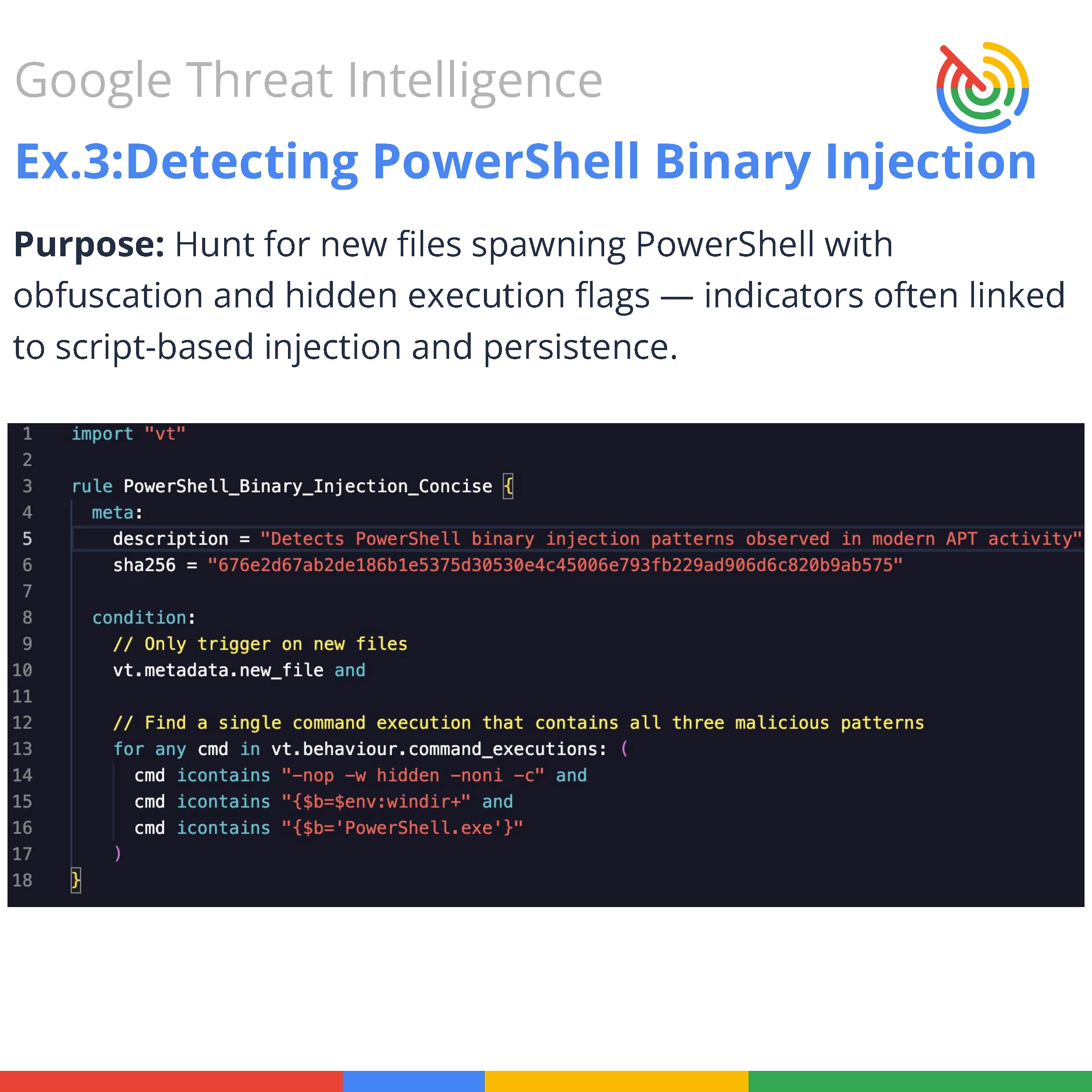
One of the standout capabilities highlighted in the material is the ability to construct detection rules based on behavioral indicators rather than relying solely on traditional static strings. Analysts can write rules that scrutinize detailed sandbox outputs, including dropped files, persistence mechanisms, defense evasion techniques, and sandbox verdicts. For instance, a rule can be designed to automatically flag files associated with specific threat actors, identify known malware families like XWorm, or detect modern execution anomalies like hidden PowerShell binary injection. This context-aware hunting allows organizations to uncover hidden exploits that traditional Endpoint Detection and Response tools might overlook.
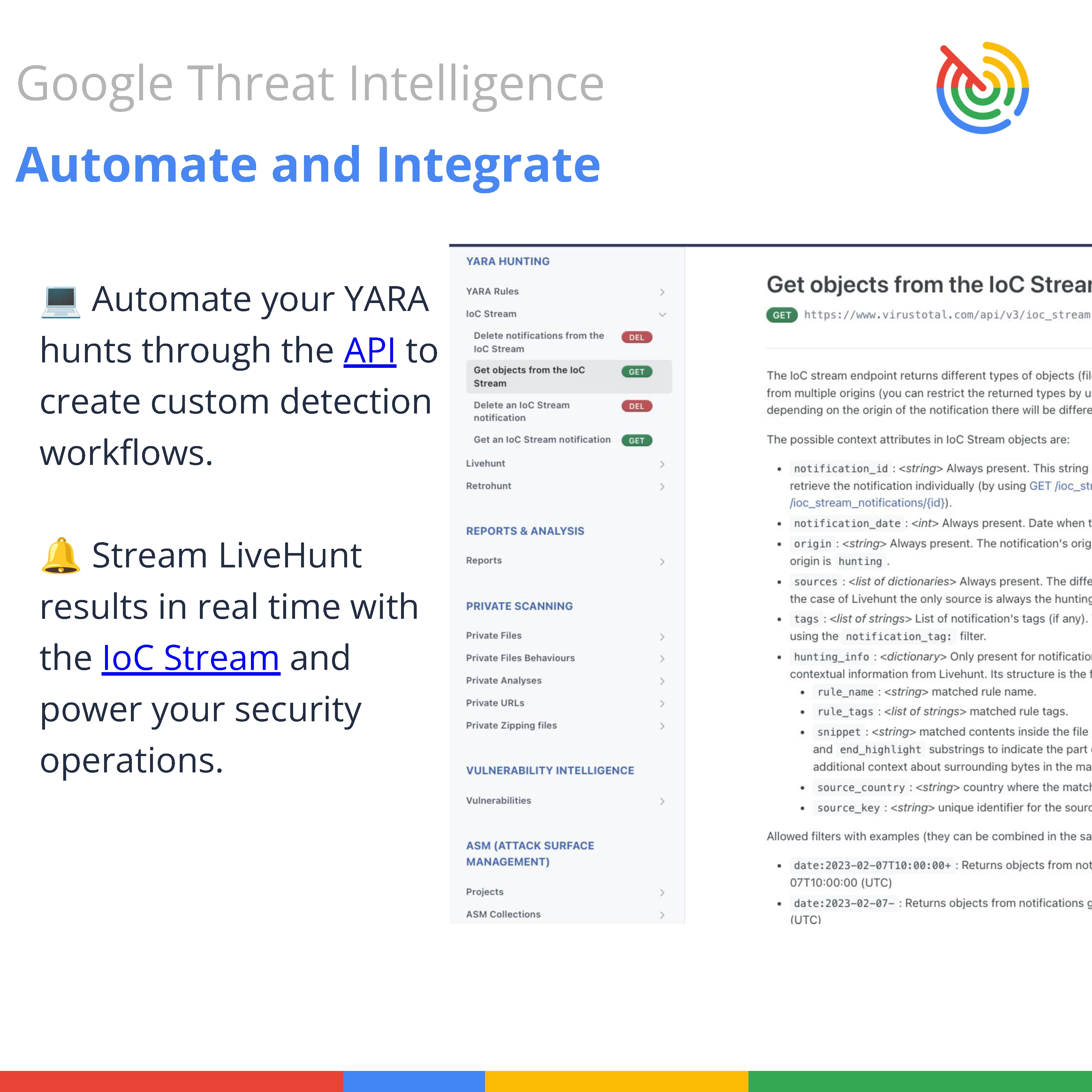
Google Threat Intelligence simplifies the rule development lifecycle by introducing automated templates and hash-based attribute population. This dramatically reduces the time required to build, test, and deploy complex rules. Before pushing these rules into live environments, analysts can utilize a sanity check feature to instantly validate rules against known samples, ensuring optimal accuracy and preventing false positives. Ultimately, embracing these integrated capabilities allows security teams to automate workflows via APIs and stream intelligence updates in real time.


Additional Resources and Links:
Get IoC Collections Associated with a Hunting Ruleset
Get objects from the IoC Stream
