



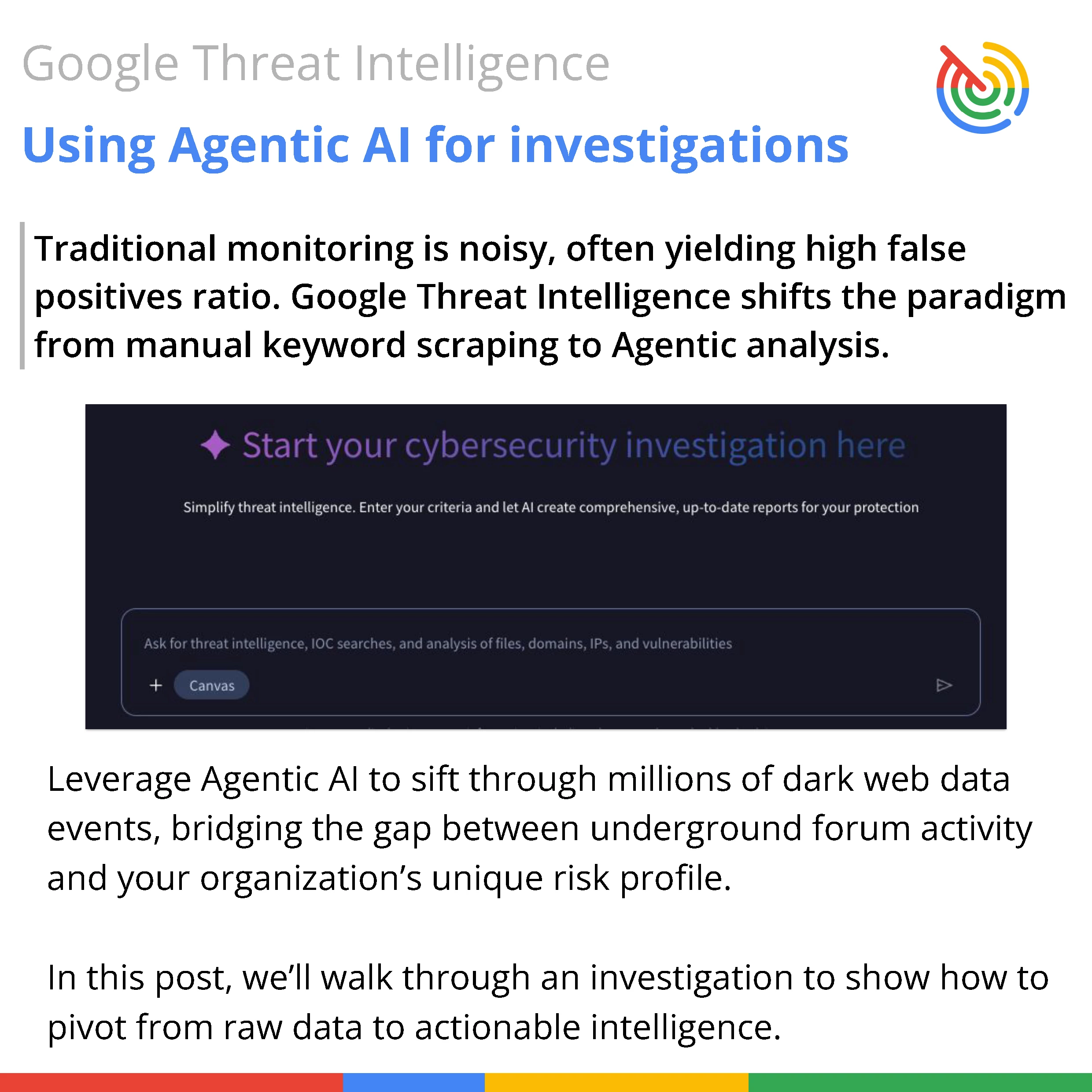
Traditional cybersecurity monitoring has long been plagued by excessive noise and high false positive ratios, forcing analysts to manually scrape underground forums for keywords. Google Threat Intelligence introduces a significant paradigm shift by utilizing Agentic AI to automate and deepen dark web investigations. Rather than relying on rigid, manual searches, this advanced technology sifts through millions of underground data events, seamlessly connecting raw illicit activity to an organization's specific risk profile.
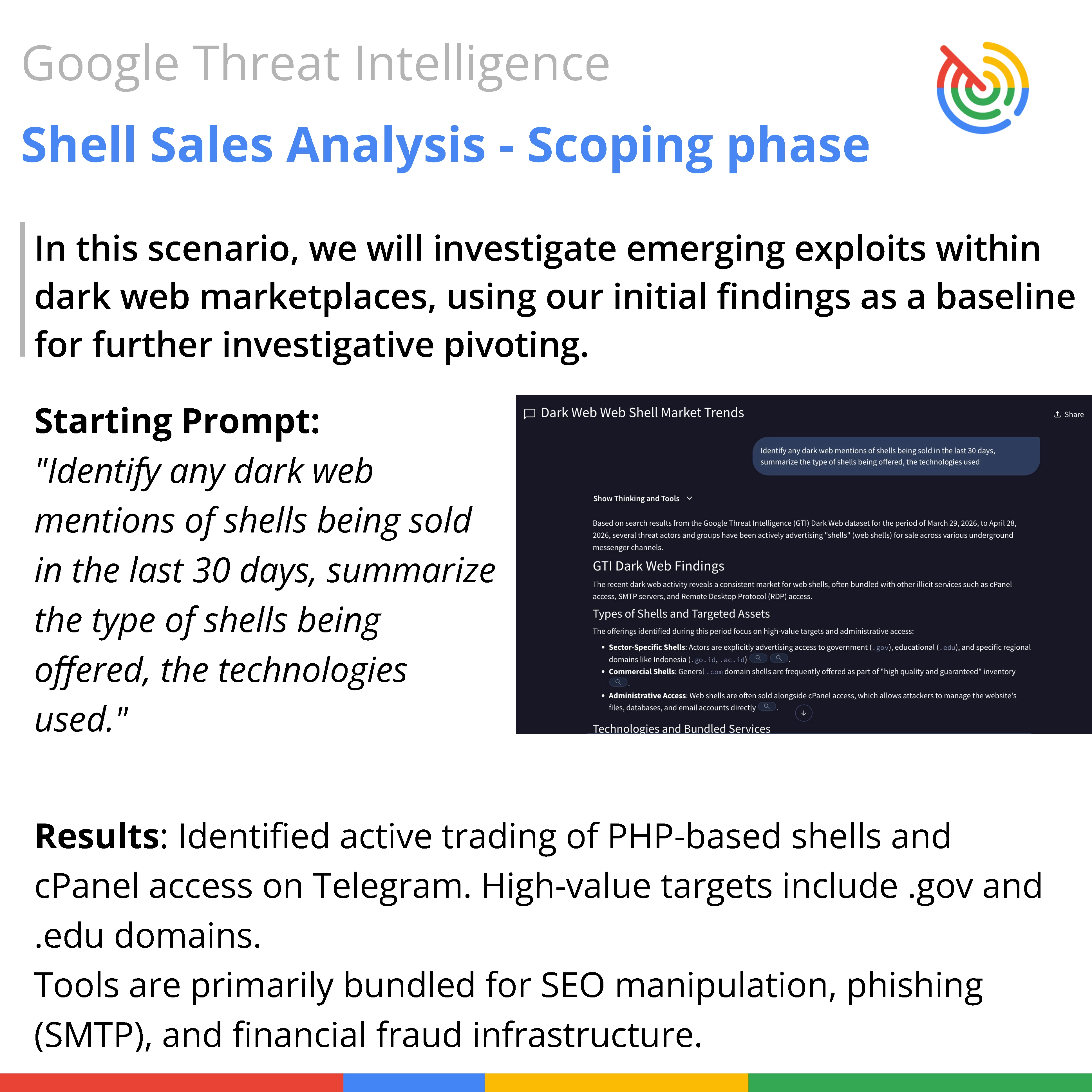
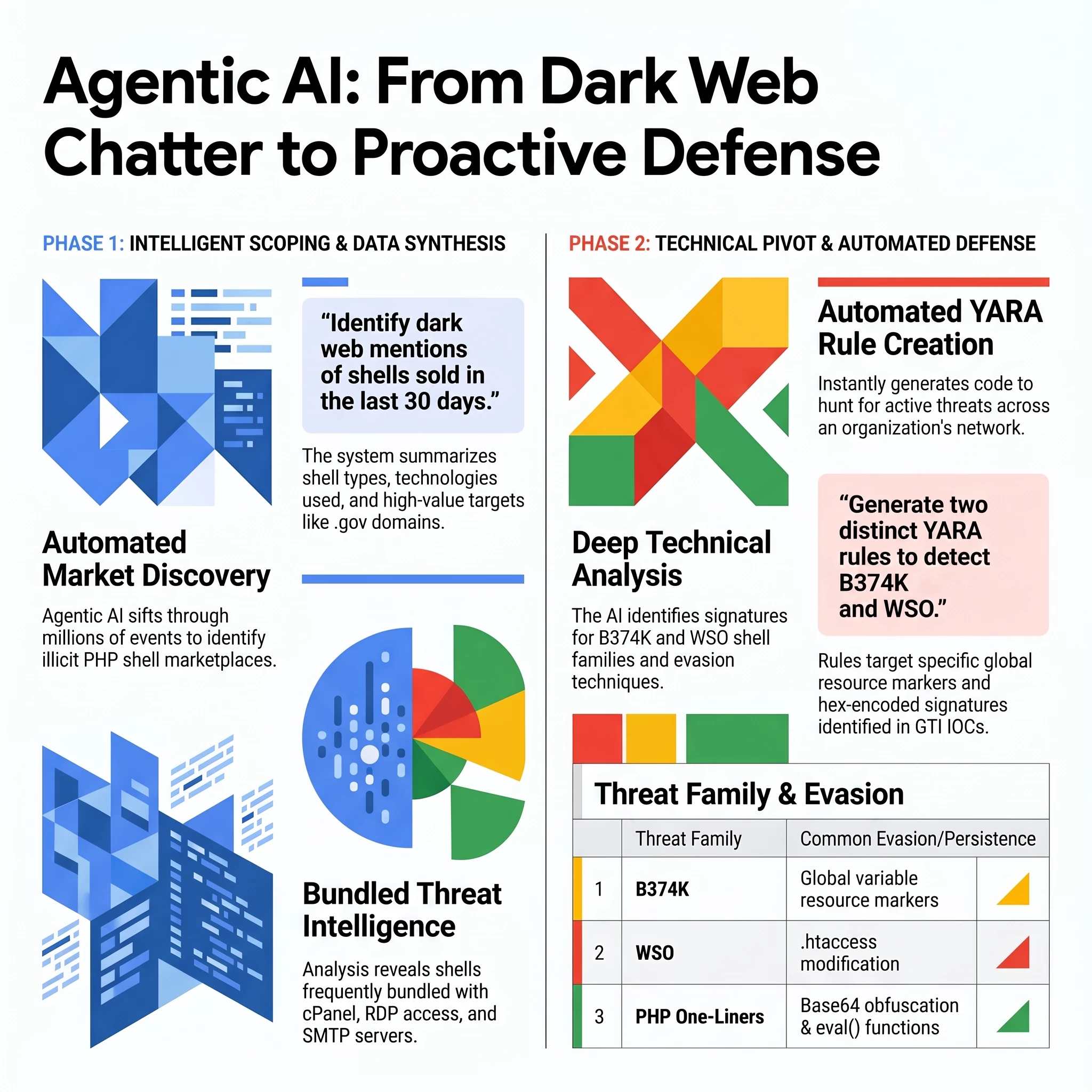
A standard investigation highlights how this feature functions in practice, moving from initial scoping to proactive defense. In a sample scenario exploring recent dark web marketplace trends, a security analyst can query the AI to identify web shells sold over the past 30 days. The Agentic AI efficiently processes data across various underground channels, revealing an active market for PHP based web shells bundled with cPanel and Remote Desktop Protocol access, frequently targeting high value government and educational domains.
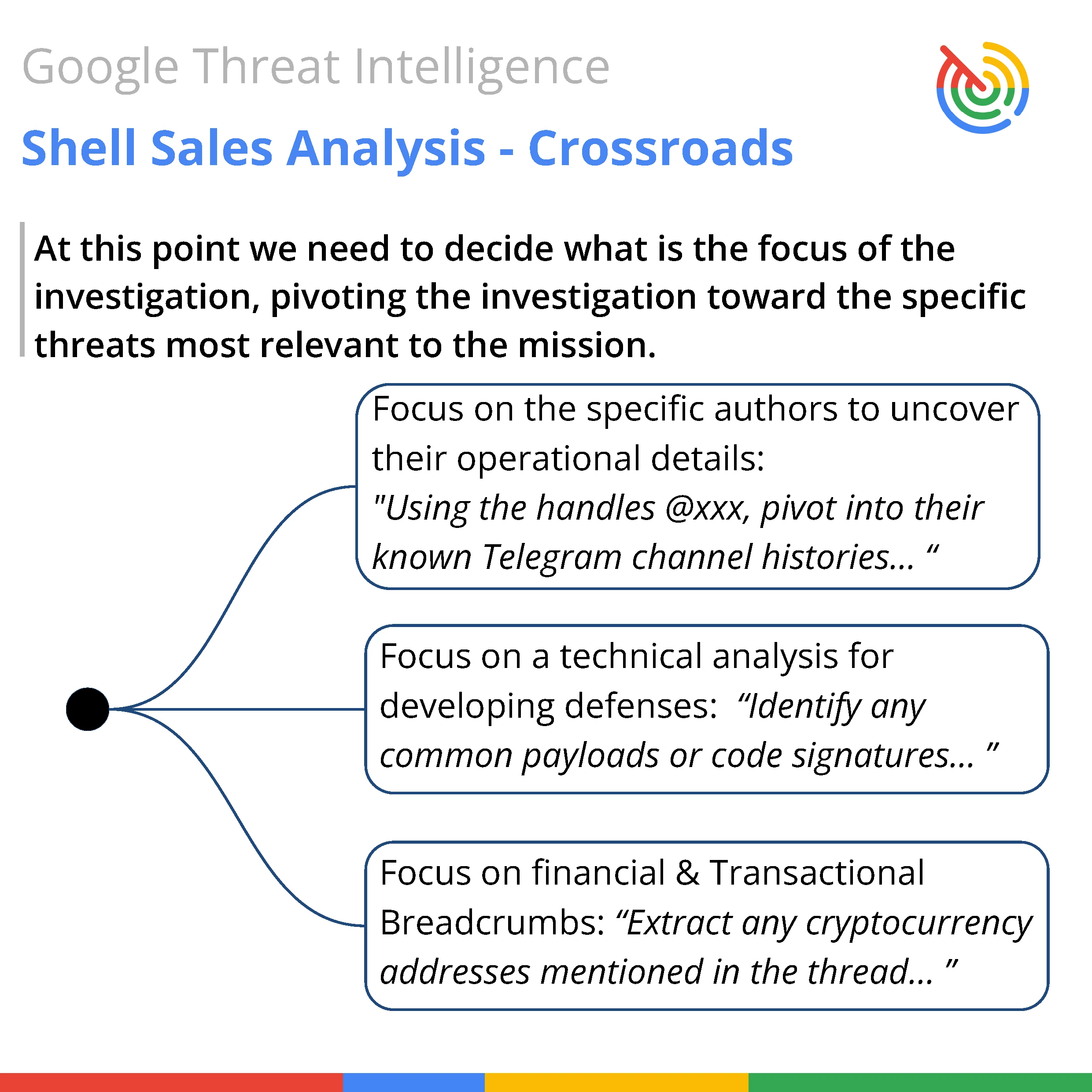
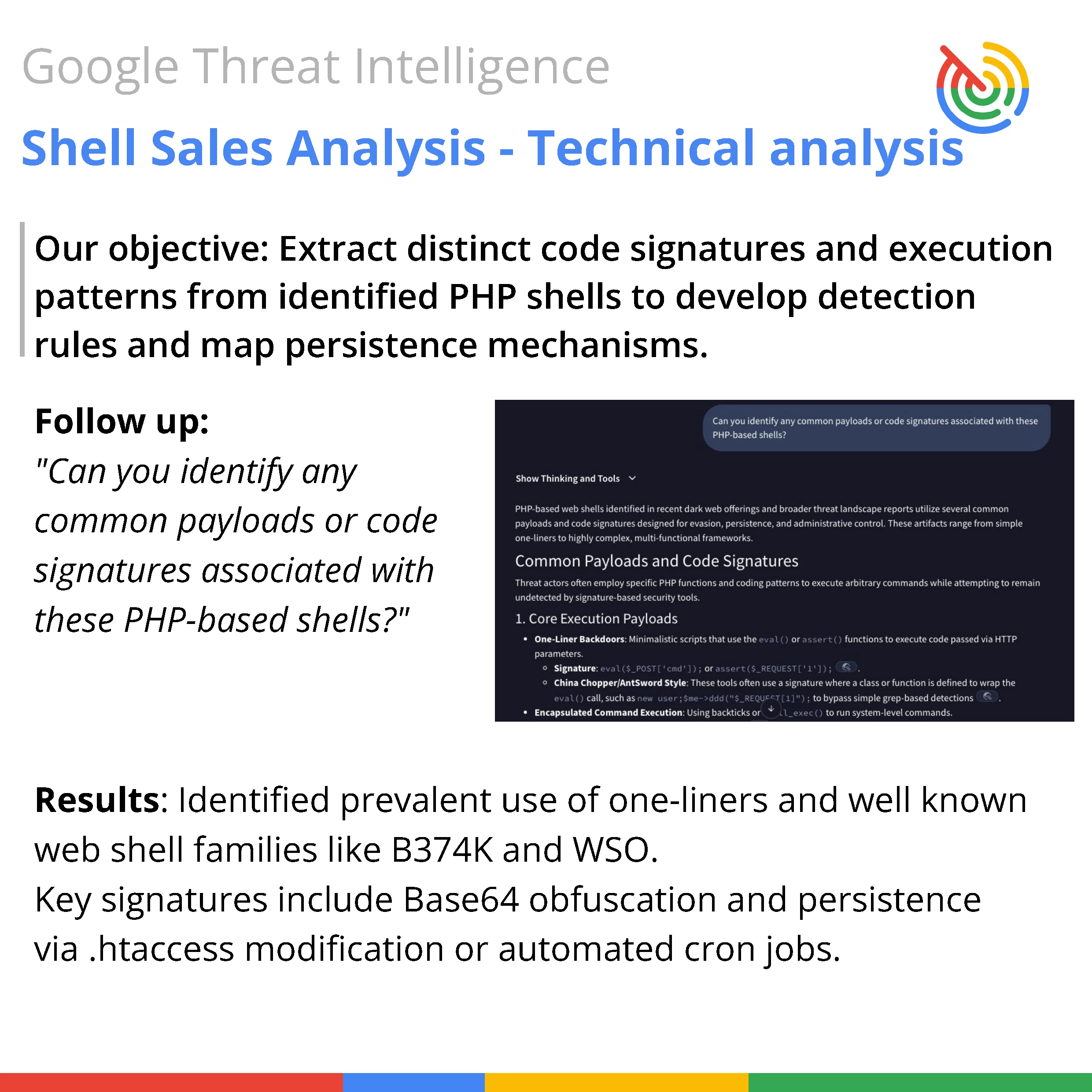
Once the initial data is gathered, the system allows investigators to pivot based on their strategic goals, whether that involves tracking specific threat actors, analyzing financial transactions, or performing a deep technical analysis. Choosing technical analysis enables the AI to dissect the code signatures of prevalent web shell families, such as B374K and WSO, identifying common evasion techniques like Base64 obfuscation and unauthorized persistence mechanisms.
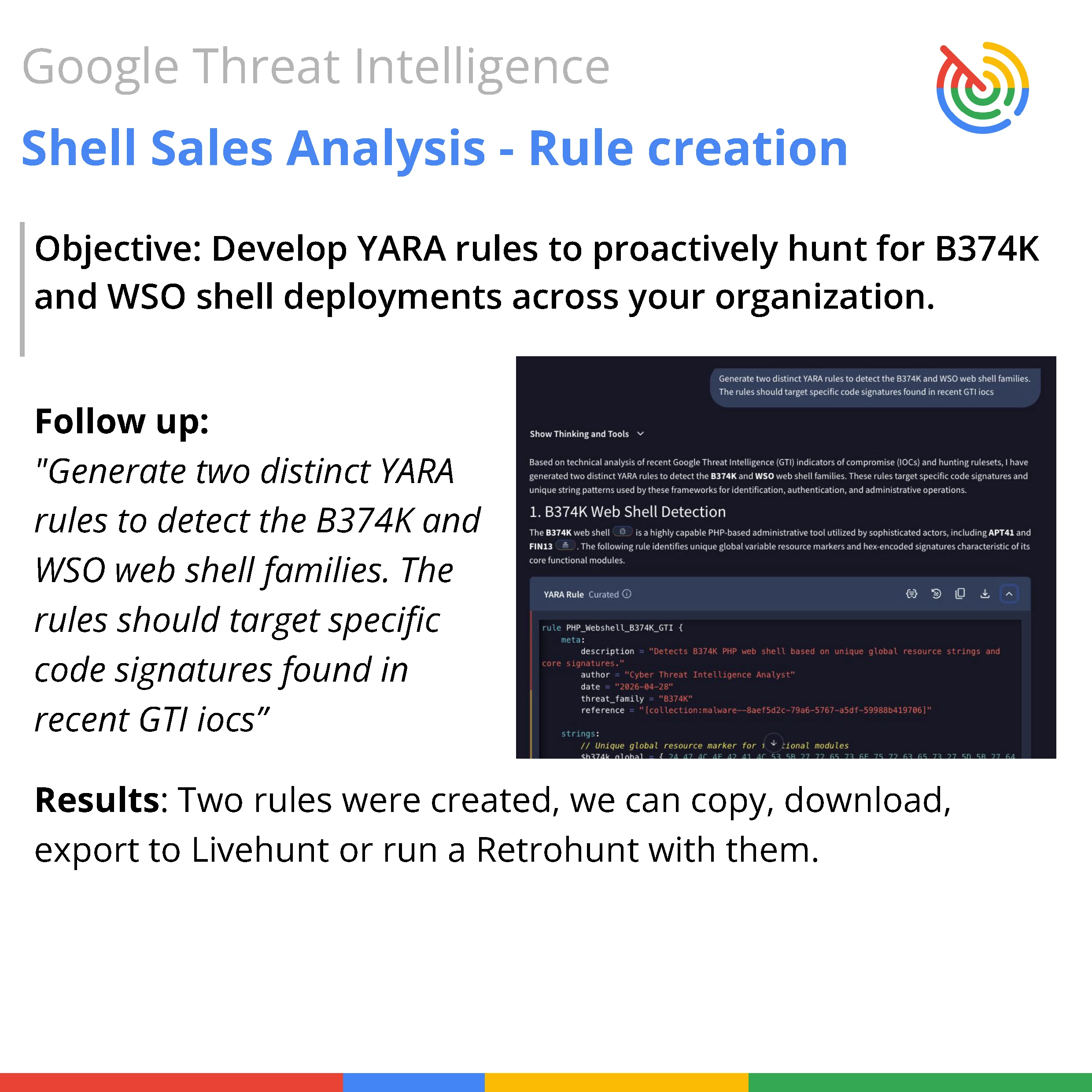
The power of this feature culminates in automated rule creation. The AI can instantly generate tailored YARA rules based on these real-time indicators of compromise. Security teams can immediately deploy these rules to hunt for active threats within their network, effectively transforming raw dark web chatter into an automated, proactive defense system.
Additional Resources and Links:
GCS Community Blog: Active dark web monitoring with Google Threat Intelligence and Agentic
