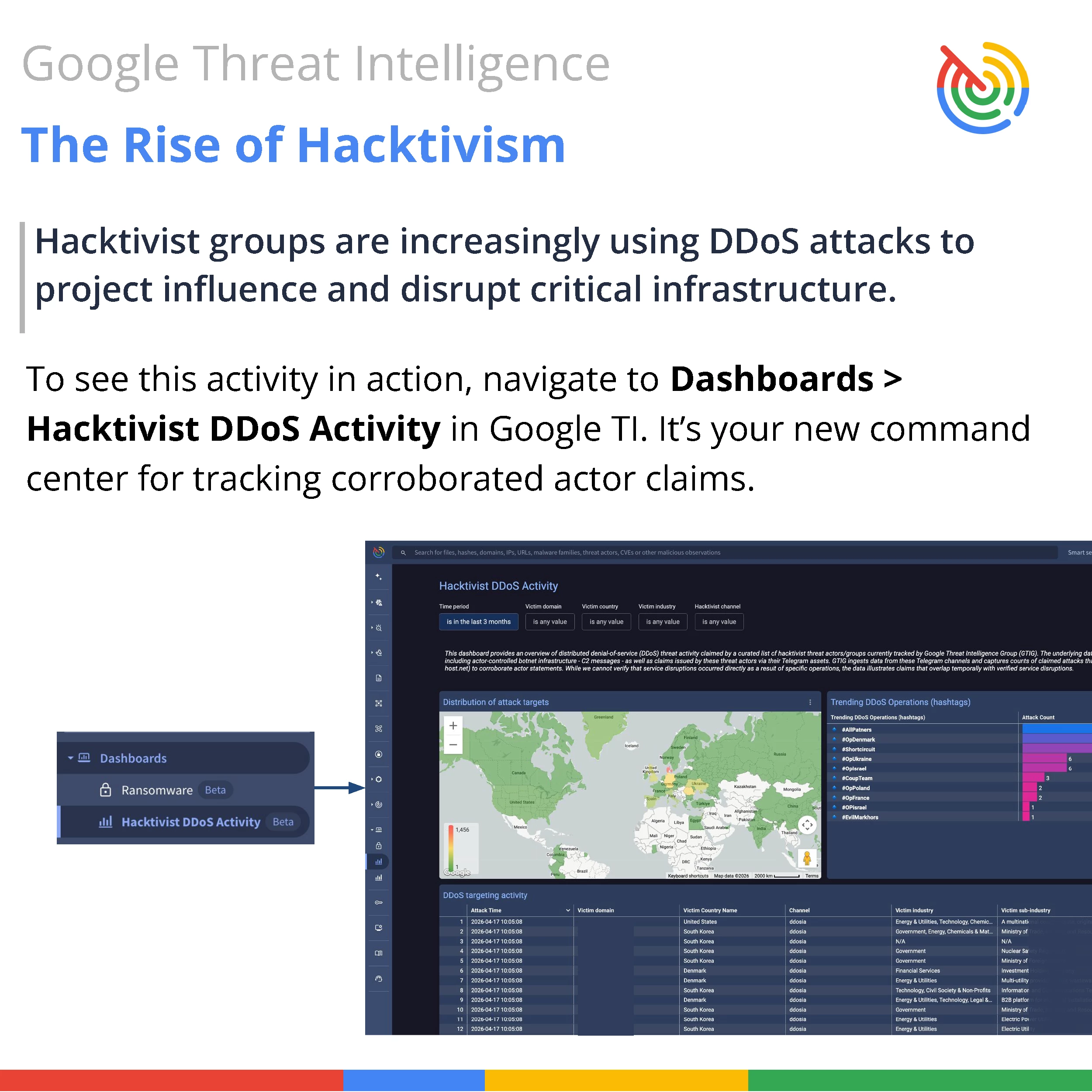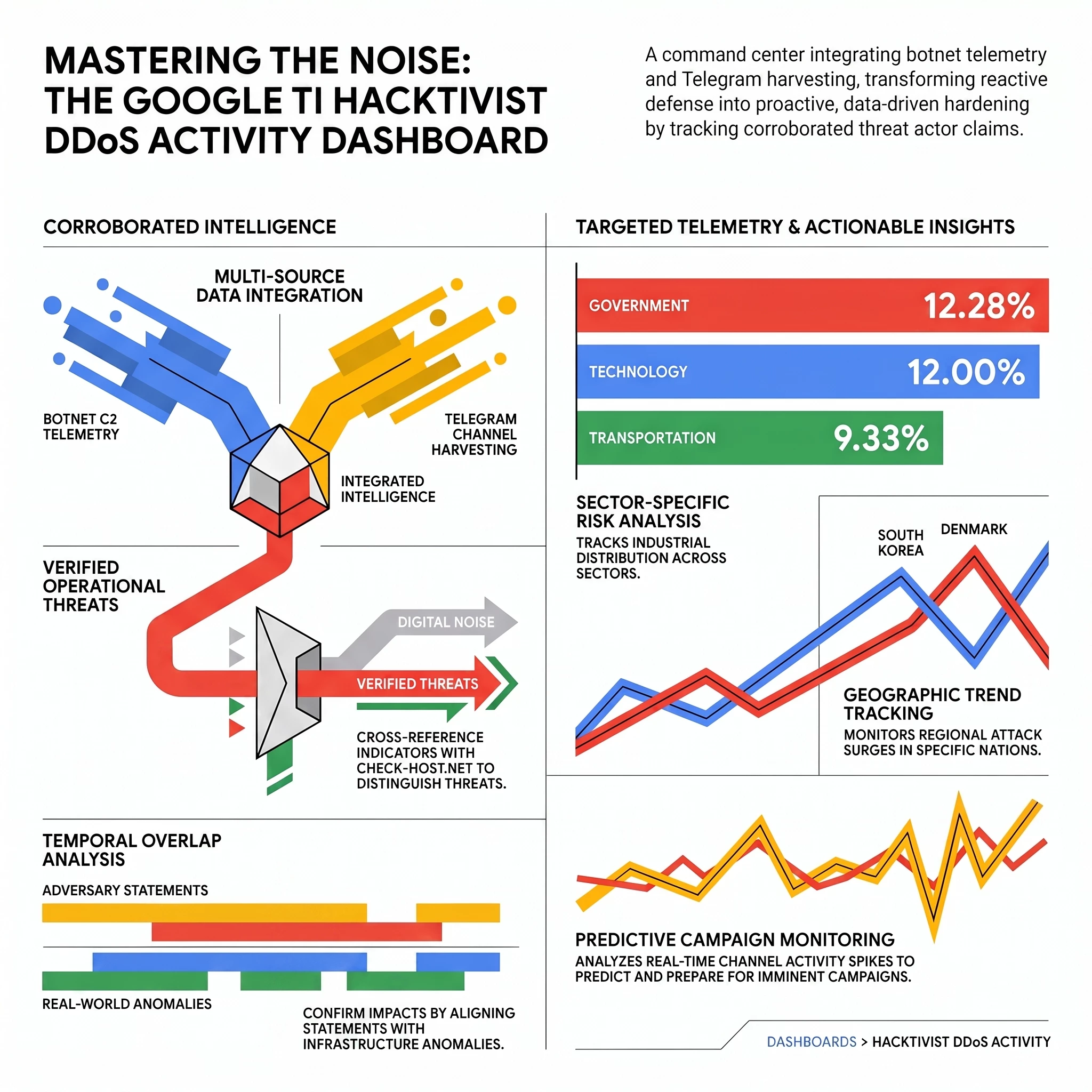

In an increasingly interconnected world, distributed denial of service (DDoS) attacks have become a preferred mechanism for hacktivist groups seeking to project influence and disrupt critical infrastructure. To help organizations navigate this volatile environment, Google Threat Intelligence has introduced the Hacktivist DDoS Activity Dashboard. This new command center offers a sophisticated approach to tracking, analyzing, and corroborating threat actor claims, moving security teams away from a reactive posture and toward tailored, data-driven defense.
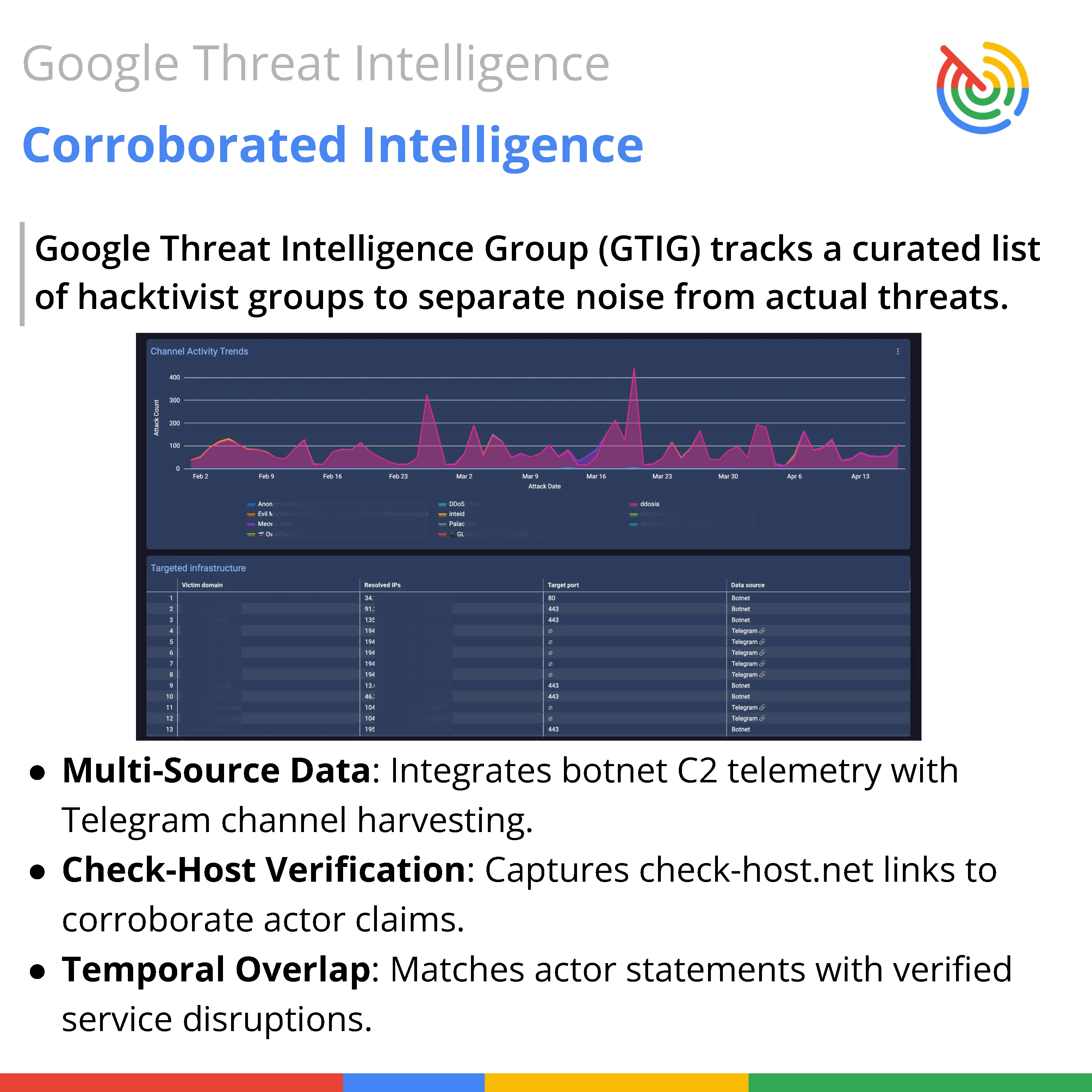
The power of this dashboard lies in its comprehensive data integration. Developed by the Google Threat Intelligence Group, the platform combines botnet command and control (C2) telemetry with continuous harvesting from threat actor Telegram channels. Rather than taking adversary claims at face value, the system utilizes check-host.net data to capture and cross reference indicators, ensuring that security professionals can distinguish actual operational threats from mere digital noise. While verifying immediate service disruptions can be challenging, the dashboard effectively identifies where actor statements temporally overlap with real world infrastructure anomalies.
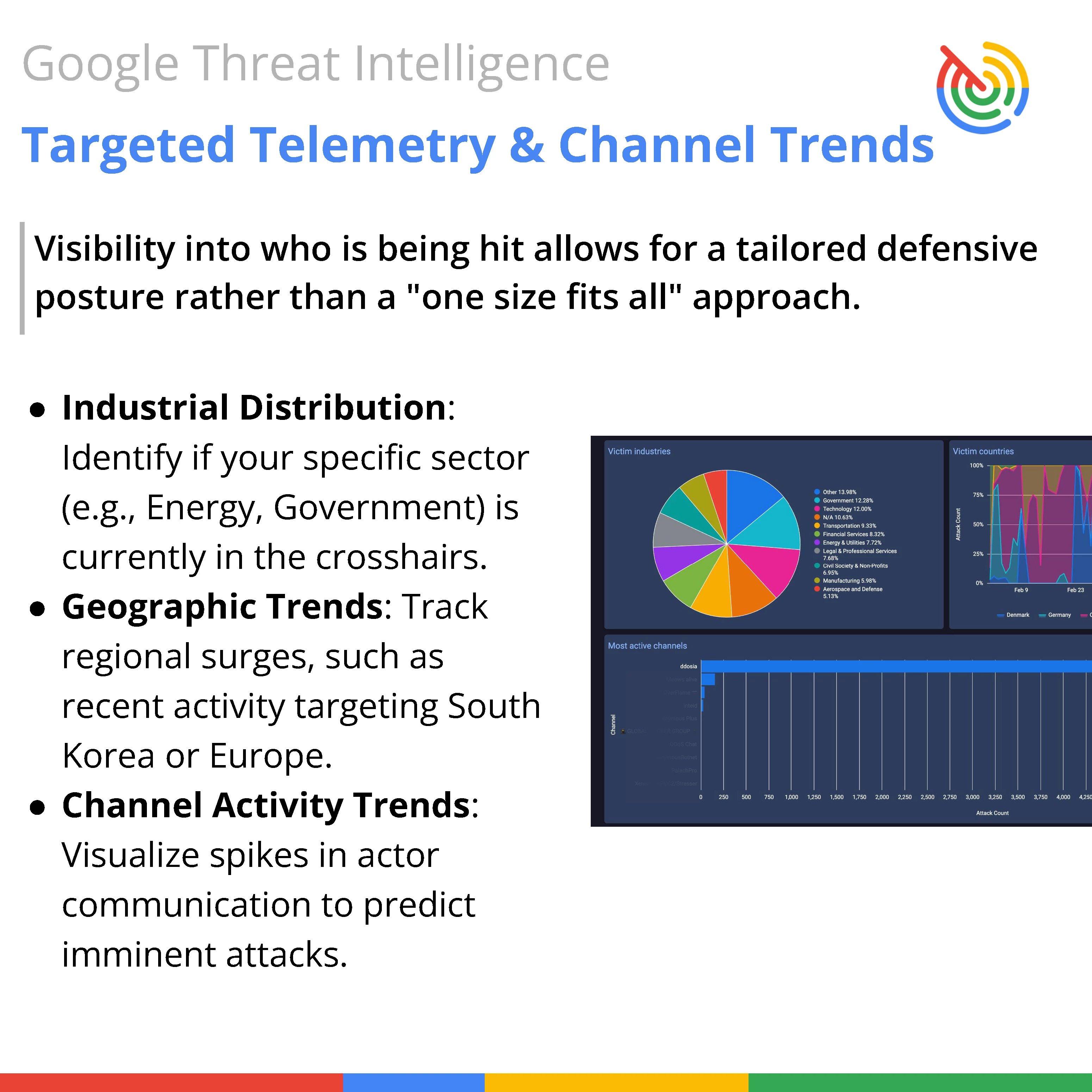
Defenders can leverage this targeted telemetry to analyze shifting regional and sector specific risks. The platform provides deep visibility into geographic trends, documenting recent attack surges across Europe and nations like South Korea and Denmark, while simultaneously tracking industrial distribution across government, technology, financial services, and energy sectors. By monitoring real time channel activity trends and communication spikes, organizations can better predict imminent campaigns. This intelligence allows cybersecurity teams to abandon generic, one size fits all defenses. Armed with granular insights into specific targeting patterns, global enterprises and critical infrastructure providers can proactively harden their infrastructure against the exact tactics deployed by today's most disruptive hacktivist collectives.