



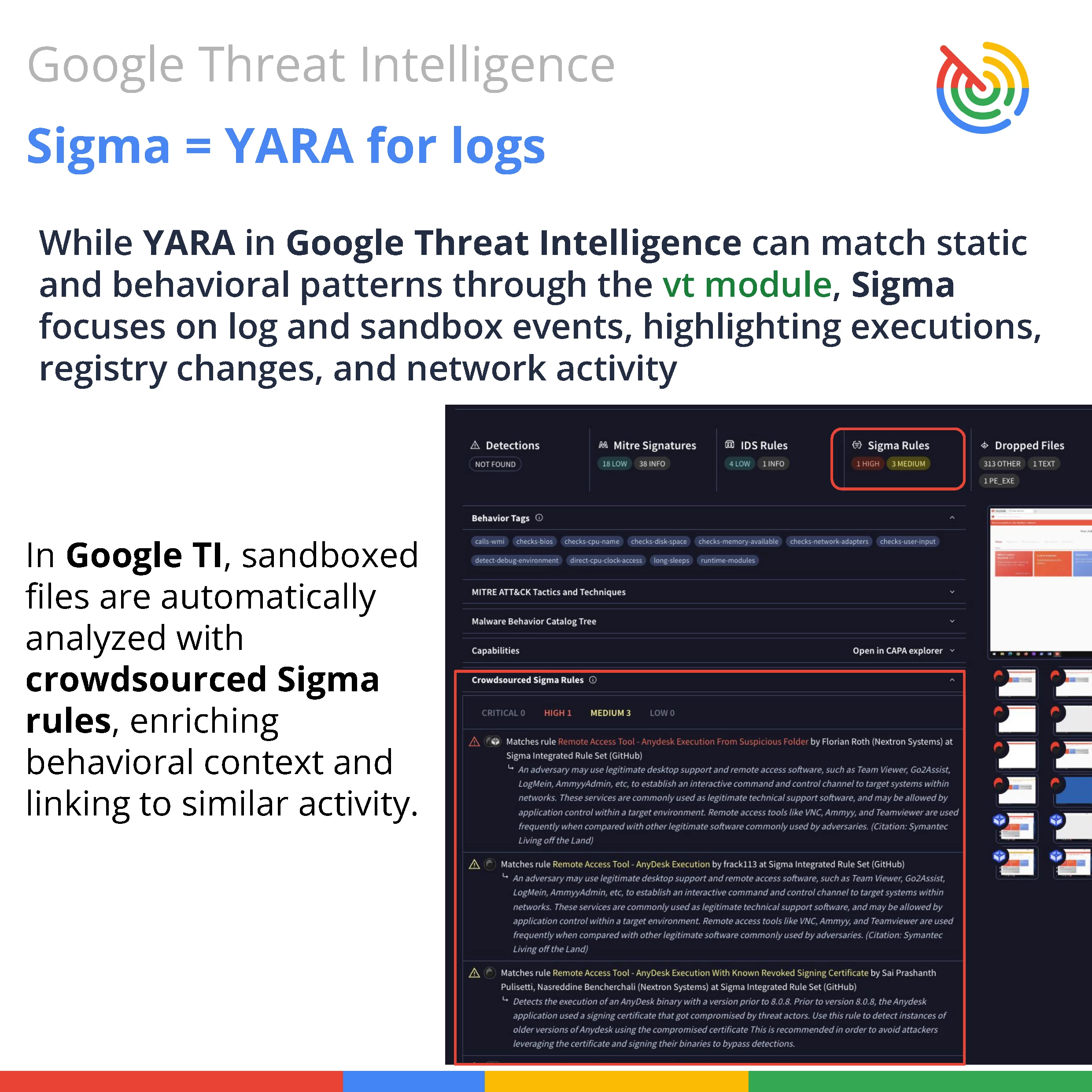
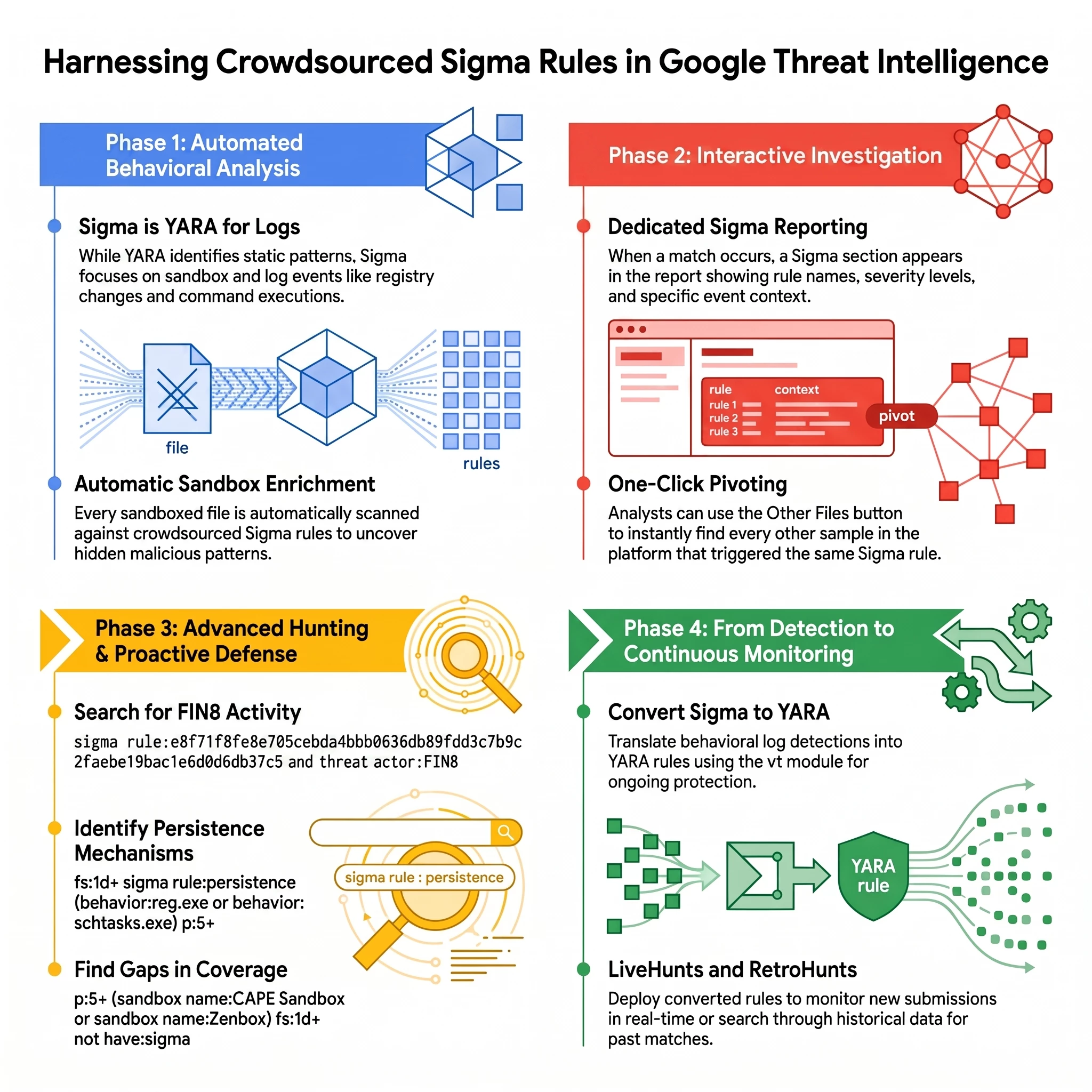
In the rapidly evolving world of cybersecurity, defender efficiency depends heavily on having clear visibility into how files behave when executed. A recent feature highlight from Google Threat Intelligence focuses on the integration of crowdsourced Sigma rules, often described as the equivalent of YARA but specifically tailored for logs. While traditional YARA rules are exceptional at identifying static and behavioral patterns via specific modules, Sigma shifts the focus toward log and sandbox events, effectively shedding light on process executions, registry modifications, and network activities.
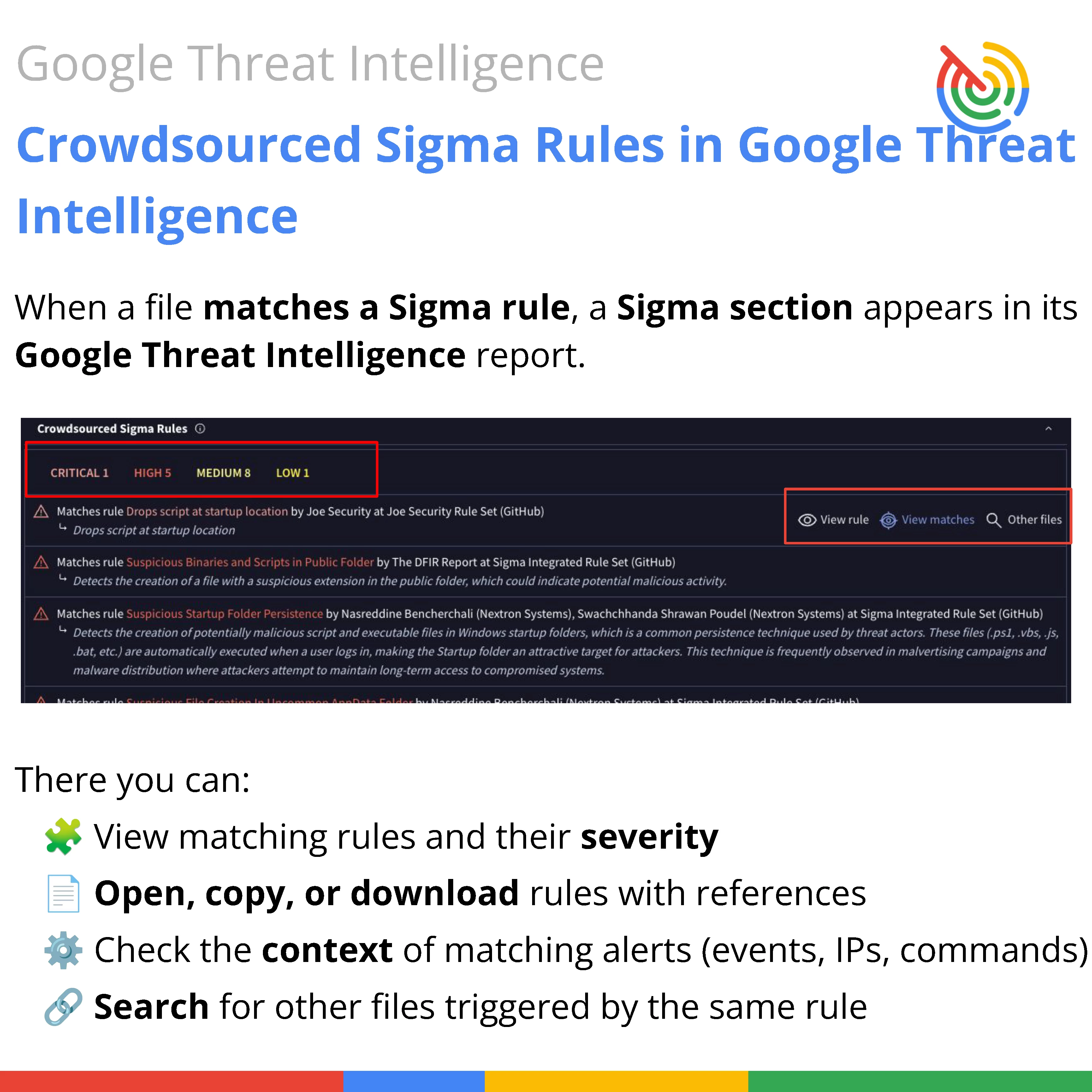
With this capability, sandboxed files undergo automatic analysis against crowdsourced Sigma rules. This automated integration greatly enriches the behavioral context of an investigation, connecting separate instances of malicious behavior and revealing hidden patterns. When a submitted file triggers a match, a dedicated Sigma section appears directly within its Google Threat Intelligence report.
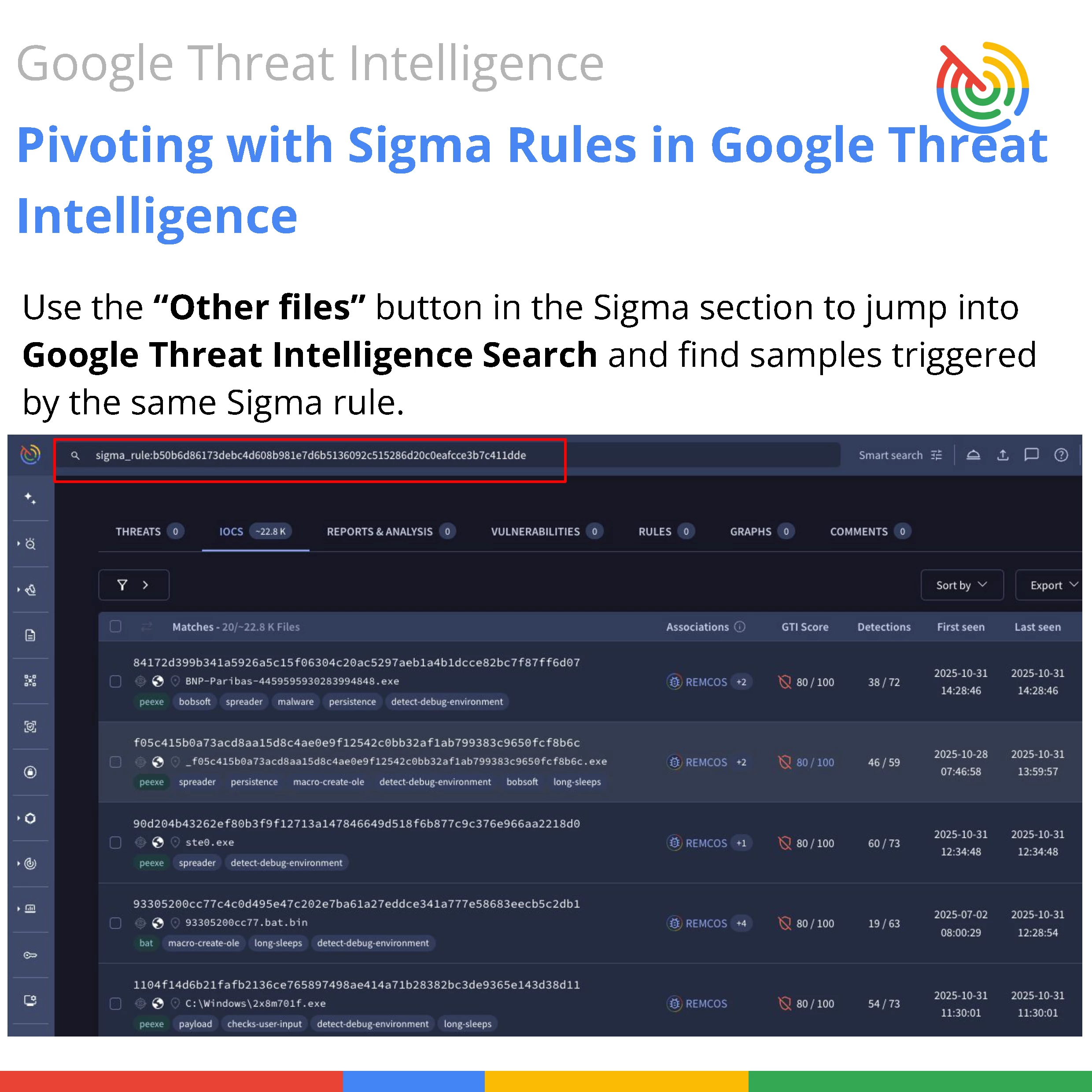
This interactive feature allows security analysts to perform several critical actions seamlessly. Investigators can view the matching rules along with their explicit severity levels, copy or download the underlying rules with their associated references, and check the precise context of matching alerts such as exact command-executions, involved IP addresses, and specific events. The interface includes an intuitive pivoting mechanism, enabling analysts to quickly search for all other files across the platform that have triggered that exact same rule.
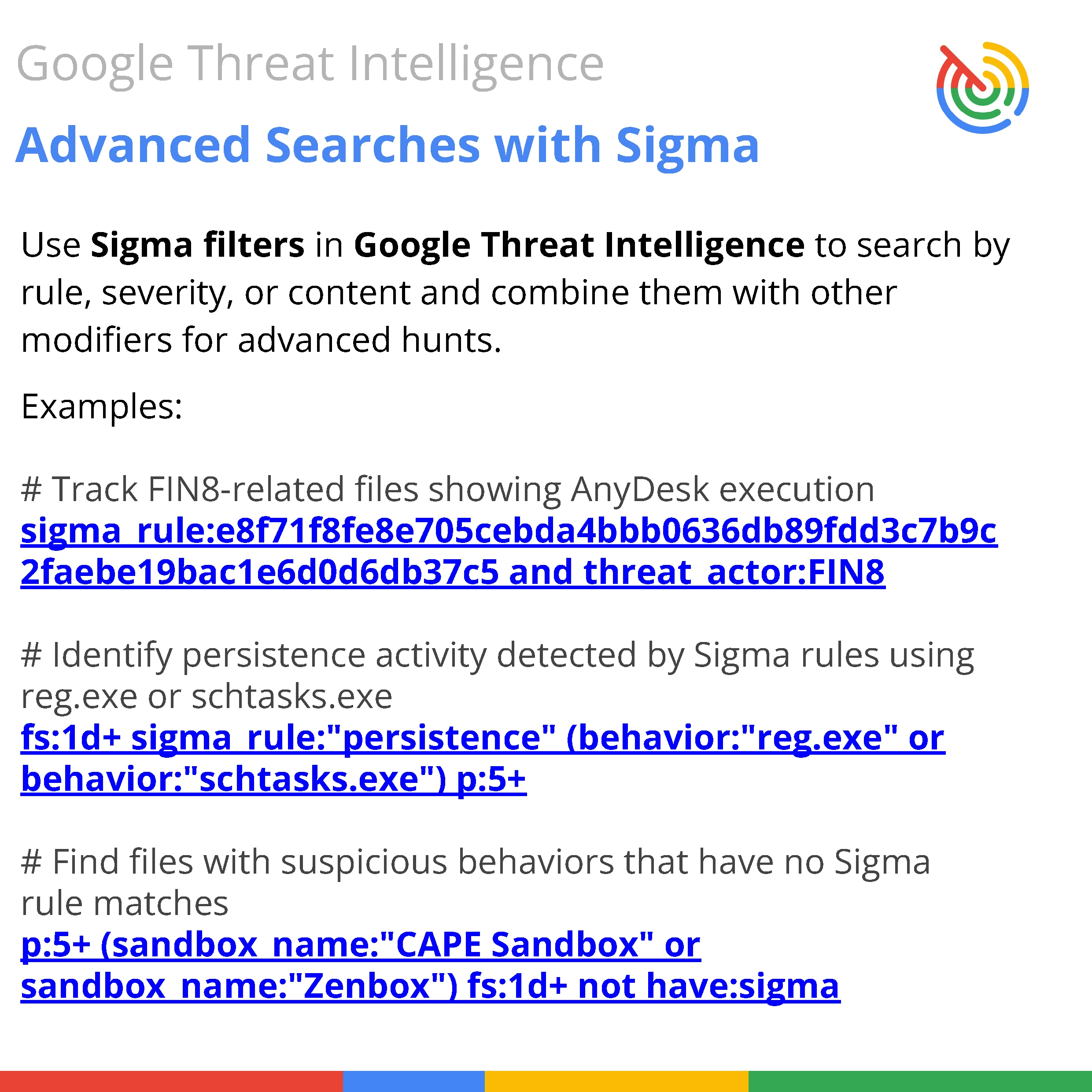
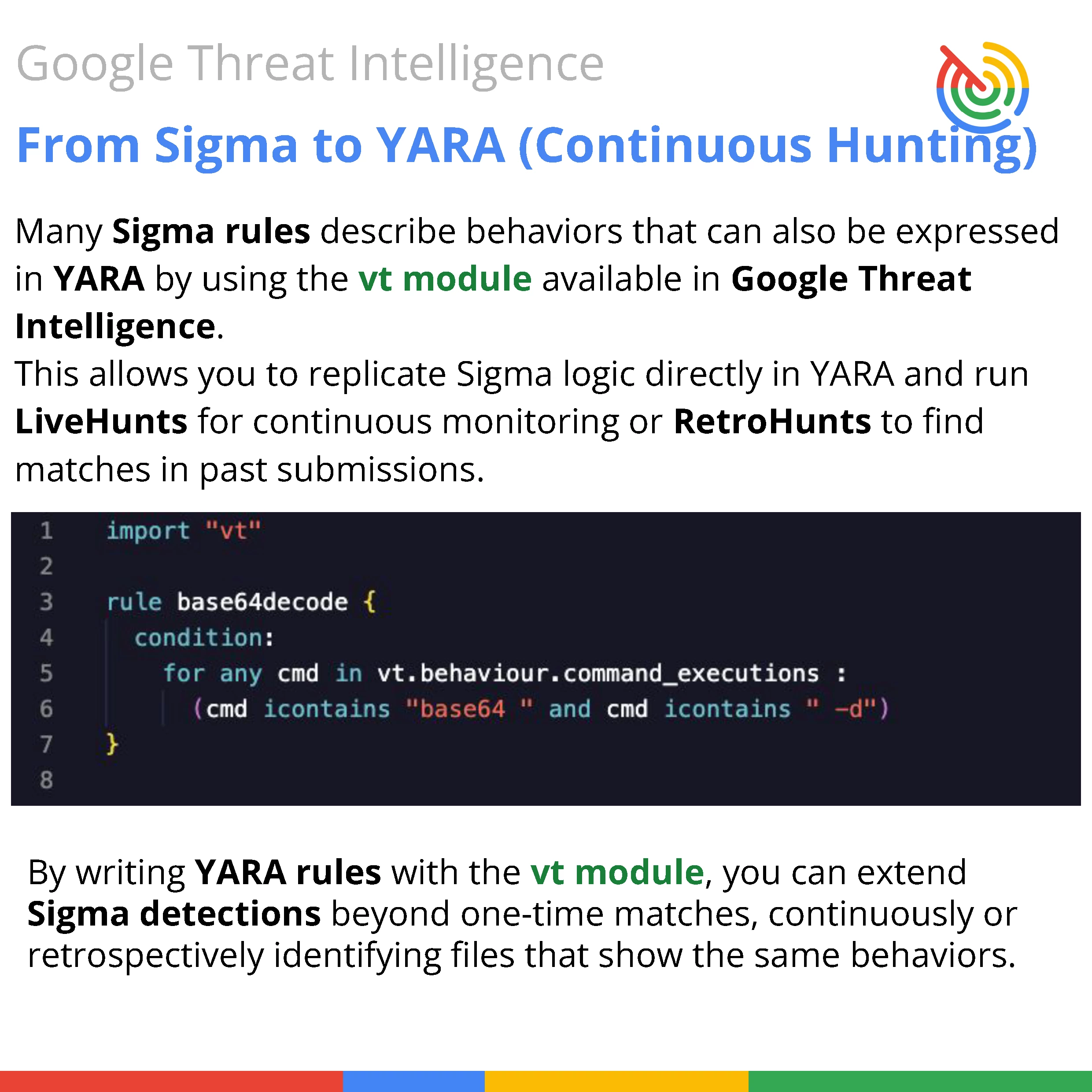
To elevate proactive defense, Google Threat Intelligence supports advanced search syntax that combines Sigma filters with other threat intelligence modifiers. For instance, defenders can hunt for specific threat actors utilizing certain remote access tools or isolate persistence mechanisms across recent submissions. These behavioral insights can be translated into YARA rules using the platform's specialized behavioral module, allowing teams to convert one time log detections into continuous monitoring through LiveHunts and historical RetroHunts.
Additional Resources, Links, and Examples:
Track FIN8-related files showing AnyDesk execution
Identify persistence activity detected by Sigma rules using reg.exe or schtasks.exe
Find files with suspicious behaviors that have no Sigma rule matches
