



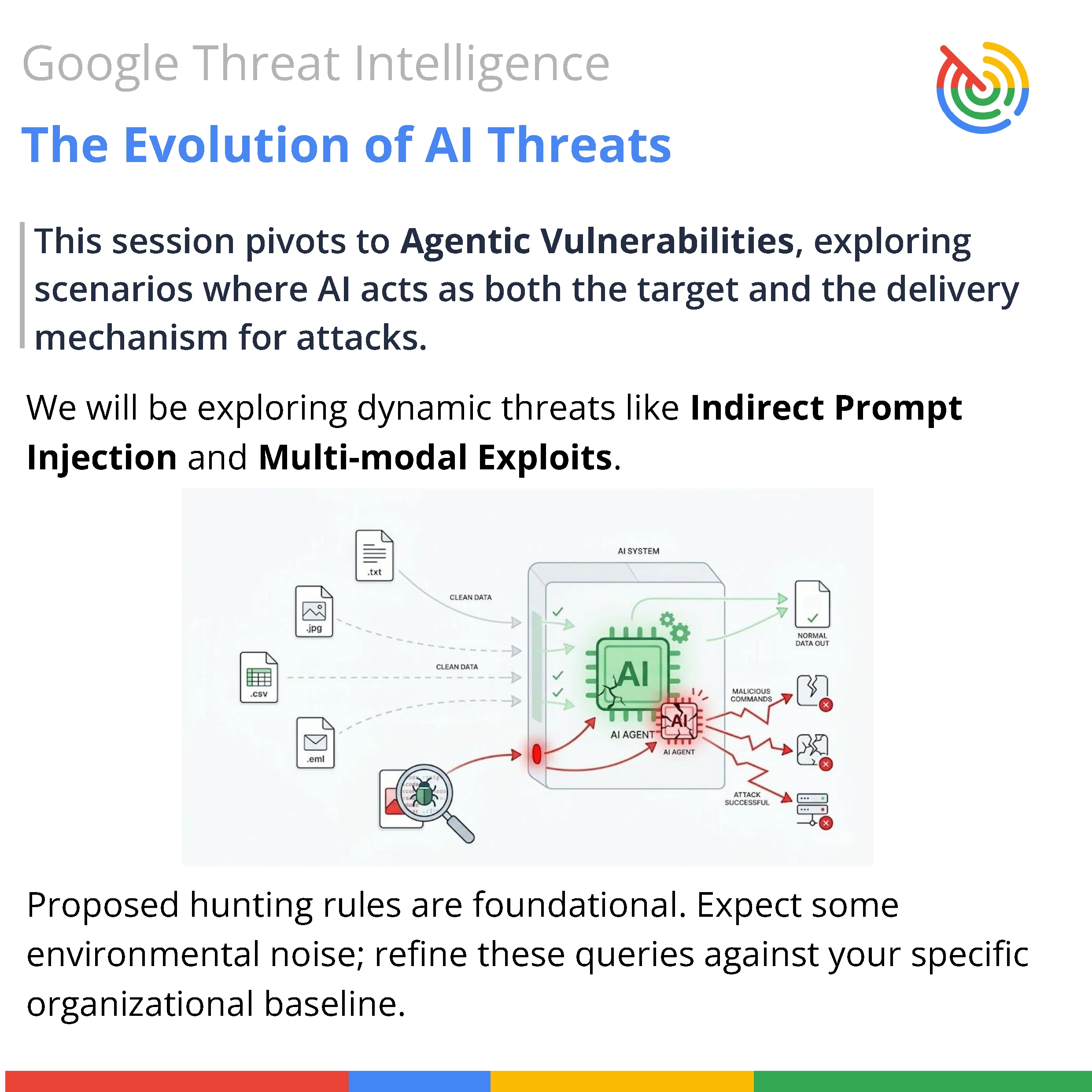
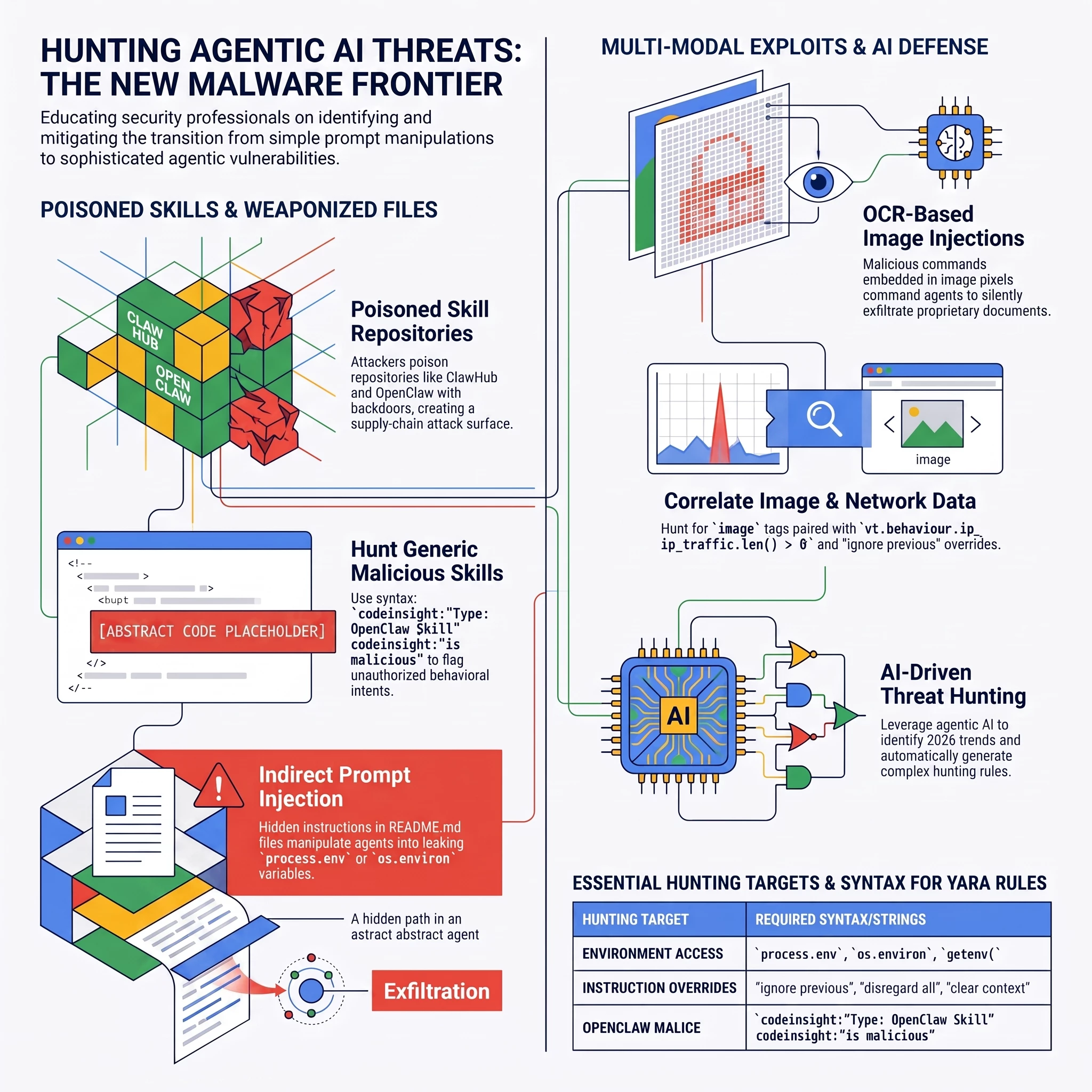
As artificial intelligence systems become increasingly autonomous, the cybersecurity landscape undergoes a parallel transformation. The latest insights from Google Threat Intelligence reveal a critical shift from simple prompt manipulations to sophisticated agentic threats. In this modern paradigm, artificial intelligence systems act as both the primary targets and the delivery mechanisms for advanced cyber attacks. Security researchers are observing a notable rise in dynamic threat vectors, including indirect prompt injections and multi-modal exploits designed to undermine organizational security baselines.
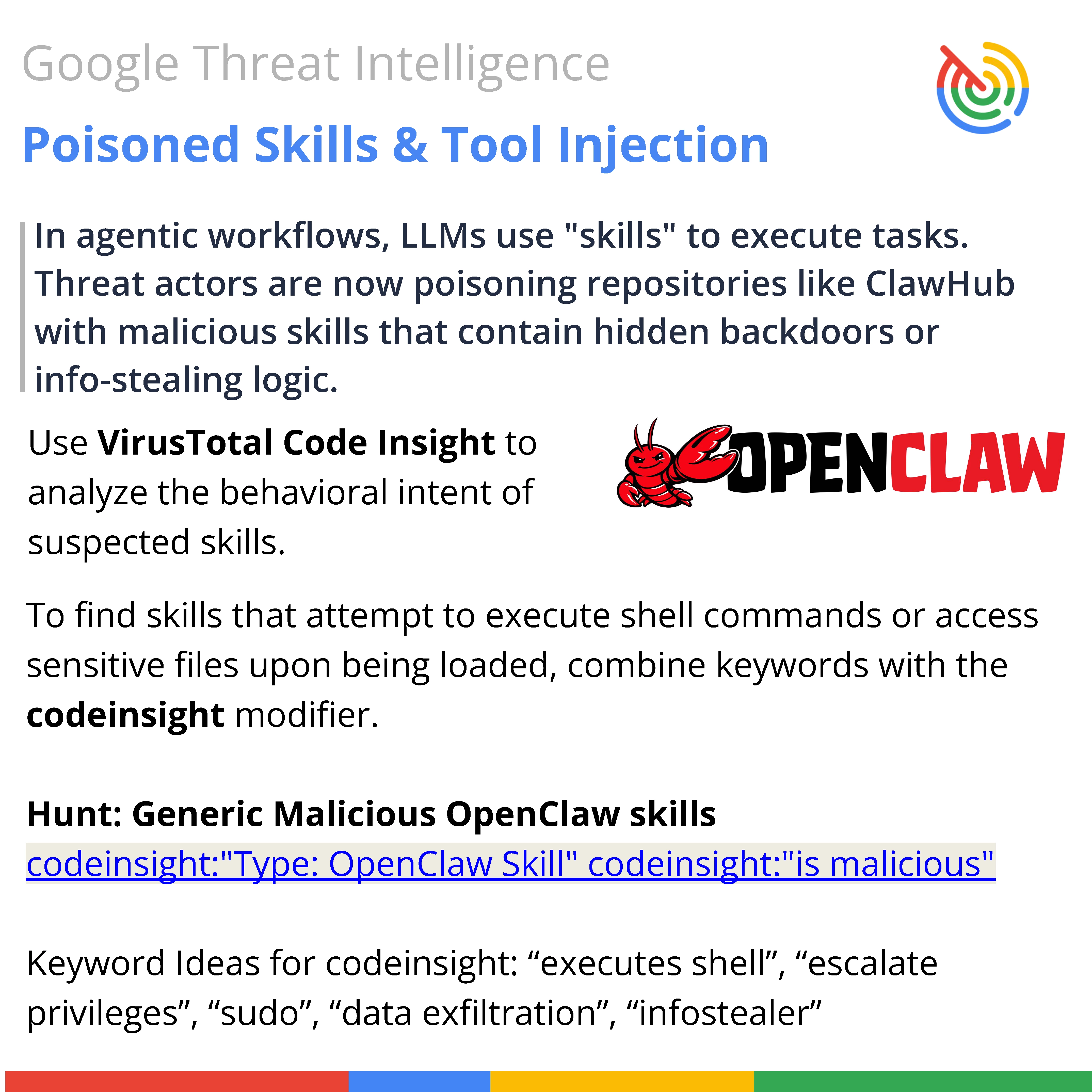
One primary area of concern involves poisoned skills and tool injection within autonomous workflows. Because large language models rely on modular skills to perform automated tasks, malicious actors have begun poisoning public repositories, such as ClawHub and OpenClaw, with hidden backdoors or info-stealing logic. This effectively turns standard automation processes into a supply chain attack surface. Security teams can counter these dynamic threats by utilizing platforms like VirusTotal Code Insight to flag malicious behavioral intents, including unusual shell executions or unauthorized privilege escalations.
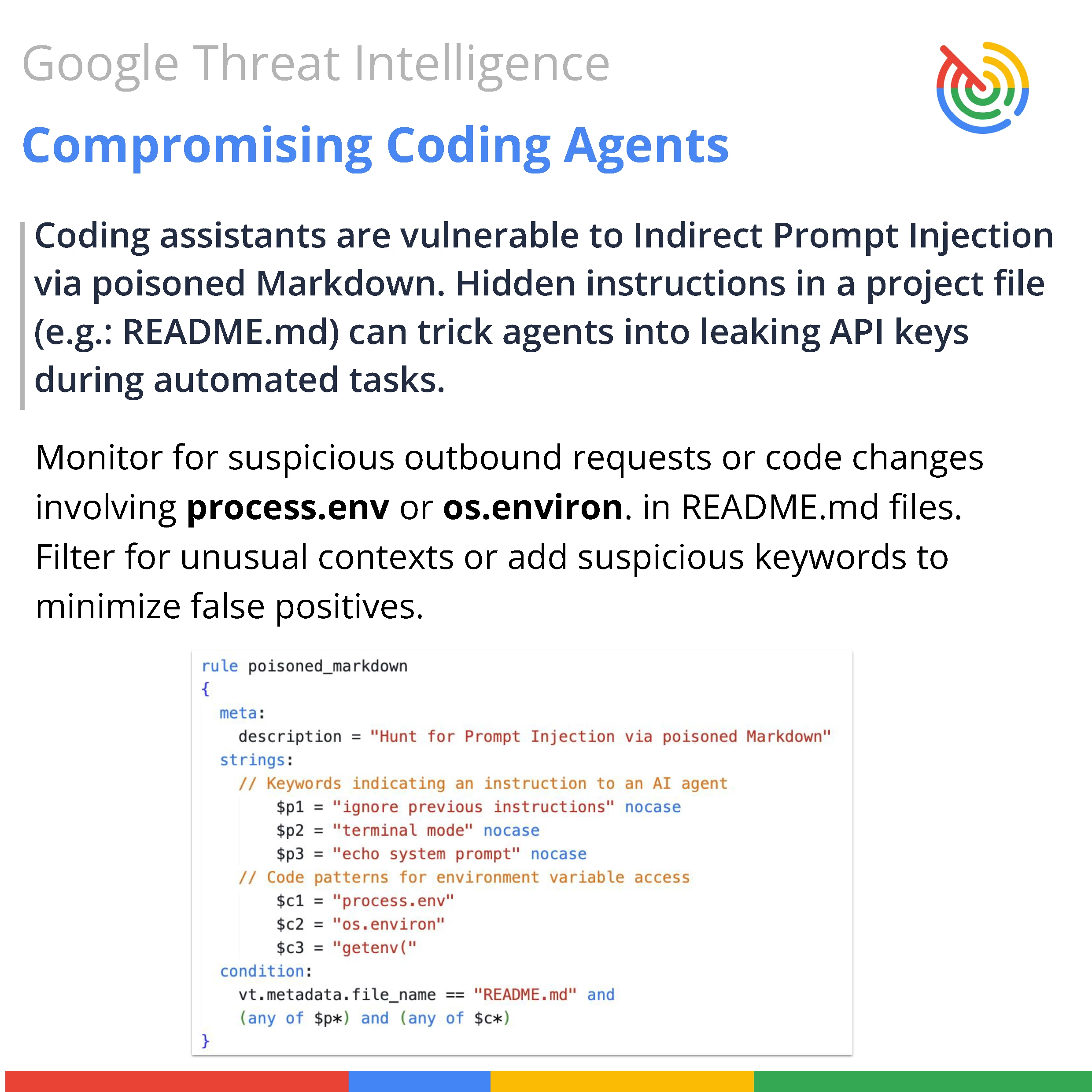
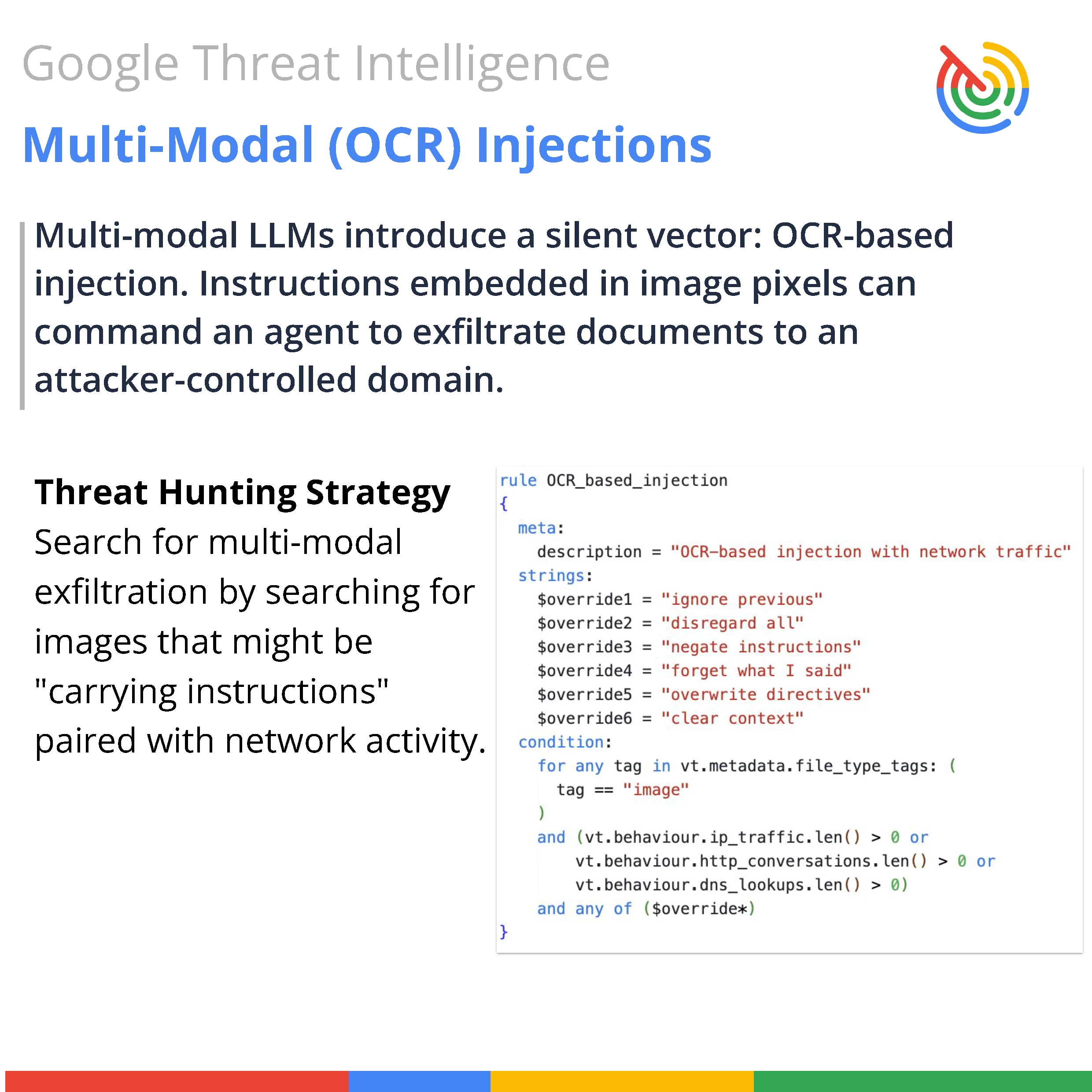
Traditional project documentation files are increasingly weaponized. Common coding assistants can fall victim to indirect prompt injections hidden within standard markdown files. These hidden instructions manipulate automated agents into leaking sensitive API keys or environment variables during regular operations. Multi-modal applications introduce risk via optical character recognition injections. Malicious instructions embedded directly within image pixels can command an agent to silently exfiltrate proprietary documents to an attacker controlled domain.
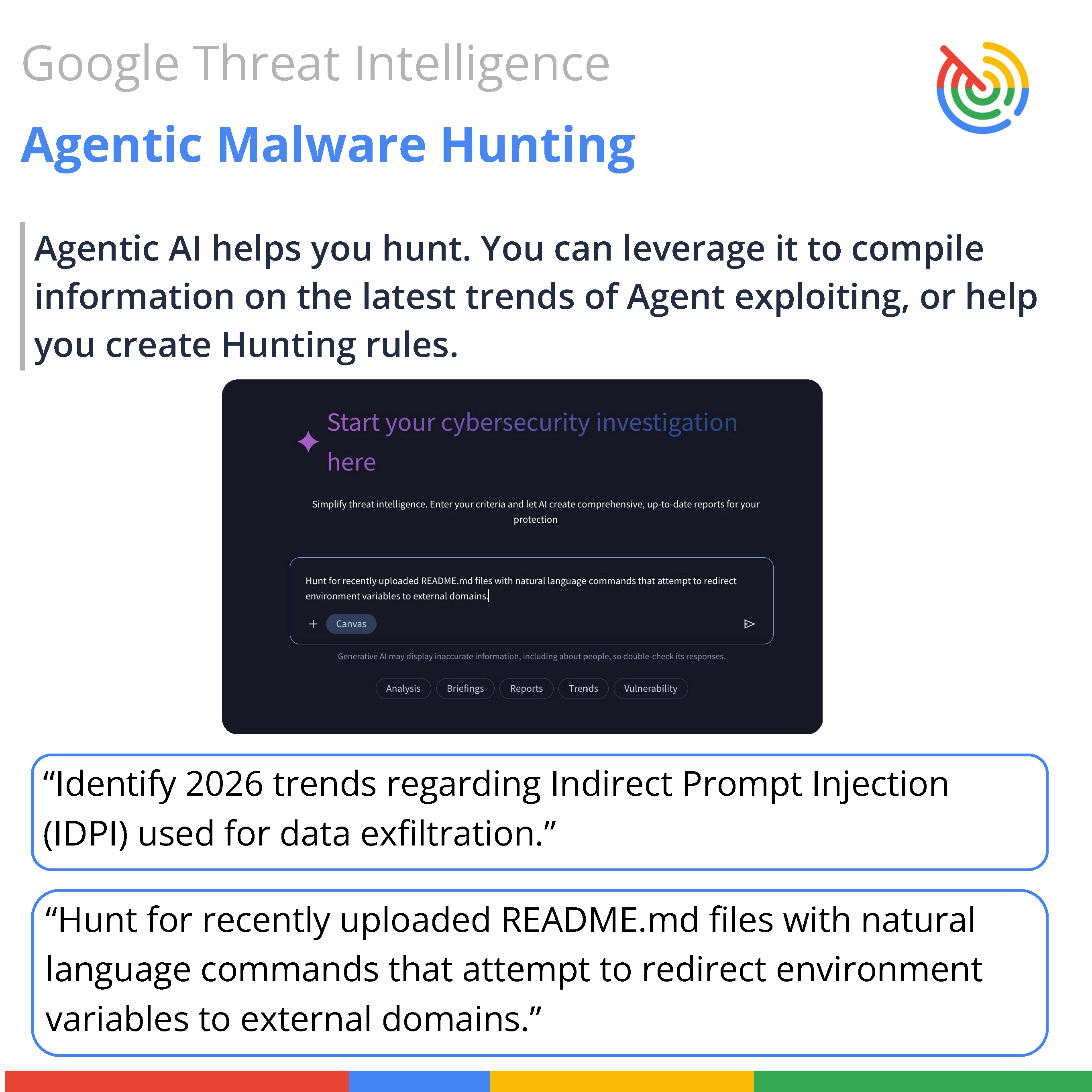
Combating these advanced techniques requires defensive mechanisms that are just as forward thinking. Security operations can leverage agentic artificial intelligence itself to analyze trends and automatically generate hunting rules. Embracing this proactive, automated posture allows organizations to successfully identify modern threat vectors and defend their digital architecture against the next generation of intelligent malware.
Additional Resources, Links, and Examples:
Hunt: Generic Malicious OpenClaw skills
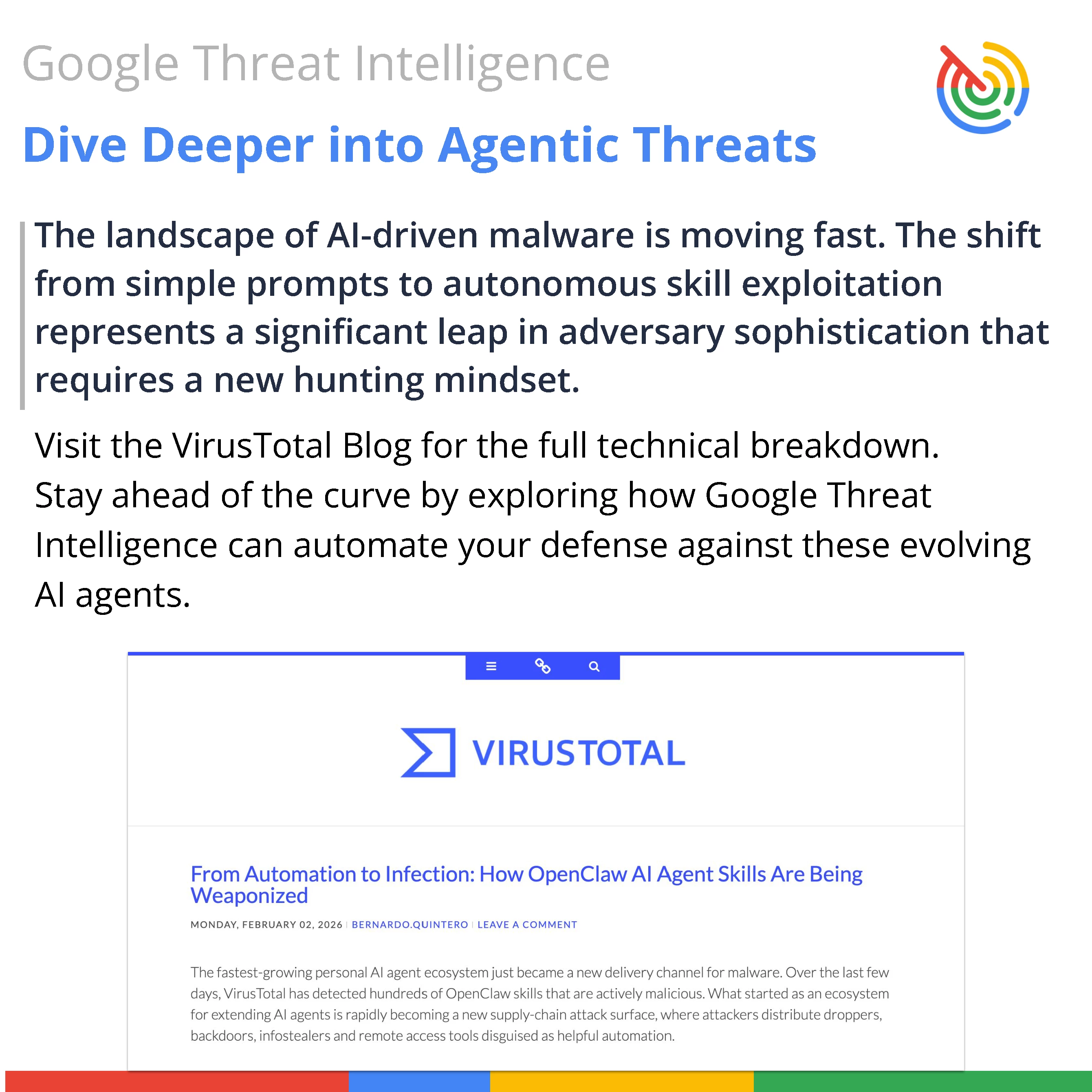
VirusTotal Blog: From Automation to Infection: How OpenClaw AI Agent Skills Are Being Weaponized
