



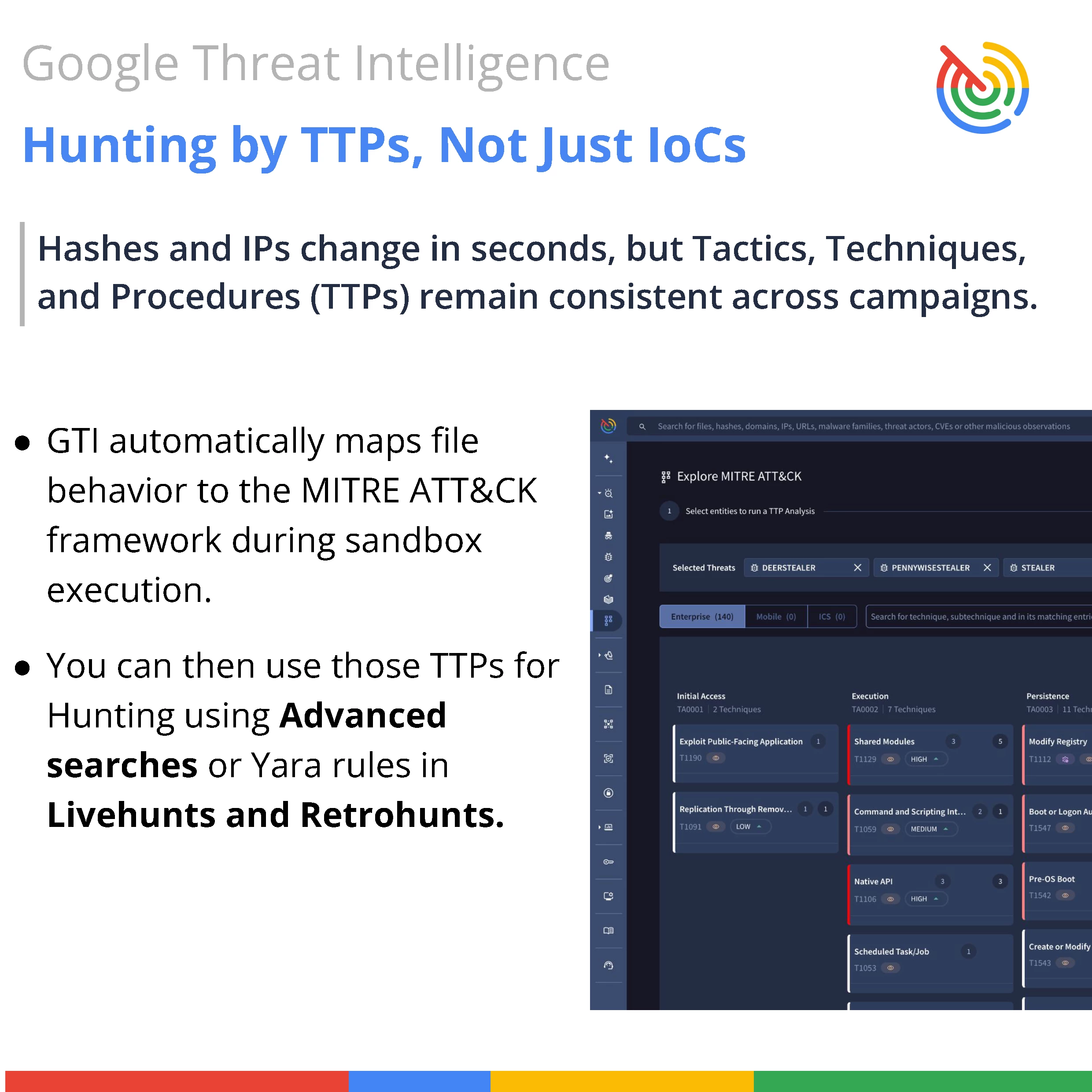
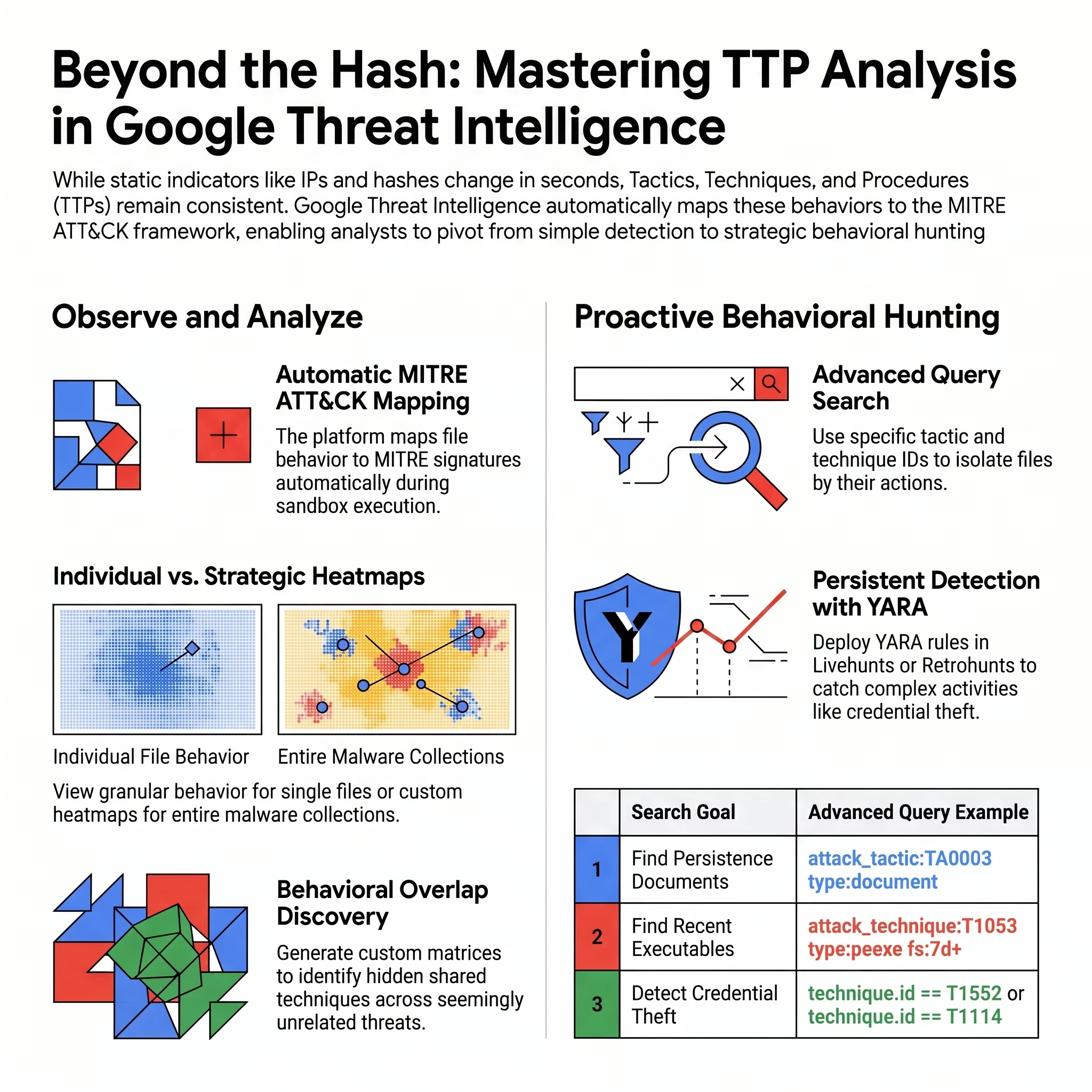
In the rapidly changing landscape of cybersecurity, relying solely on static indicators of compromise like file hashes and IP addresses is no longer enough. Threat actors can modify these markers in mere seconds to evade detection. However, their underlying Tactics, Techniques, and Procedures (TTPs) remain remarkably consistent across different campaigns. Google Threat Intelligence addresses this reality by allowing security teams to pivot away from transient indicators and focus heavily on these behavioral patterns.
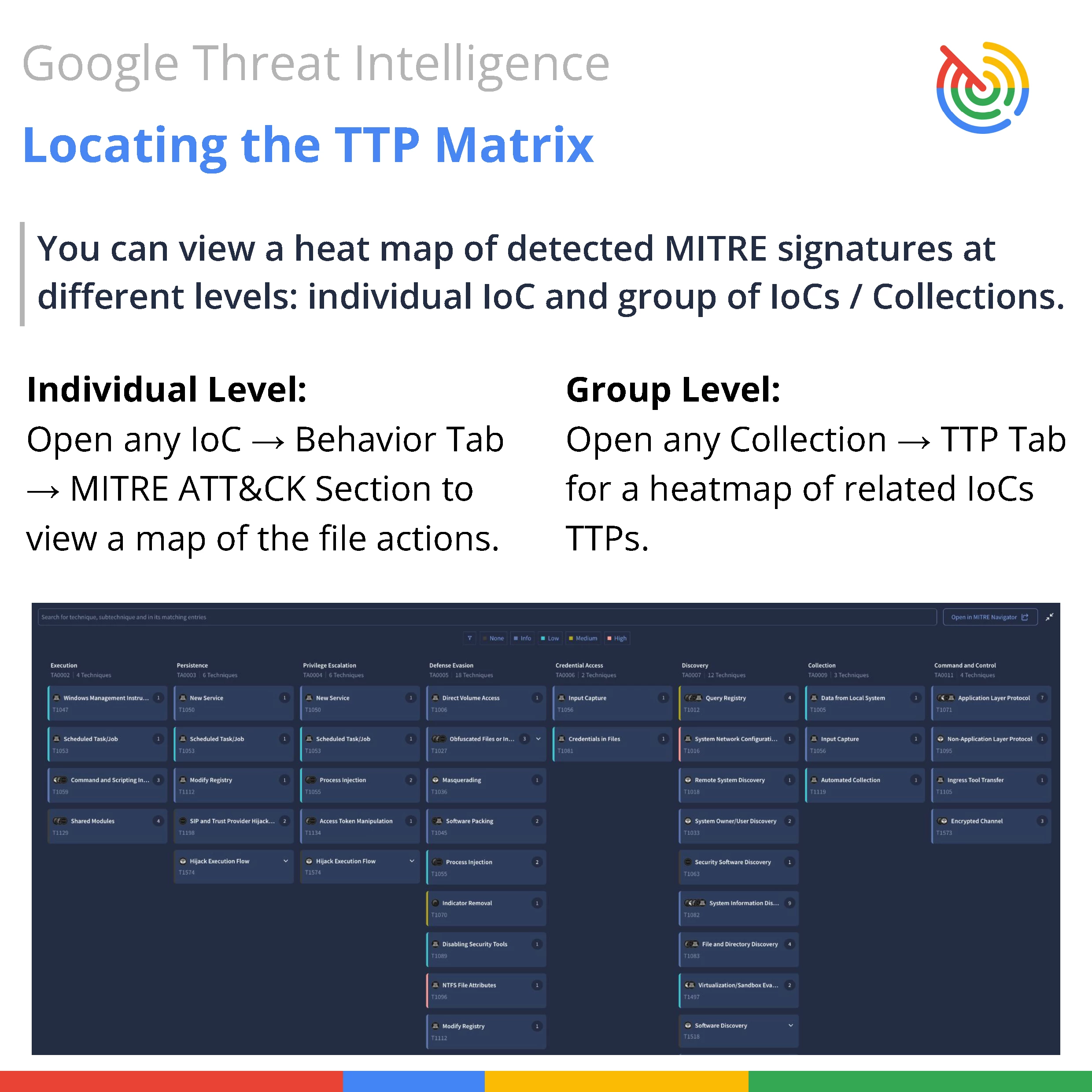
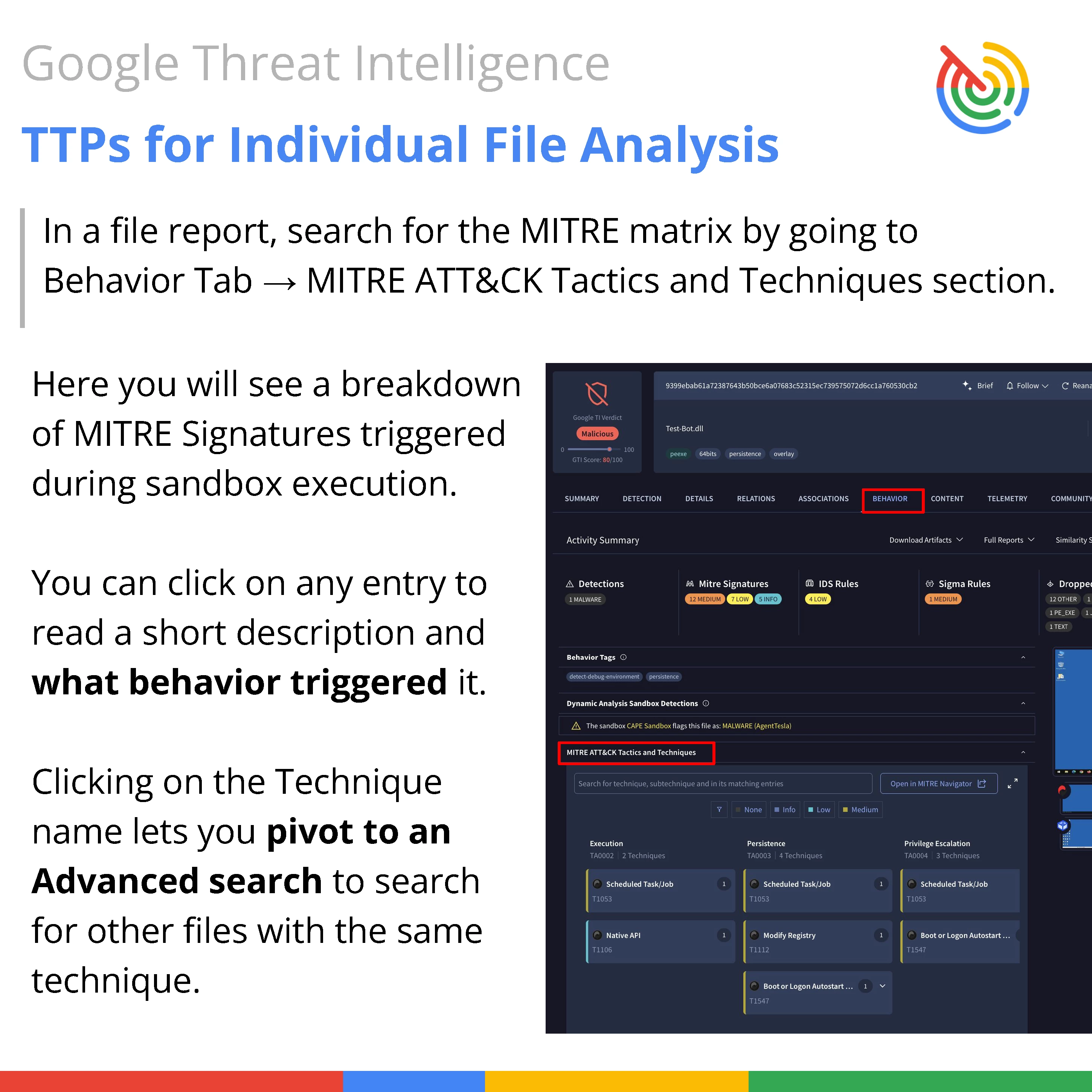
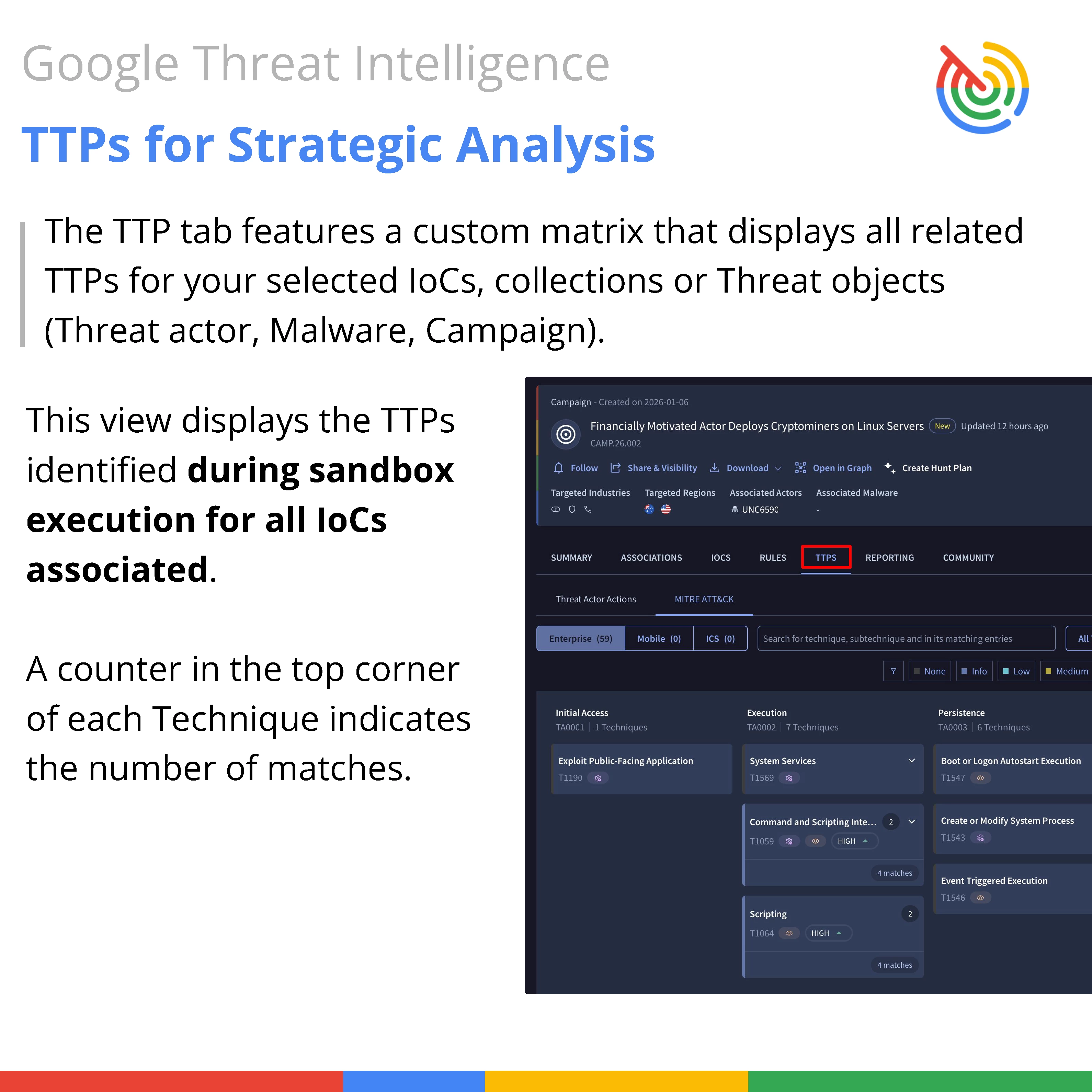
During sandbox execution, the platform automatically maps file behavior directly to the MITRE ATT&CK framework. This powerful integration enables analysts to observe adversary behavior dynamically. Security operations teams can locate these visual heat maps at both an individual indicator level through the behavior tab and at a group level within designated collections. This dual approach provides granular technical clarity alongside a broad strategic overview.
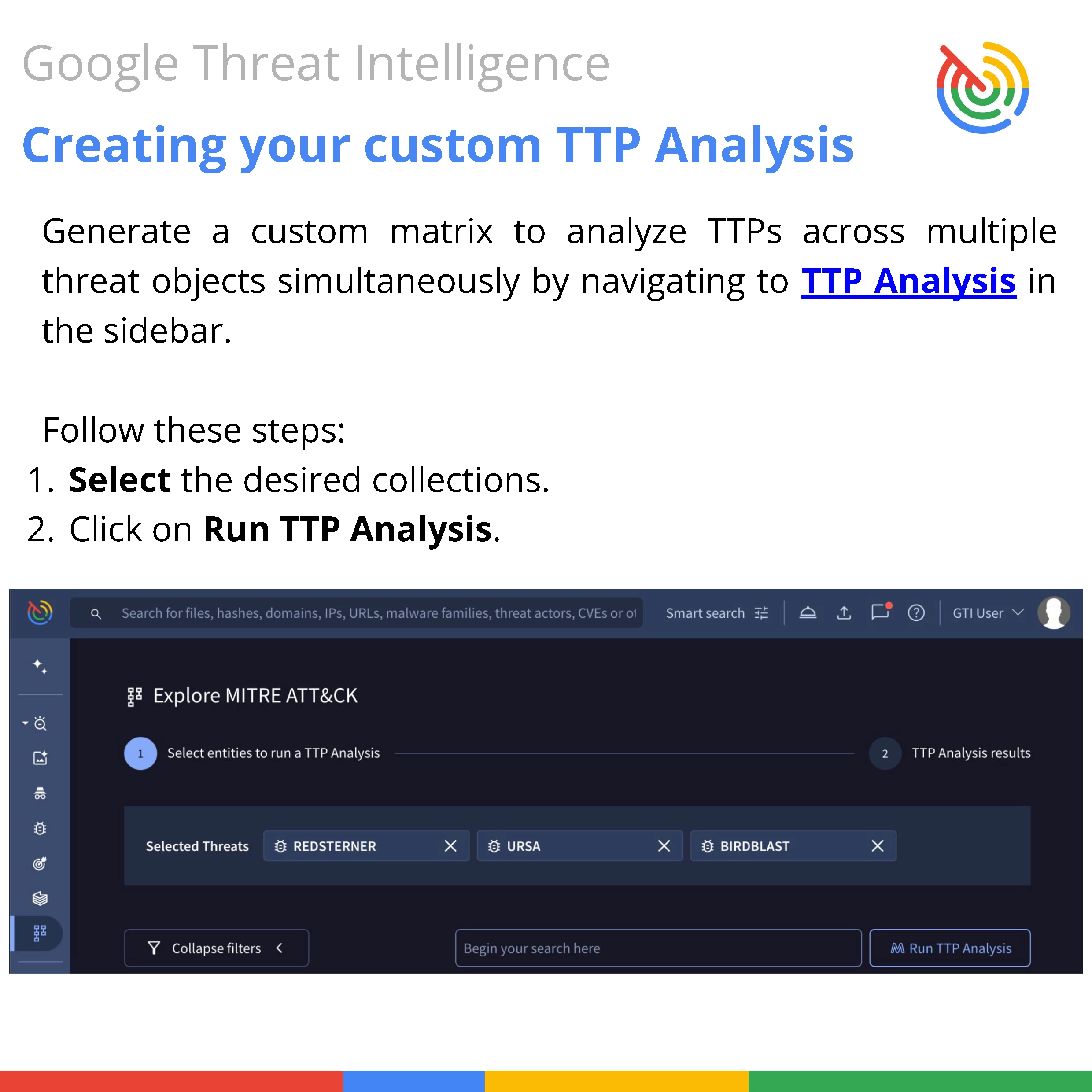
The strategic analysis capability features custom matrices that compile related behaviors across selected collections or specific threat objects, such as malware families and campaigns. Users can generate custom matrices by selecting multiple entities in the sidebar and running a tailored analysis. This capability allows teams to discover hidden behavioral overlaps among seemingly unrelated threats.
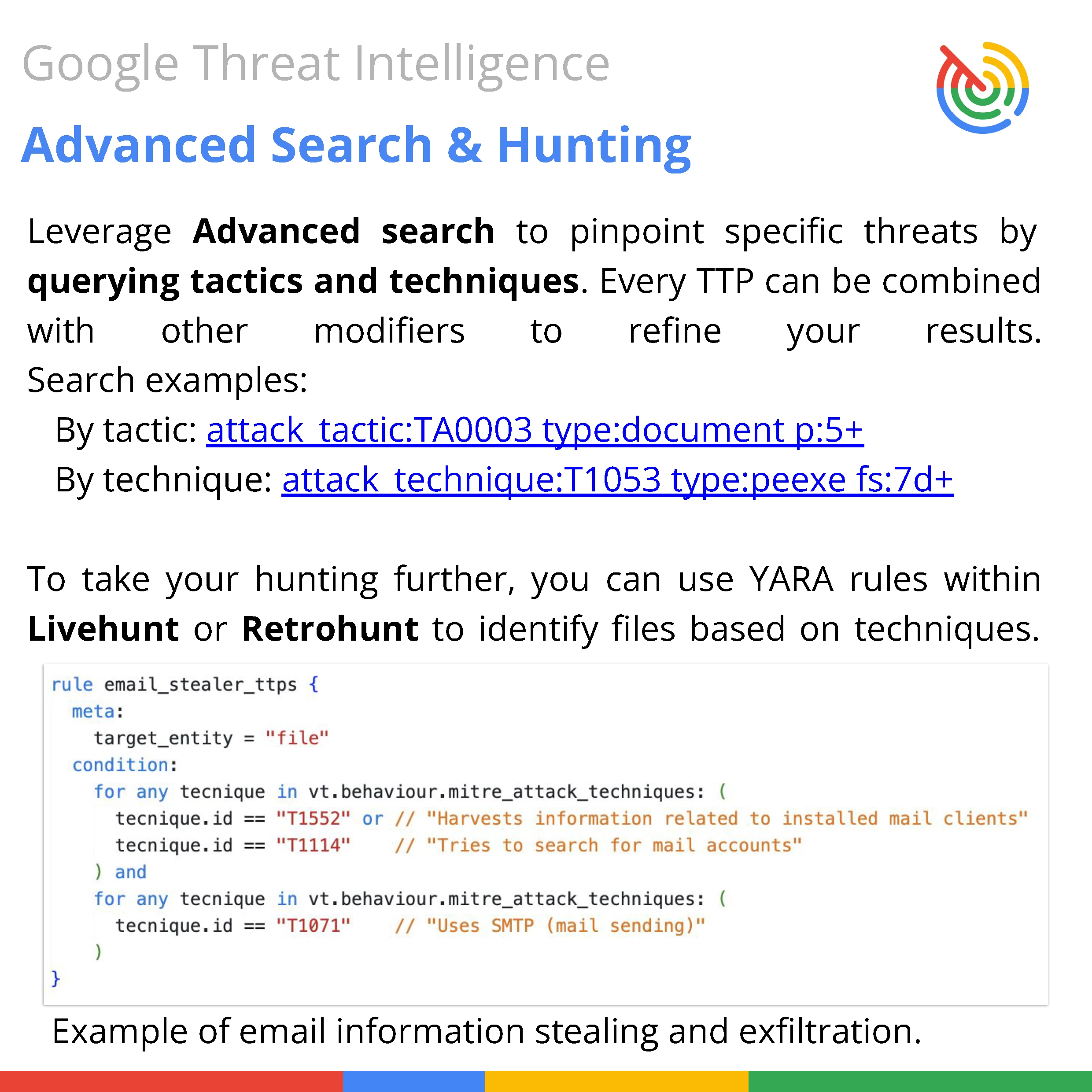
To help proactive defense teams, the platform supports advanced search queries and hunting capabilities. Security professionals can search by specific tactics or techniques while combining modifiers to isolate files of interest. Taking proactive defense a step further, analysts can deploy YARA rules within Livehunts or Retrohunts. By querying behavioral attributes such as specific MITRE ATT&CK technique IDs, defenders can reliably catch complex activities like credential theft or automated data exfiltration. Transitioning to behavioral hunting ensures defenses stay resilient against adaptive threats.
Additional Resources, Links, and Examples:
By tactic: attack_tactic:TA0003 type:document p:5+
