



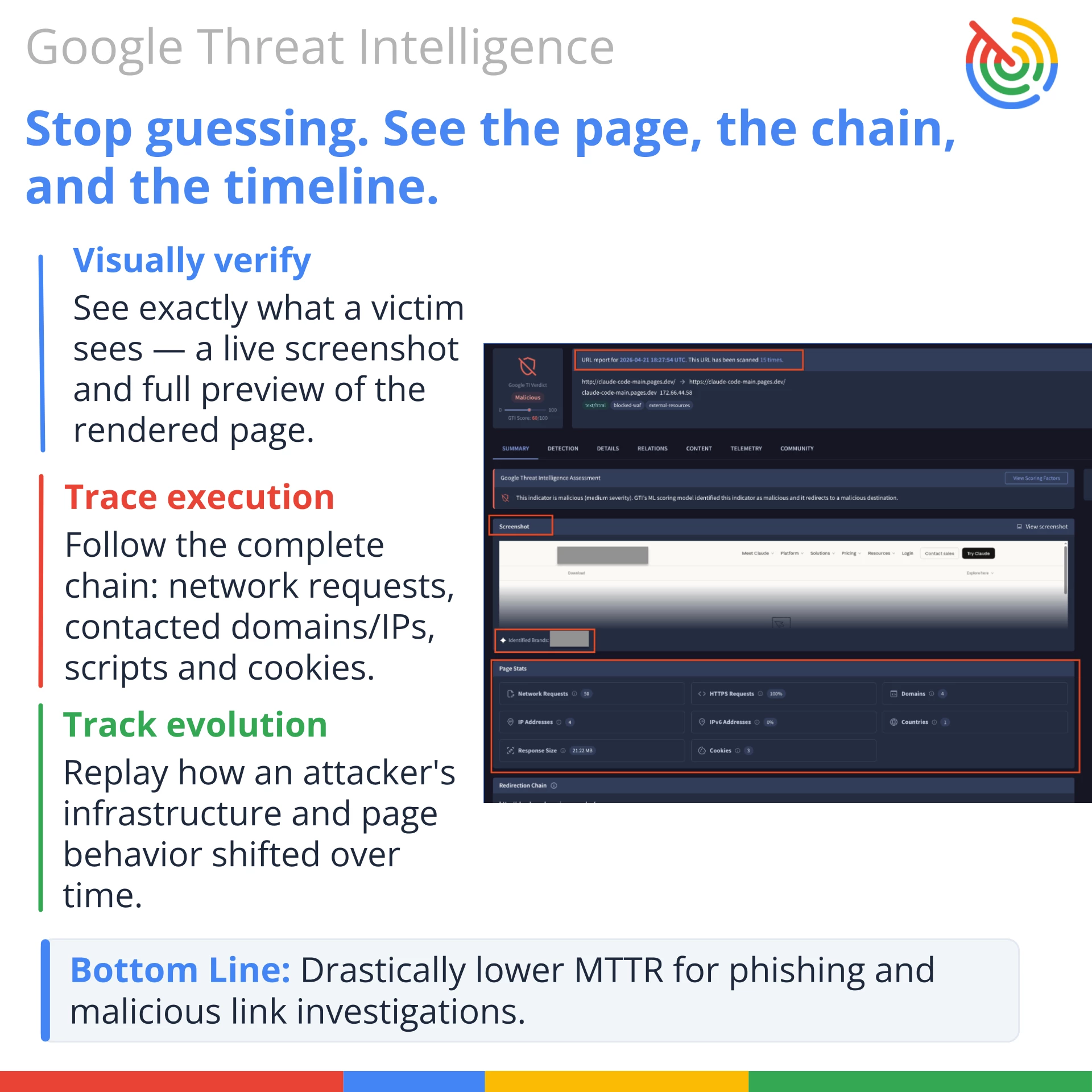
In the rapidly shifting landscape of modern cybersecurity, static detection mechanisms are no longer sufficient to counter sophisticated, evasive web threats. Malicious actors continuously alter their infrastructure and obfuscate code to slip past traditional scanners. To address this critical challenge, Google Threat Intelligence has launched URL Scanning 2.0, a transformative capability designed to give security analysts unprecedented visibility and drastically reduce the Mean Time to Resolution (MTTR) for phishing and link-based investigations.
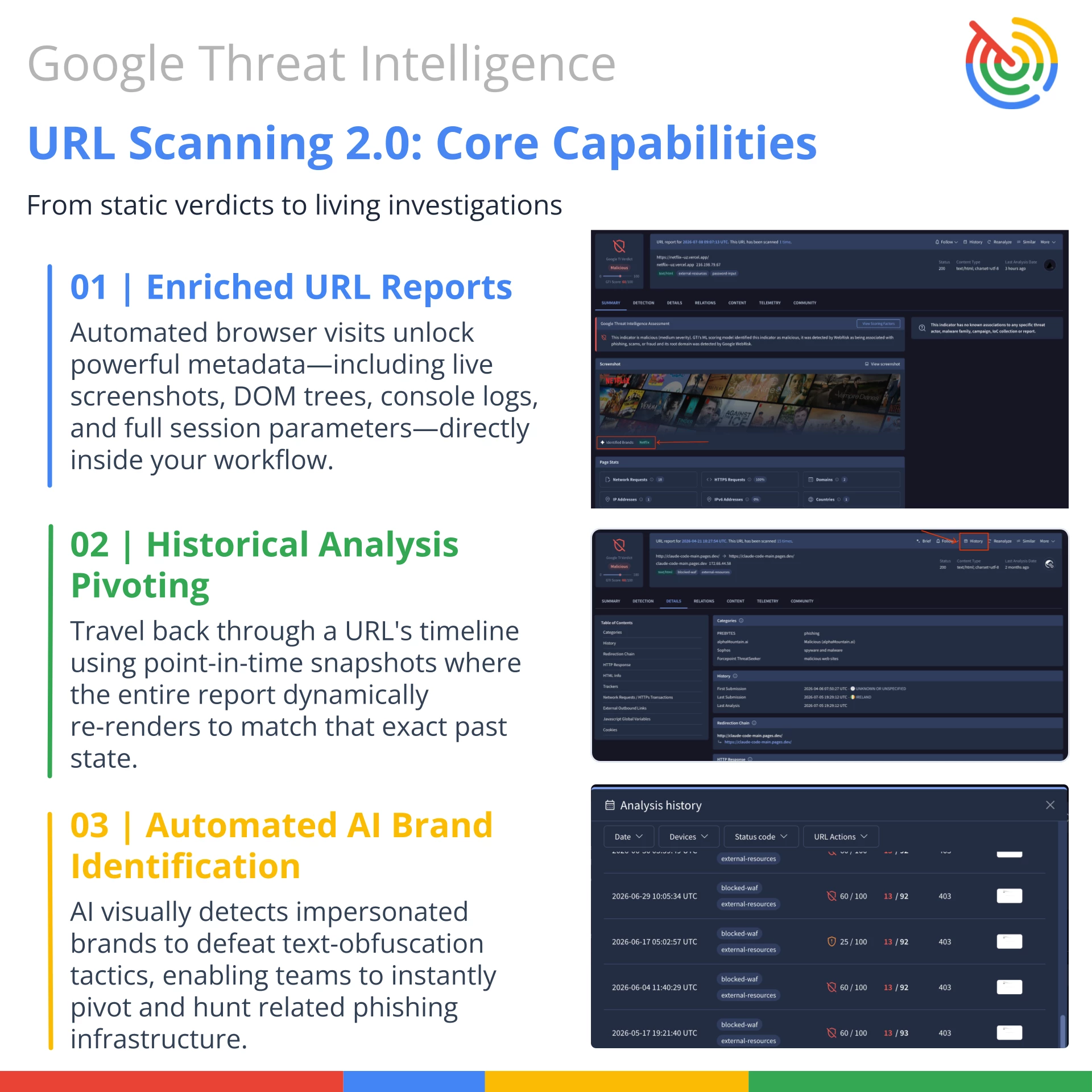
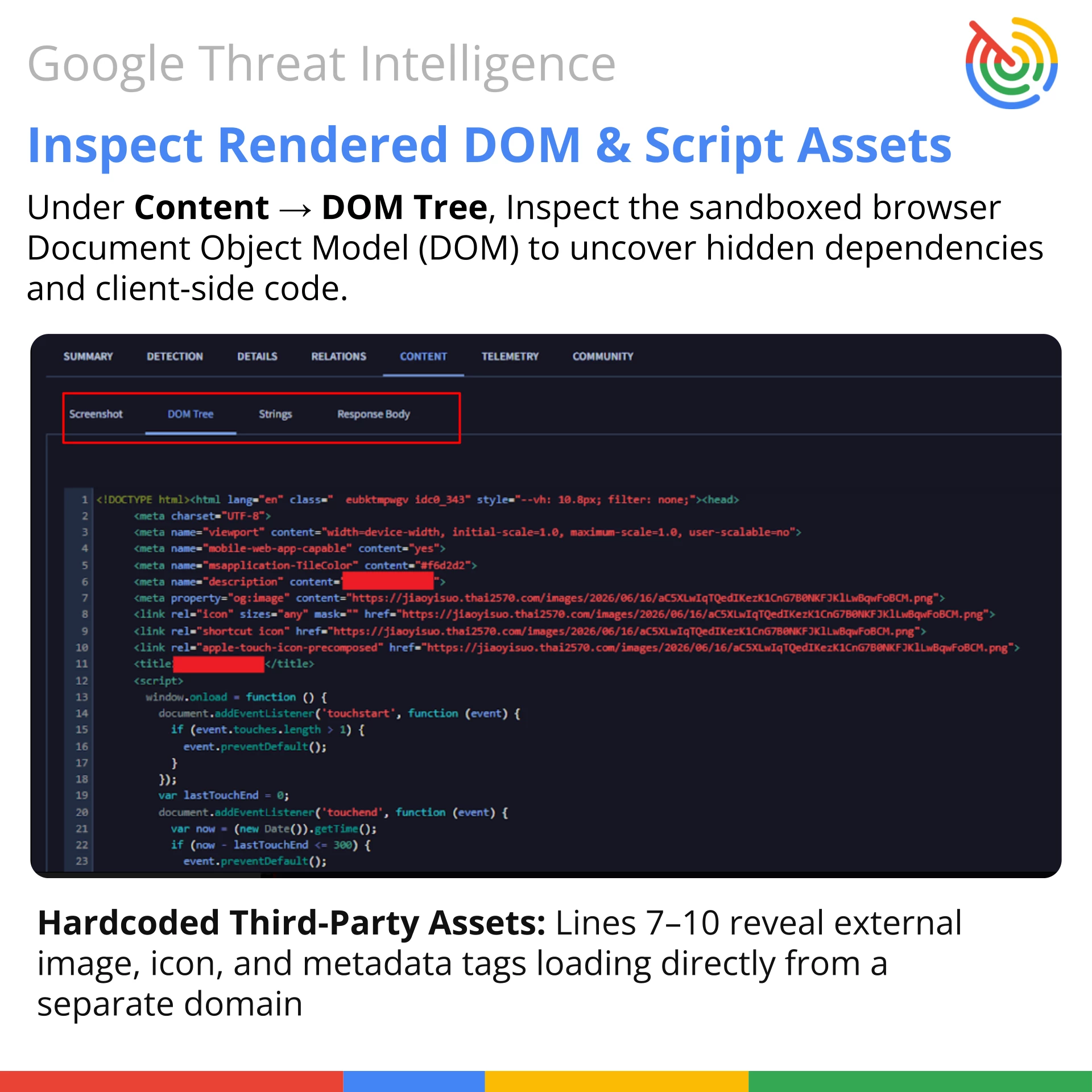
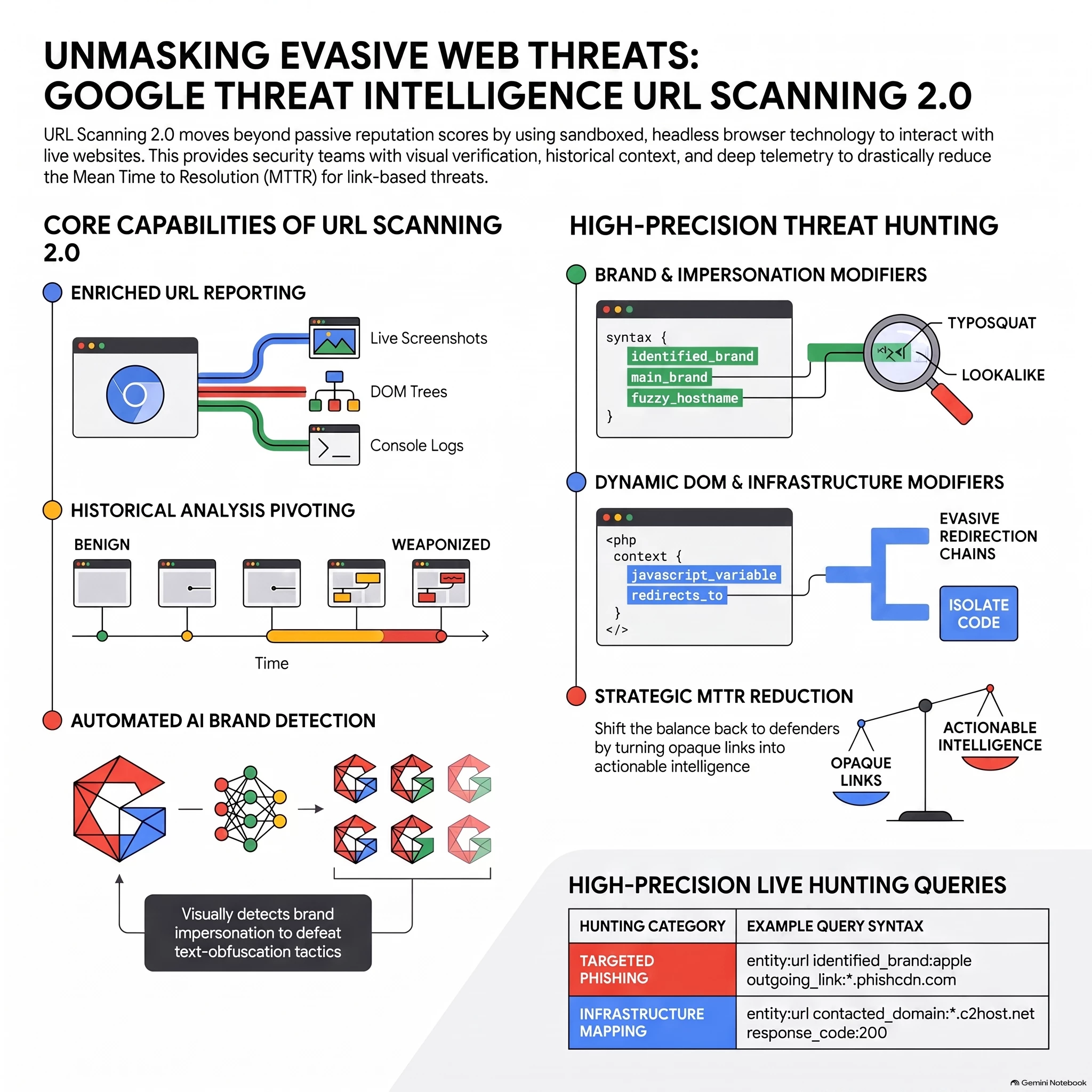
At the core of URL Scanning 2.0 is a dynamic approach to web threat analysis. Instead of relying on passive reputation scores, the system employs sandboxed, headless browser technology to interact with live websites. This allows security teams to visually verify threats through automated live screenshots and full page previews. By seeing exactly what a targeted victim would see, analysts can bypass text-obfuscation tactics. Additionally, the tool exposes crucial client-side telemetry, including Document Object Model (DOM) trees, console logs, and active session parameters.
A particularly powerful feature of this release is Historical Analysis Pivoting. Because attackers frequently change page behavior over time to evade analysis, URL Scanning 2.0 allows defenders to travel back through a URL's history using point-in-time snapshots. Analysts can replay the exact evolution of a page, re-rendering its past states to understand when and how a benign link was weaponized.
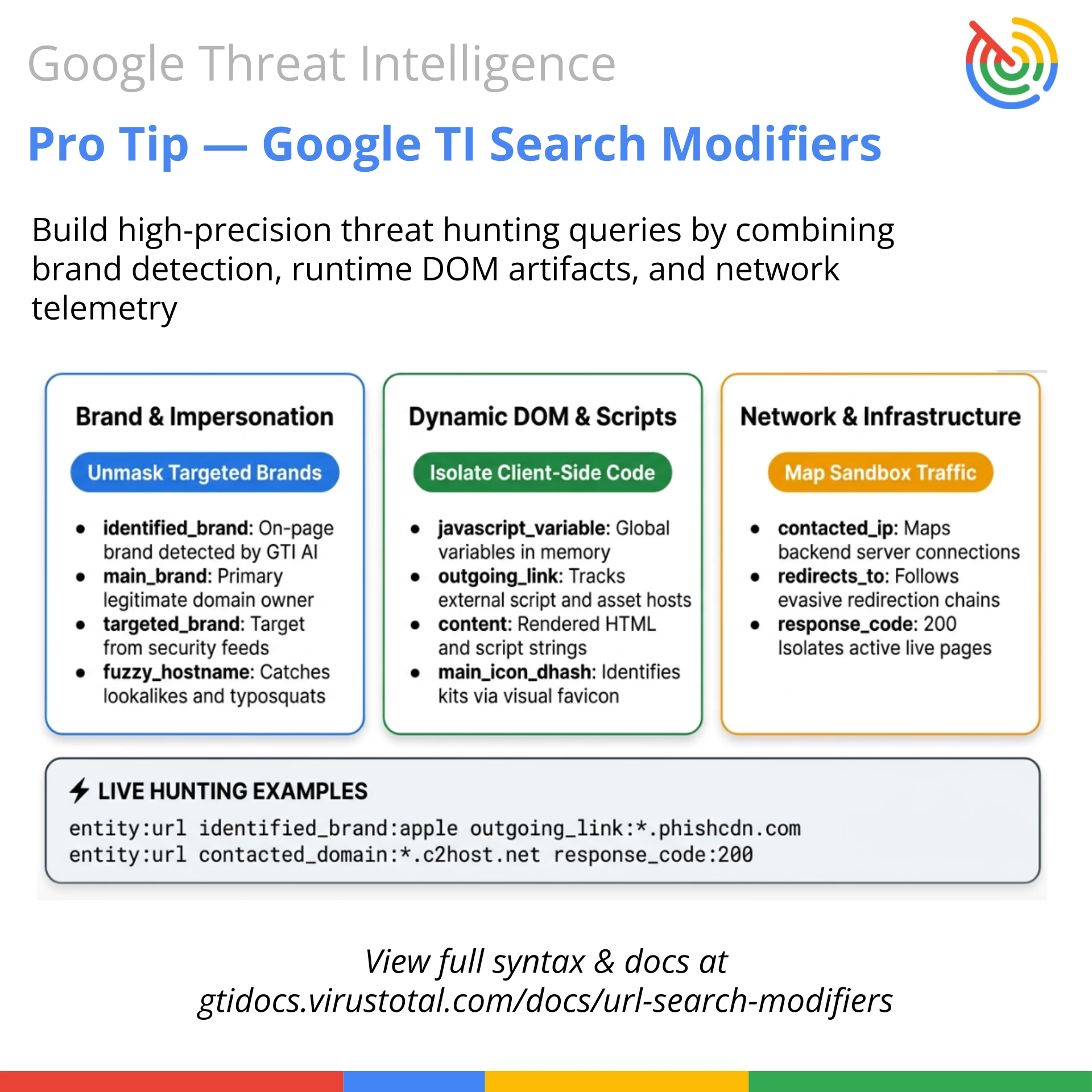
Automated artificial intelligence brand detection works to instantly uncover brand impersonation. This enables threat hunters to identify targeted organizations immediately and pivot to map out broader phishing campaigns. Supported by an array of specialized search modifiers, security teams can now query runtime DOM artifacts, network redirects, and brand alignments with high precision. URL Scanning 2.0 fundamentally shifts the balance back to defenders, turning opaque, evasive links into clear, actionable intelligence.
Additional Resources, Links, and Examples:
