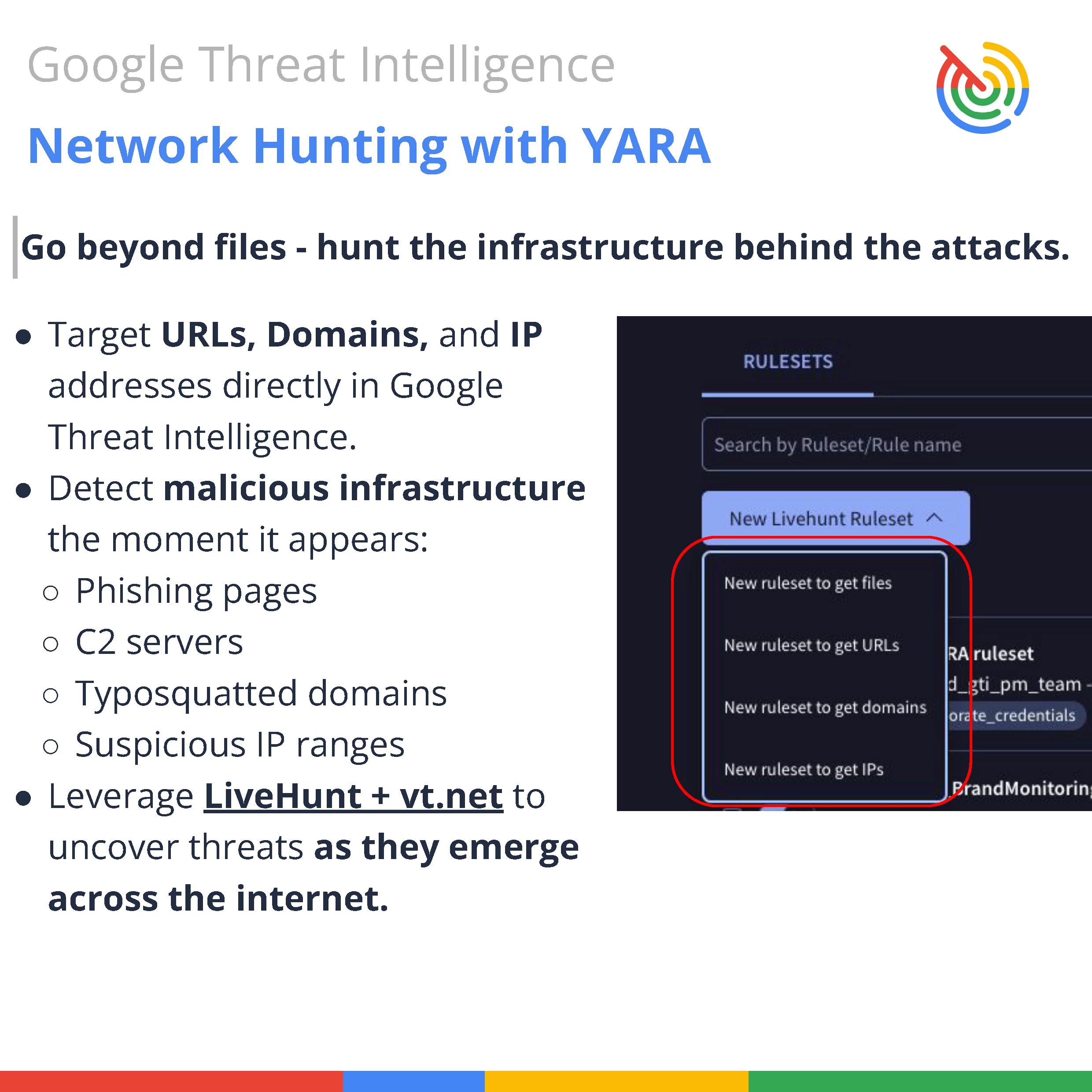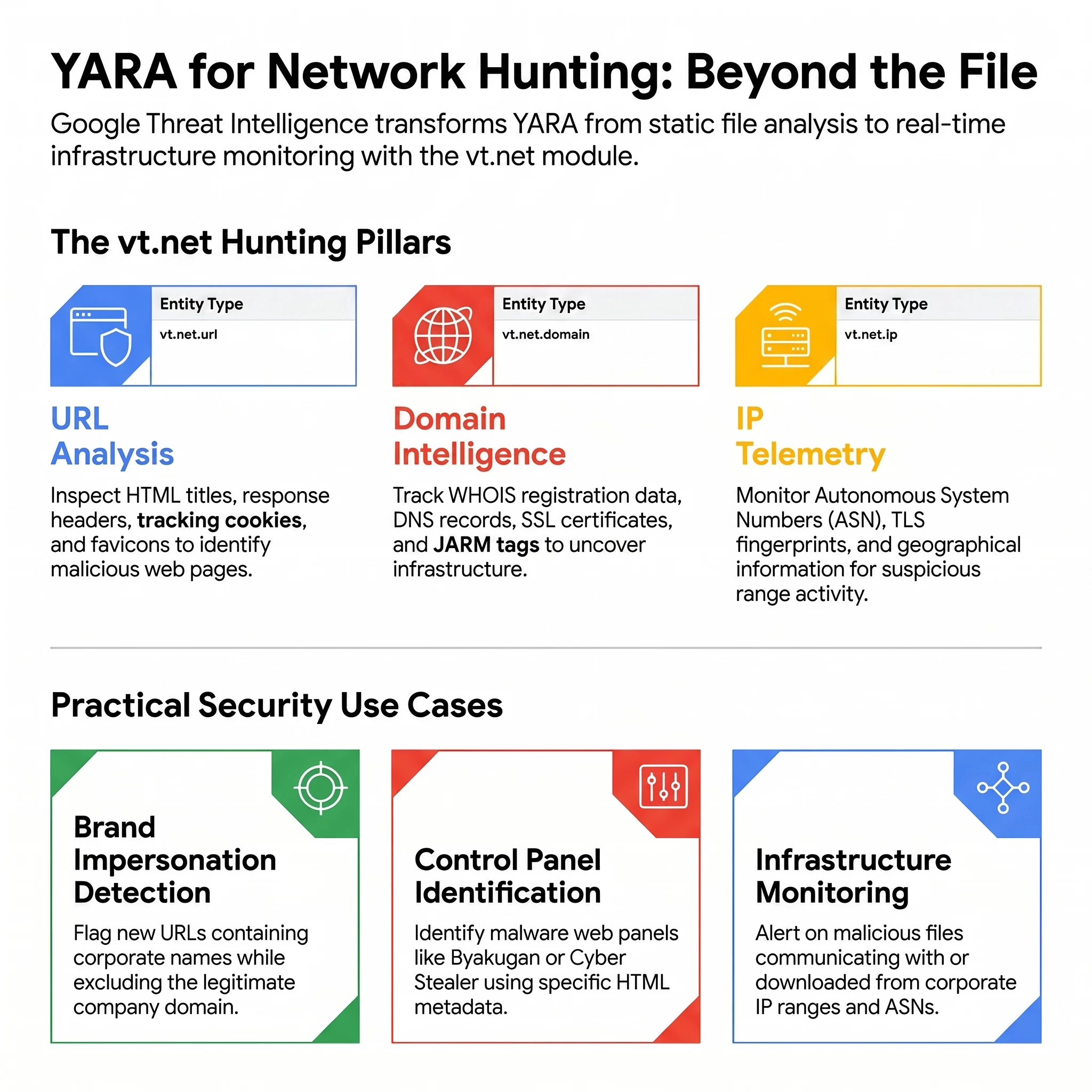

Threat detection strategies have traditionally centered around analyzing static files to identify malicious behavior. However, modern adversaries are highly agile, making it vital for security operations to look further upstream at the digital infrastructure powering cyberattacks. Google Threat Intelligence introduces a significant paradigm shift by expanding YARA capabilities into the realm of network hunting through the innovative vt.net module. This feature allows threat hunters to target URLs, domains, and IP addresses directly, uncovering malicious infrastructure the moment it surfaces across the internet.
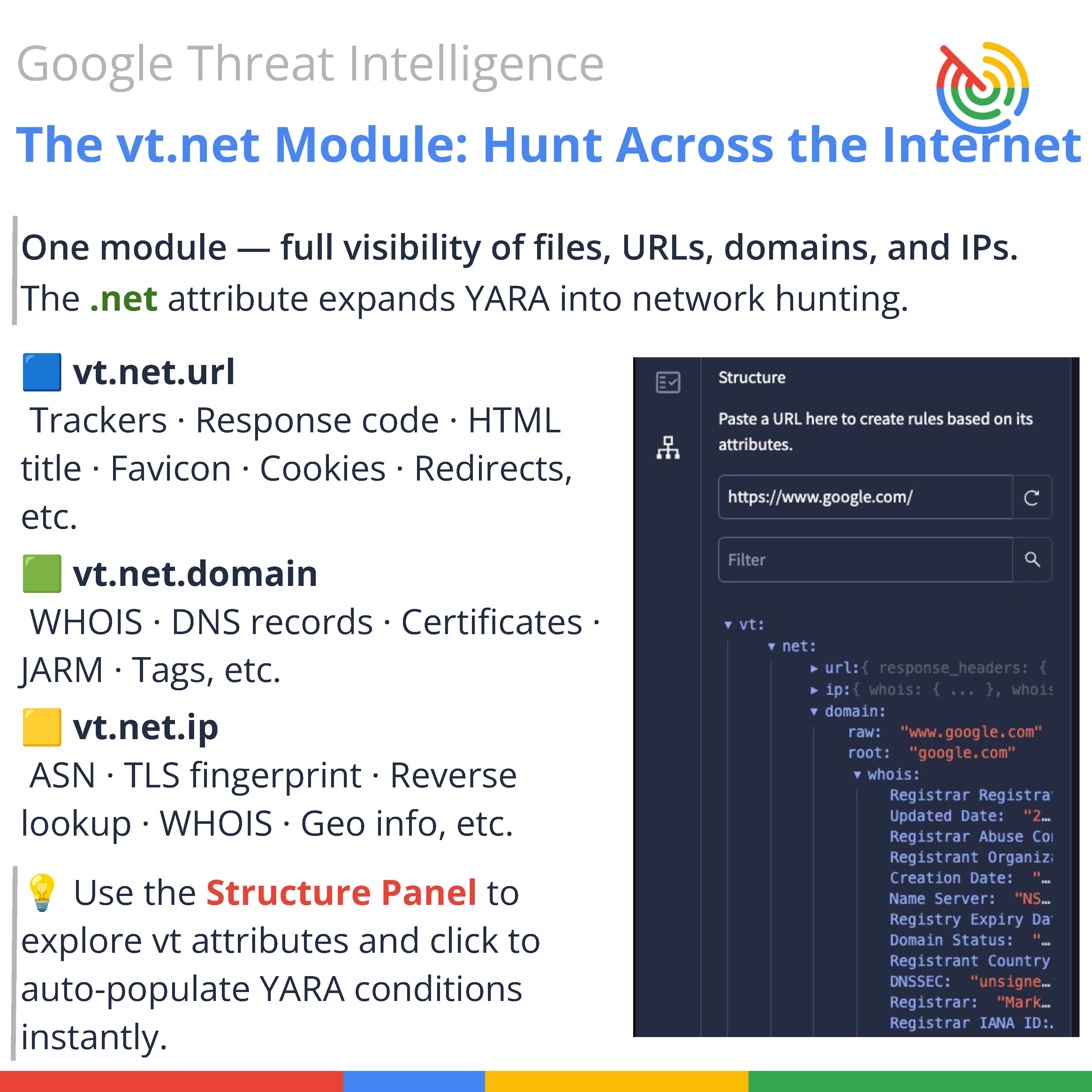
By leveraging LiveHunt combined with global network telemetry, security teams can detect emergent threats such as phishing pages, active command and control (C2) servers, typosquatted domains, and suspicious IP ranges in real time. The integration provides comprehensive visibility into critical web and network attributes. Hunters can track WHOIS registration data, DNS records, SSL certificates, response headers, tracking cookies, and HTML titles. Exploring these elements is made simple with the platform's Structure Panel, which allows analysts to seamlessly inspect attributes and auto-populate YARA conditions instantly.
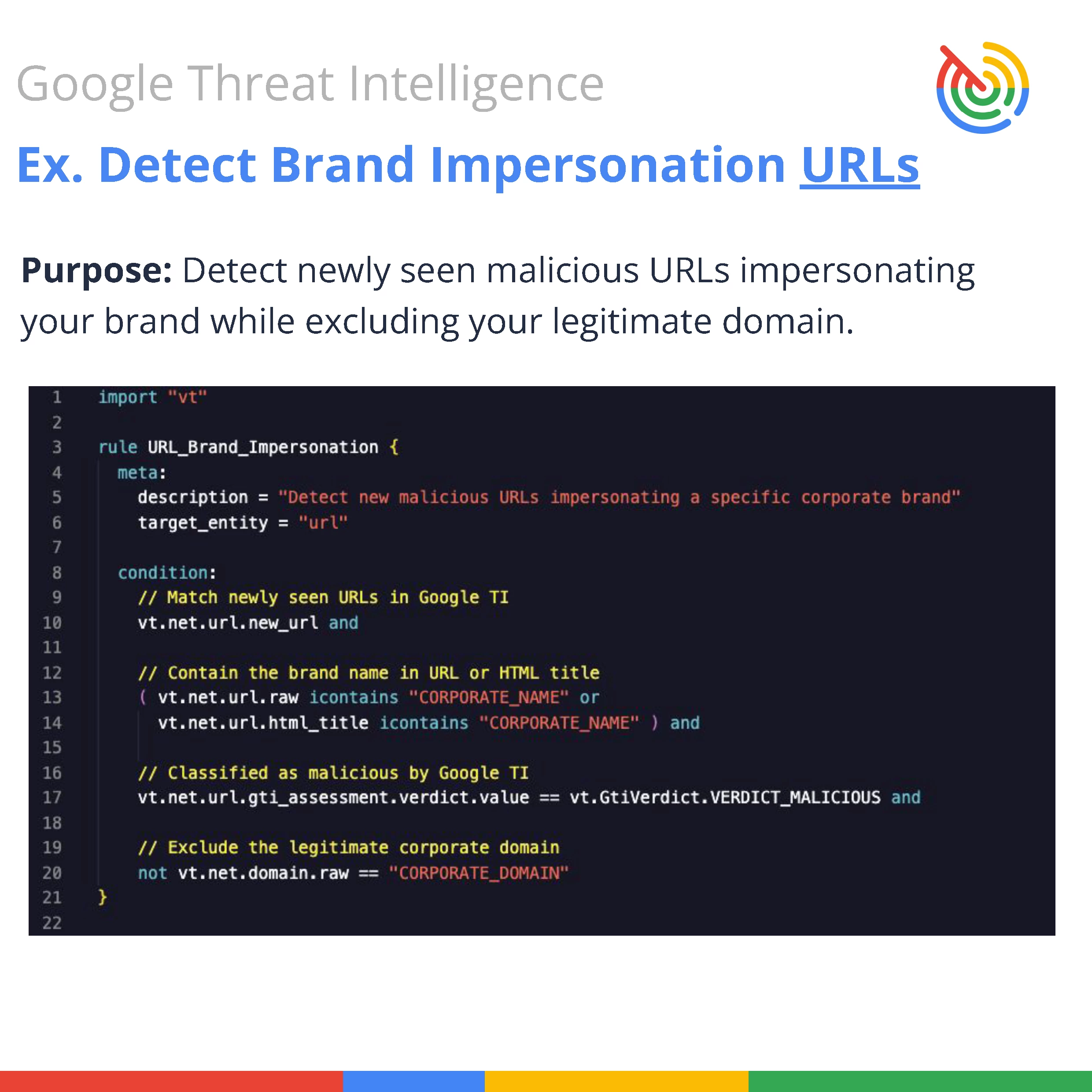
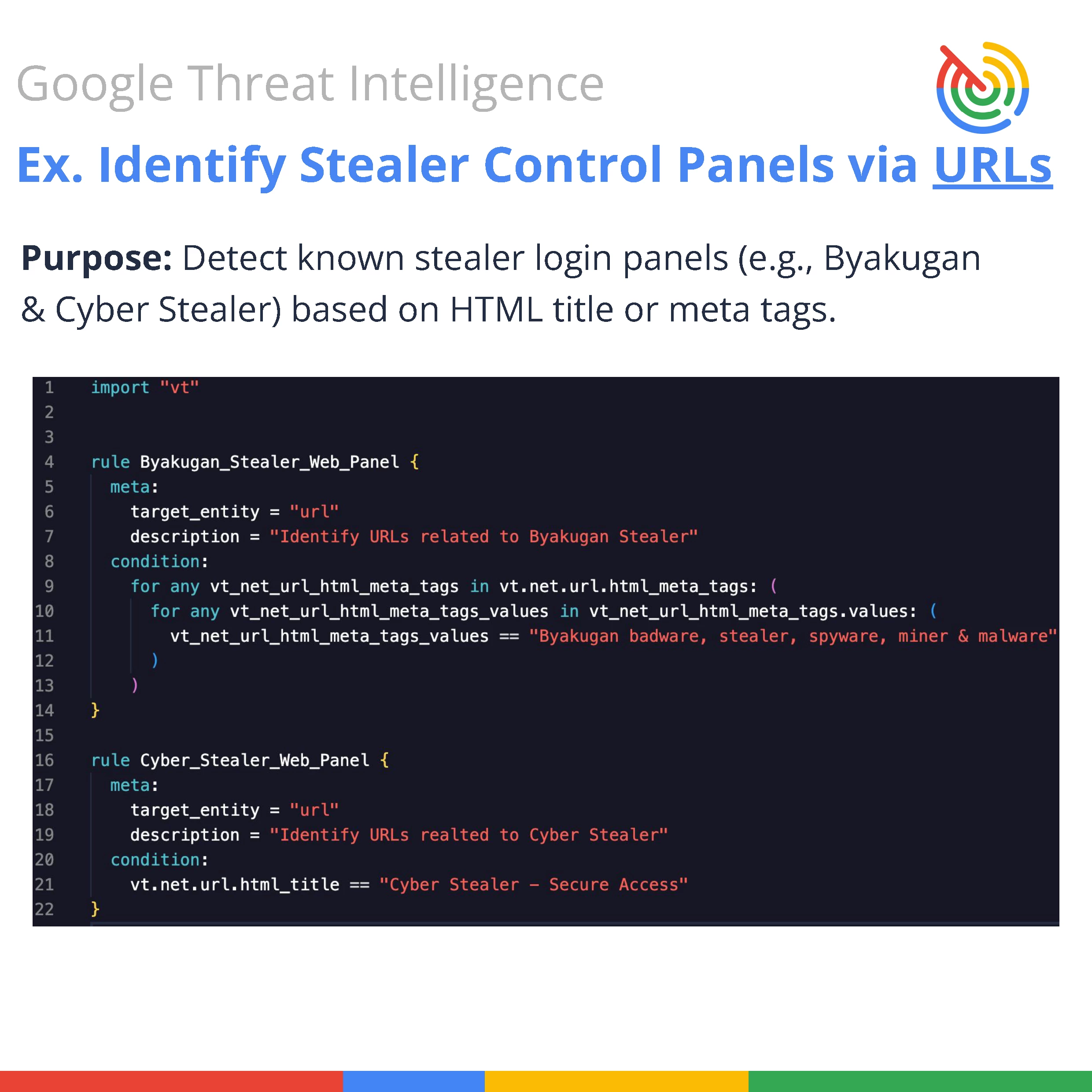
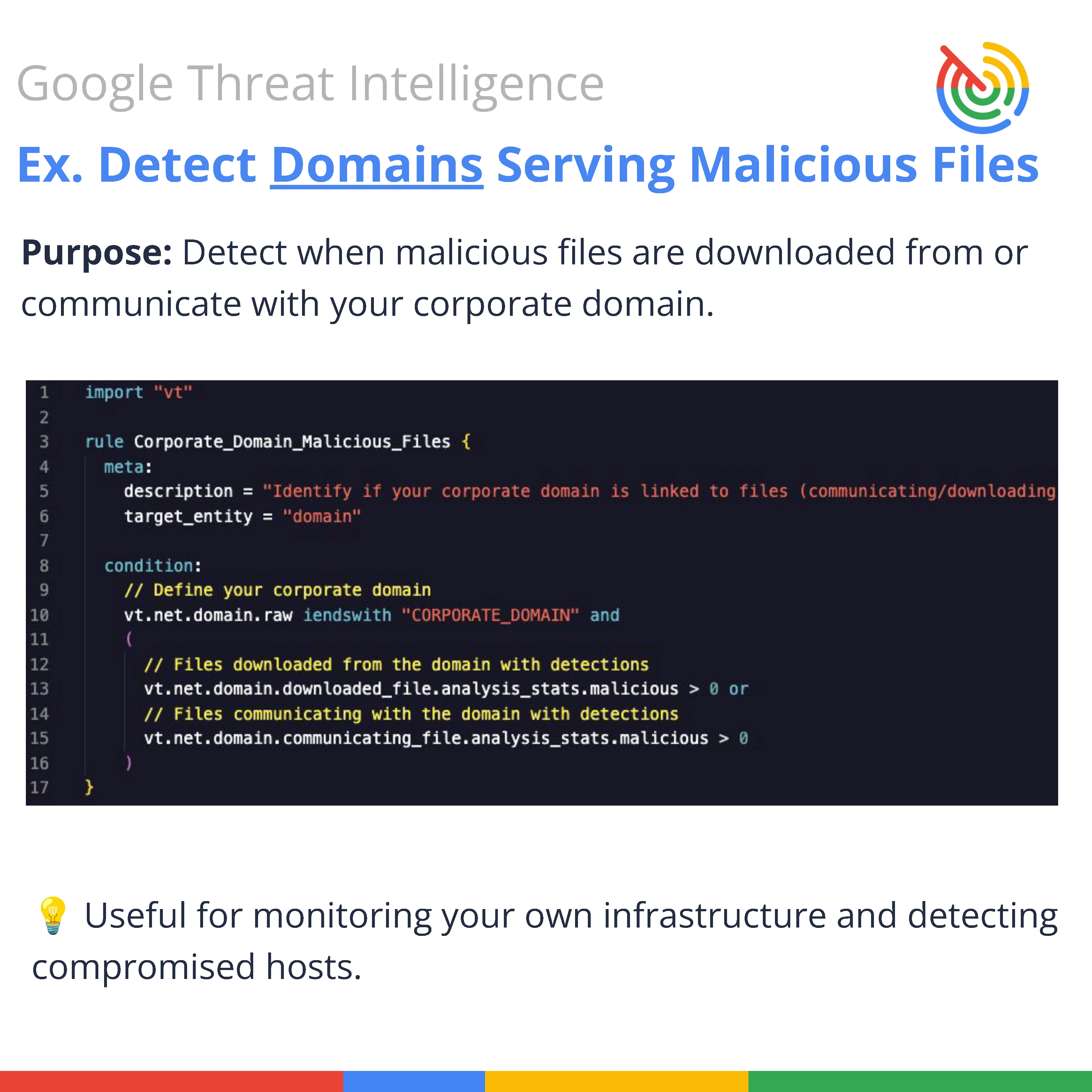
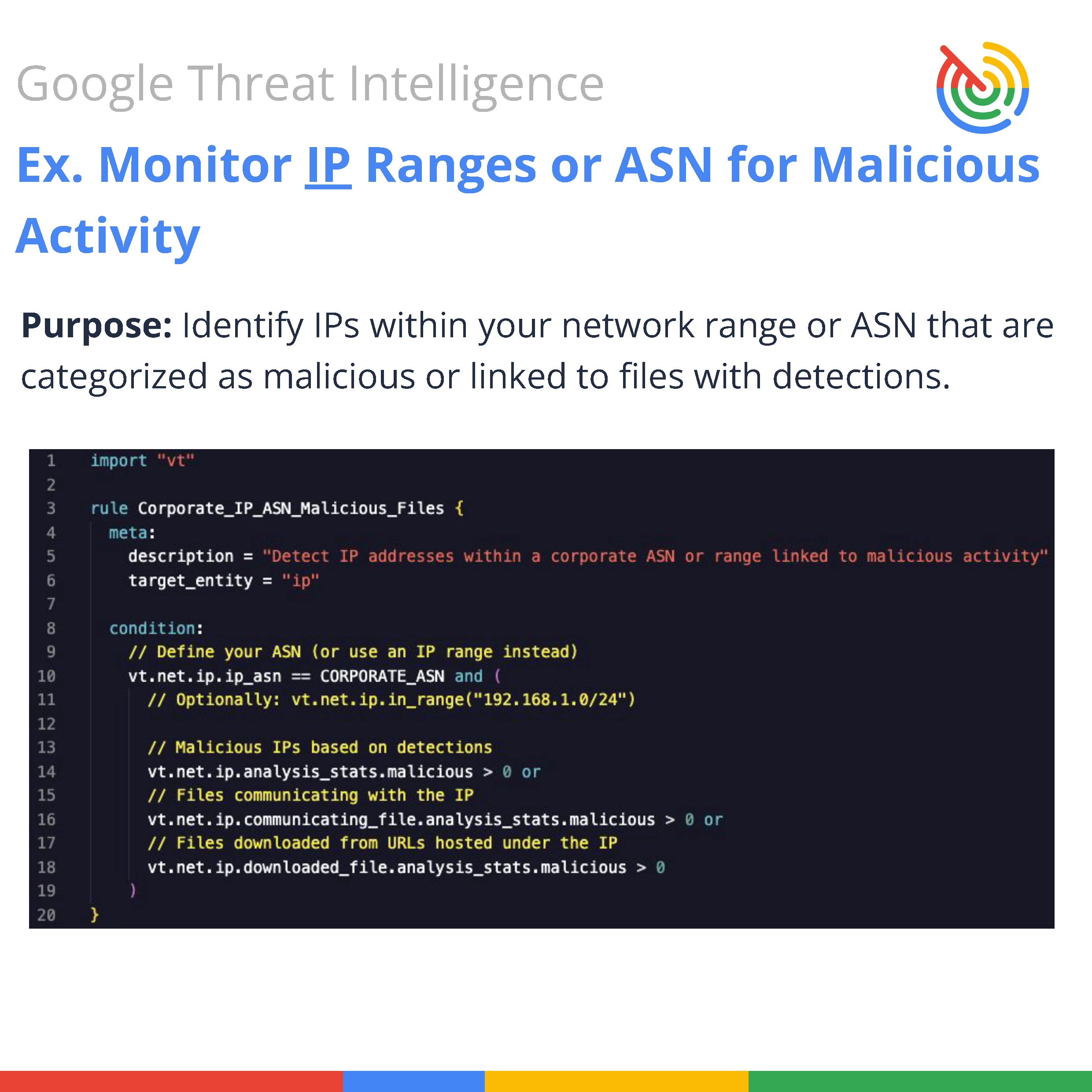
The practical applications of this network hunting capability are diverse and highly impactful. For instance, organizations can write rules to detect brand impersonation by flagging newly observed URLs that contain their corporate name while explicitly excluding their legitimate domain. Analysts can also identify the web control panels of specific malware strains, like Byakugan or Cyber Stealer, by matching HTML titles or specific metadata tags. Additionally, companies can monitor their own infrastructure by alerting on instances where malicious files communicate with or are downloaded from their corporate domains, IP ranges, or Autonomous System Numbers (ASNs).
This evolution transforms YARA from a localized file scanning tool into a proactive, global infrastructure monitoring mechanism. By embracing these capabilities, defenders can effectively disrupt cyber adversary networks before they impact corporate environments.