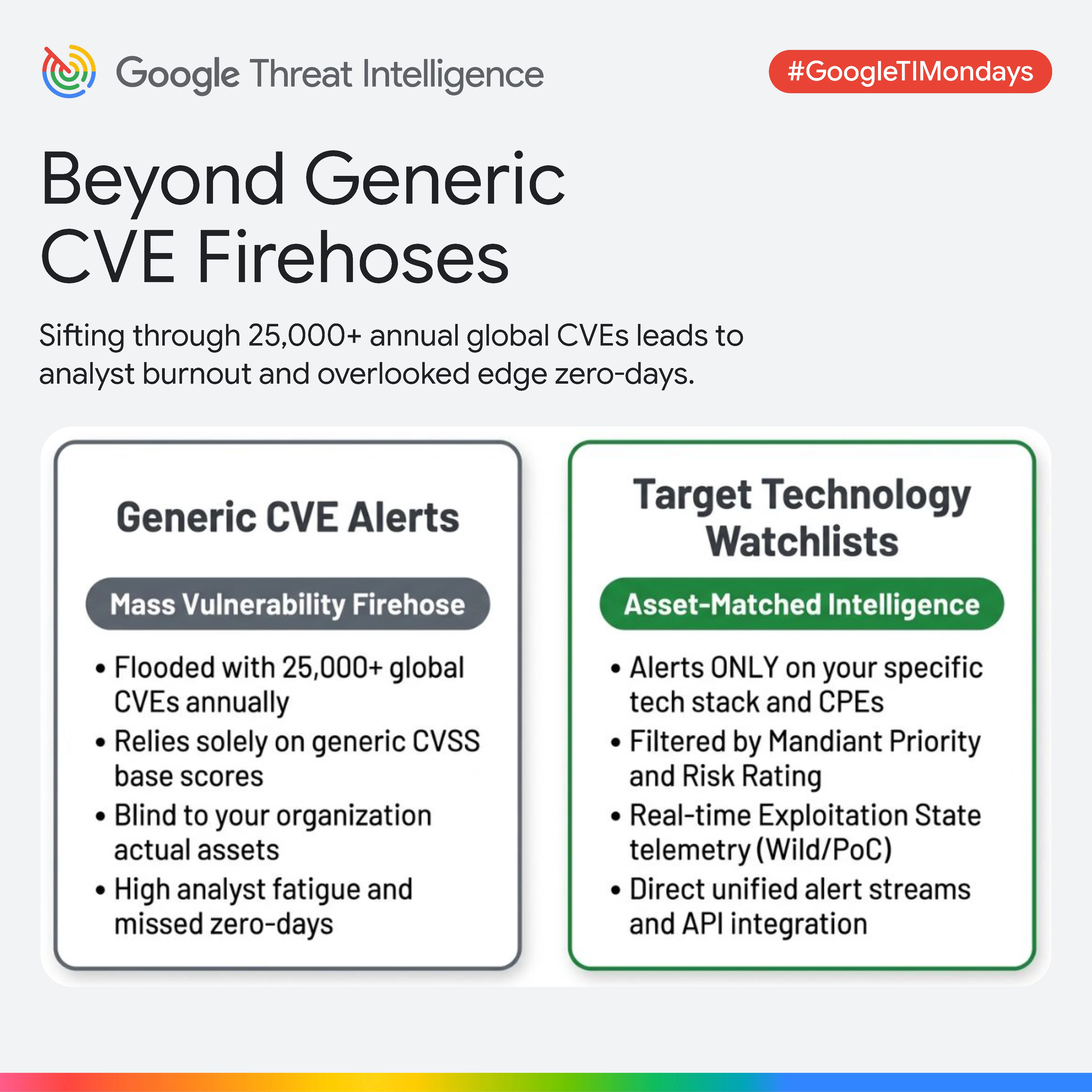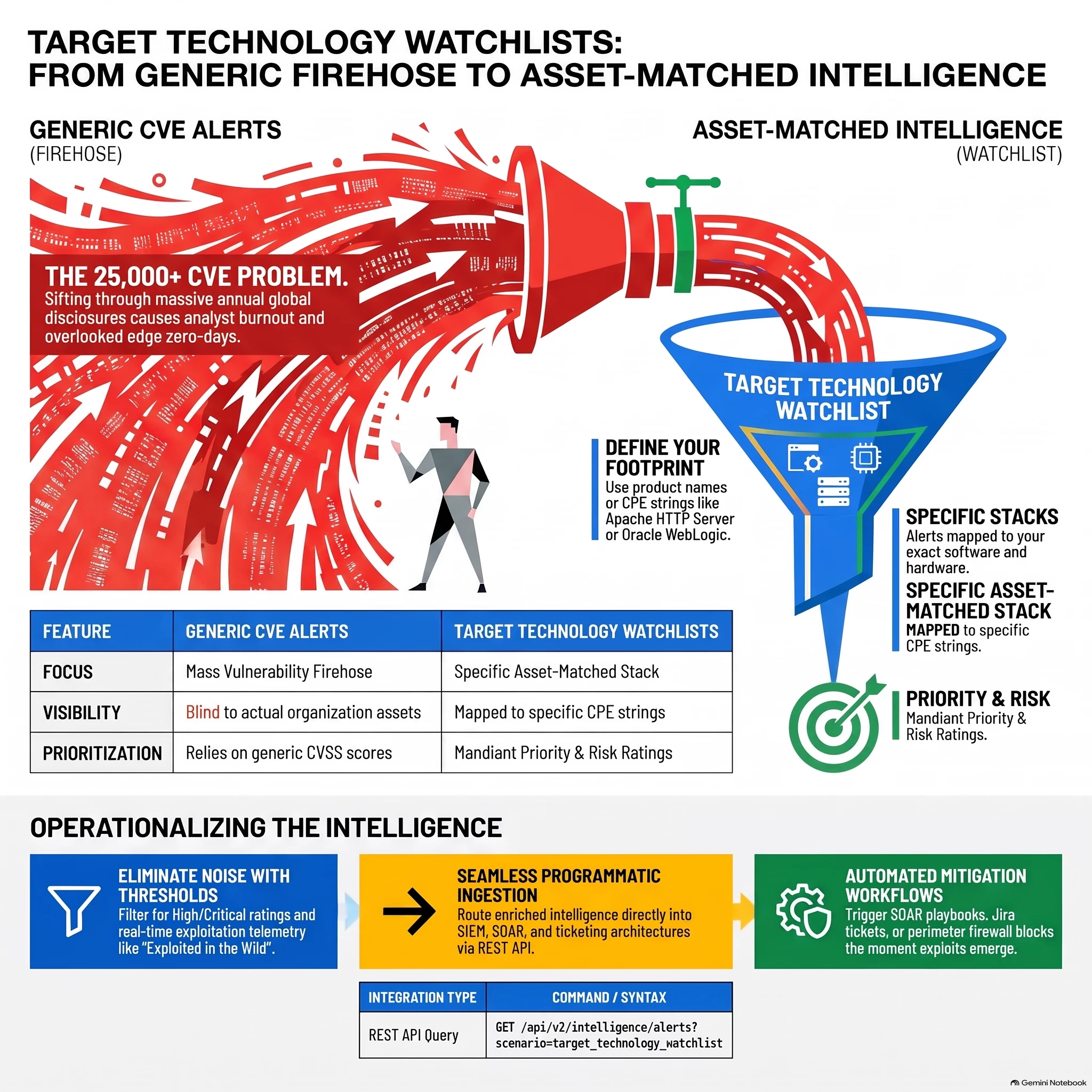

Security teams today face an overwhelming volume of vulnerability disclosures, with more than twenty-five thousand common vulnerabilities and exposures emerging each year. Sifting through this relentless stream often leads to acute analyst fatigue, while critical edge zero-day threats risk being overlooked. Relying solely on generic base scoring metrics without asset visibility makes prioritizing remediation exceptionally difficult. Google Threat Intelligence introduces Target Technology Watchlists to directly address this persistent operational challenge by delivering focused, asset-matched intelligence.
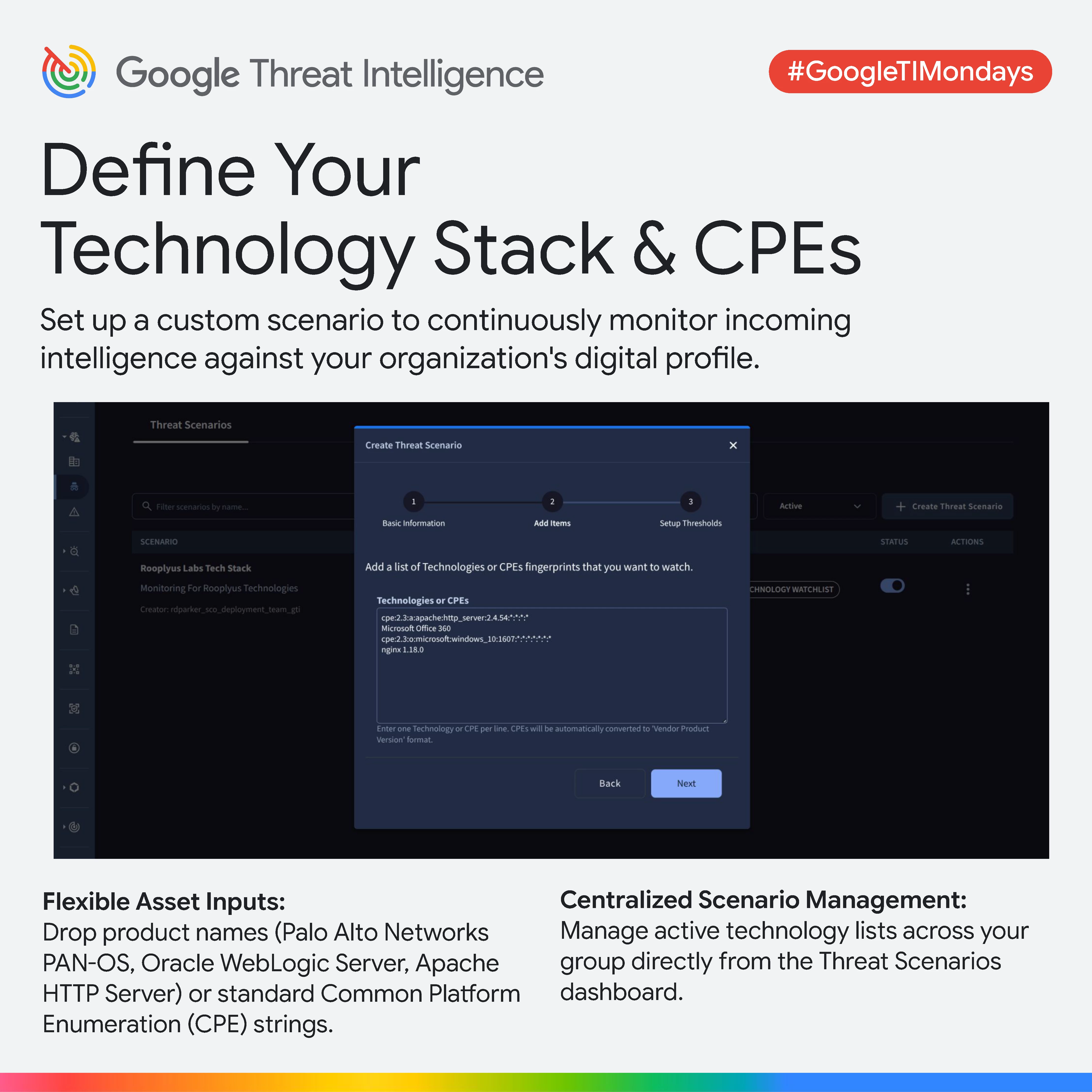
Target Technology Watchlists allow security professionals to define and monitor their exact technology footprint. Organizations can configure custom threat scenarios by supplying standard Common Platform Enumeration (CPE) strings or simple product names, such as Apache HTTP Server, Oracle WebLogic, or Palo Alto Networks PAN-OS. Instead of wading through irrelevant notices, teams receive alerts mapped strictly to the software and hardware components running within their enterprise environment.
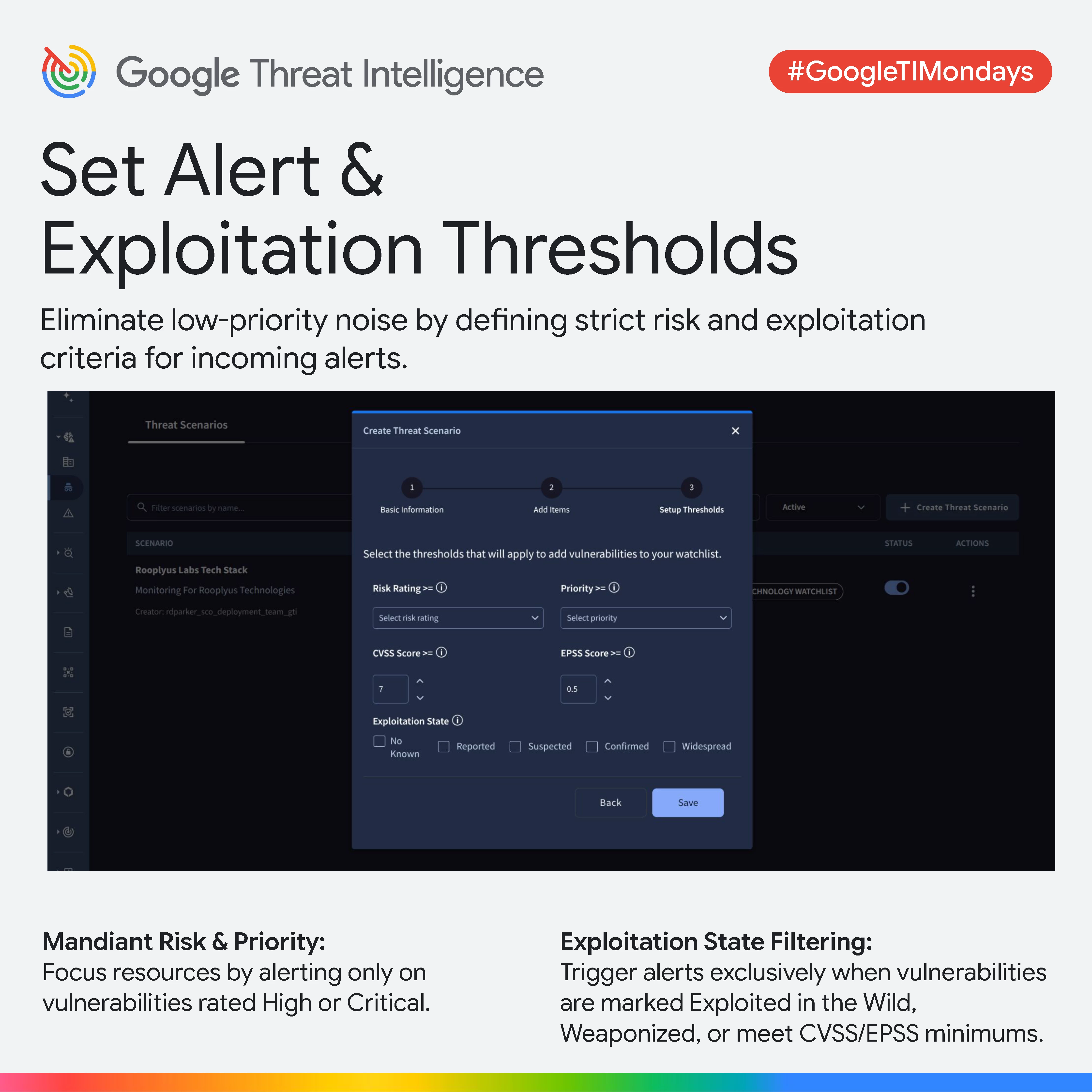
Beyond simple asset alignment, this capability enables precise noise reduction through granular alert thresholds. Security teams can focus their resources by filtering notices using Mandiant risk and priority scores, targeting only items rated High or Critical. Additionally, thresholds can incorporate real-time exploitation telemetry, highlighting whether a vulnerability is actively exploited in the wild, weaponized, or meeting specific score benchmarks. Incoming alerts are thoroughly enriched with actionable context, including exploit probability, attack vector analysis, and vendor patch availability.
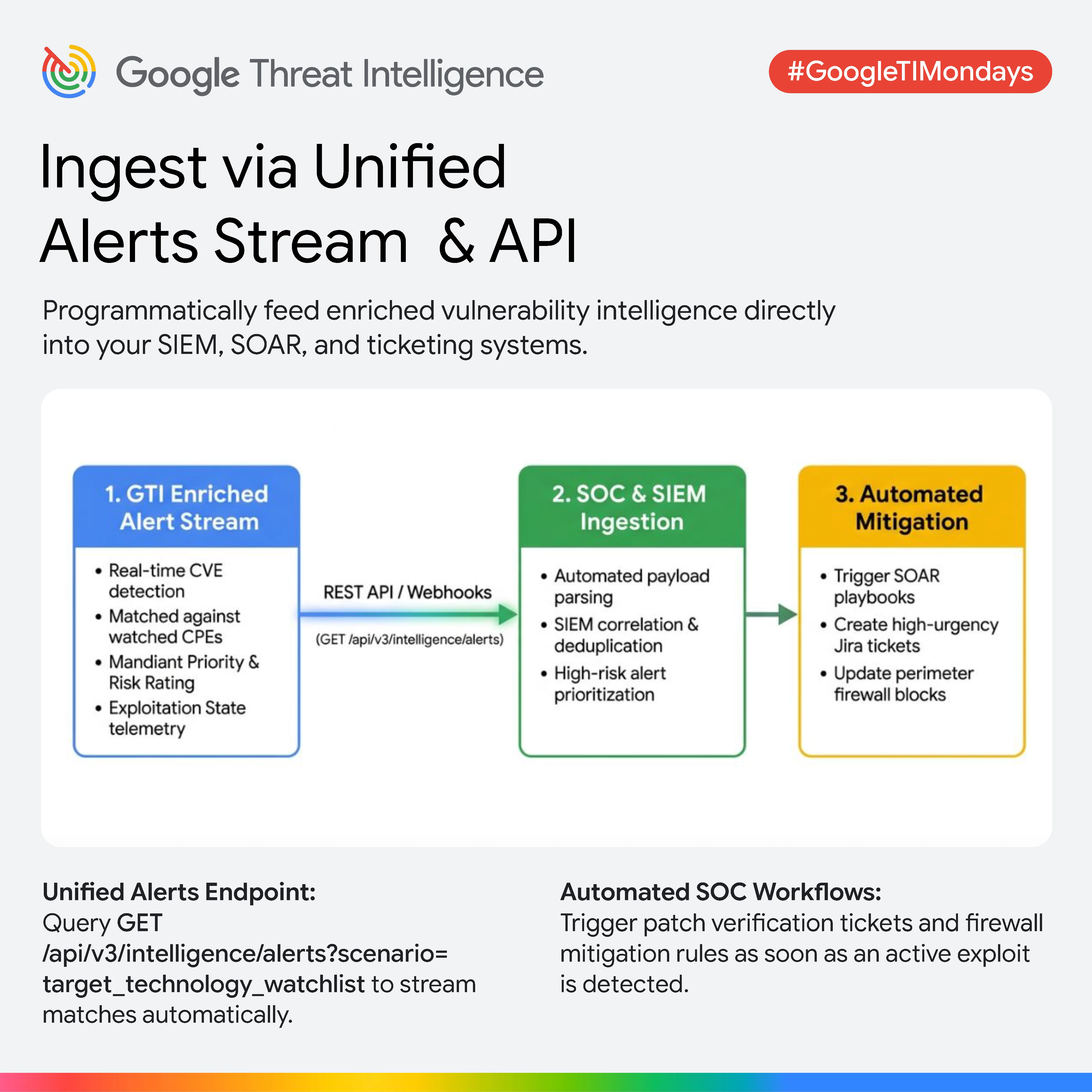
Integration is seamless and purpose-built for modern security operations. Through a unified alerts stream and REST API, incoming intelligence can be routed directly into existing SIEM, SOAR, and ticketing architectures. This programmatic ingestion empowers automated SOC workflows, allowing teams to instantly trigger patch verification tickets or implement perimeter firewall mitigation rules the moment an active exploit is detected. By moving away from generic firehoses toward precise, stack-specific awareness, organizations can significantly strengthen their overall defensive posture.