Question

Need help on UDM Enrichment

  • August 27, 2026
  • 4 replies
  • 56 views

Ameya
Forum|alt.badge.img

Hi Everyone,

I have a problem around UDM enrichment and I would appreciate if someone can guide me to resolve this. 

Problem :

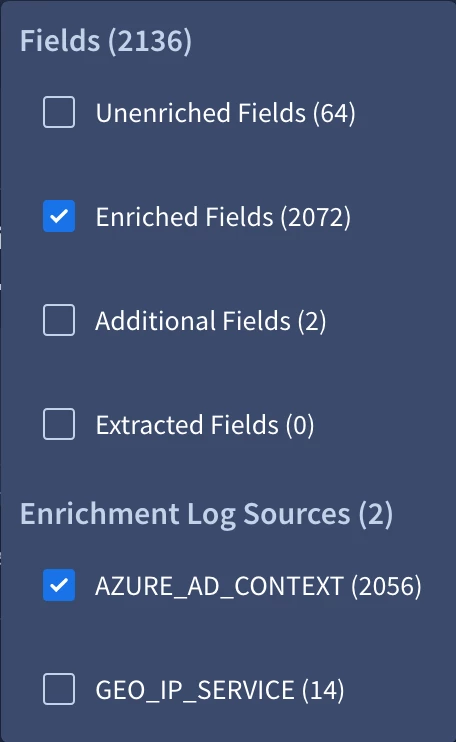
The current user data is enriched with Azure AD Context and it is pulling all the data that is associated with the user present in the Azure AD. But, every user’s attributes have at least 500+ key-value pairs which are getting enriched as a part of the AD Context which is making the event data heavy with essentially too much garbage data that we don’t need at all. Below is one example:


This screenshot is from the event details under the event tab:
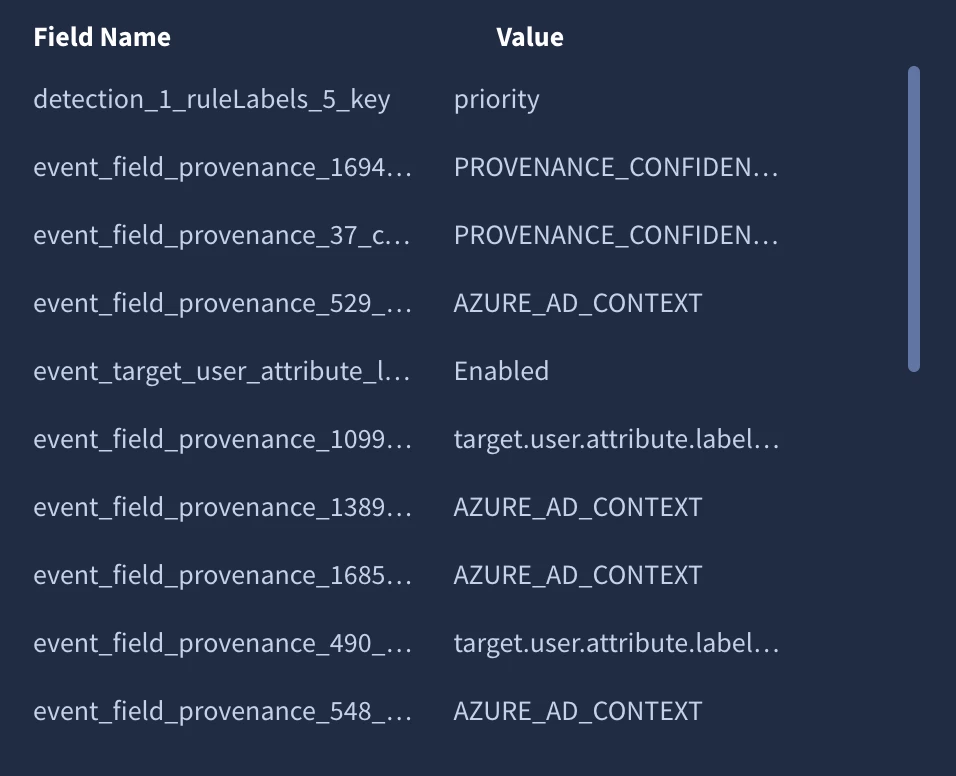
Because of this, the actual event/incident details are fully buried under this garbage.


This is the SIEM Event details :


I have checked the documentation and did not find any way to remove the user attribute fields or configuration of event enrichment.


Thanks in advance!

4 replies

MitchellR
Forum|alt.badge.img+2
  • Bronze 1
  • August 27, 2026

Hi ​@Ameya, there are two paths you could take here:

  1. write a parser extension that no-ops the extraneous fields you’re receiving from the source 
  2. disable the applicable enrichment block(s) to prevent said enrichment from occurring (docs here: https://docs.cloud.google.com/chronicle/docs/event-processing/block-enrichment-flows)

Given the massive number of enrichment fields shown there, it’s also possible that the provenance fields specifically are incorrectly stitching together / keying off an identifier, thus merging unrelated entities and leading to the large excess in unhelpful fields? 


Ameya
Forum|alt.badge.img
  • Author
  • New Member
  • August 28, 2026

Hi ​@MitchellR,

Thanks for the reply!

For the first option, Do I have to rewrite the whole parser logic in the extension or just the part that removes the extraneous fields?


MitchellR
Forum|alt.badge.img+2
  • Bronze 1
  • August 28, 2026

Hi ​@MitchellR,

Thanks for the reply!

For the first option, Do I have to rewrite the whole parser logic in the extension or just the part that removes the extraneous fields?

You would only target the fields you’re looking to change/drop. The rest of the parser can stay as-is, and your extension would take precedence on the specific fields you target. The flow would be default parser > extension > resulting data. 


hzmndt
Staff
Forum|alt.badge.img+12
  • Staff
  • August 29, 2026

Another way maybe can do from the source, only ingest the selected fileds, but need custom ingestion via cloud storage or via your data pipeline: 

Filter at the Ingestion Source (Microsoft Graph $select) — Best Practice

If ingesting Azure AD context via the Microsoft Graph API / Azure AD Feed:

  • Restrict the queried attributes by using the $select OData query parameter in the API feed or collector script.
  • Example:

    $select=id,displayName,userPrincipalName,mail,department,jobTitle,manager,accountEnabled,createdDateTime

  • Why this is preferred: It prevents large, unnecessary directory extension payloads (500+ key-value pairs) from consuming network bandwidth, ingestion quota, and processing overhead before they even reach Google SecOps.