Could someone provide an example of the table HTML for the predefined views?
I would like to use this template to display JSON results from a QRadar AQL query.
The current template uses static results. What modifications are needed to configure it to use dynamic JSON results and include fields such as Source IP, User-Agent, and Location?
Thank you!
Best answer by yogesh_mahera
<table>
  <thead>
    <tr>
      <th>Source IP</th>
      <th>User-Agent</th>
      <th>Location</th>
      <!-- Add more columns as needed -->
    </tr>
  </thead>
  <tbody id="dynamic-data">
    <!-- This section will be populated dynamically with JSON results -->
  </tbody>
</table>

// Assume 'jsonData' is the JSON result from the QRadar AQL query
const tableBody = document.getElementById('dynamic-data');

jsonData.forEach((row) => {
  const tableRow = document.createElement('tr');
  tableRow.innerHTML = `
    <td>${row.SourceIP}</td>
    <td>${row.UserAgent}</td>
    <td>${row.Location}</td>
    <!-- Add more columns as needed -->
  `;
  tableBody.appendChild(tableRow);
});
If you chose a key (theKey) from a JsonResult, it outputs a comma separated list of results e.g. {},{}, so you might need to encapsulate the result in [] so that after parsing, when JS runs, it appears right.
If you chose a key (theKey) from a JsonResult, it outputs a comma separated list of results e.g. {},{}, so you might need to encapsulate the result in [] so that after parsing, when JS runs, it appears right.
I hope you are well, I need to create a table in html for a Default Case View that contains the information of the alerts, following your example I could call fullJsonPayload = [ActionName.JsonResult]; but this action receives as mandatory a parameter called “case id”, how could I send this parameter ? or otherwise what would be the best way to paint these alerts by case...
I hope you are well, I need to create a table in html for a Default Case View that contains the information of the alerts, following your example I could call fullJsonPayload = [ActionName.JsonResult]; but this action receives as mandatory a parameter called “case id”, how could I send this parameter ? or otherwise what would be the best way to paint these alerts by case...
Thanks greetings from colombia
HTML can only read data from the playbook/Actions, they cannot perform actions or provide input it is a 1 way process. So there is no way for HTML table to provide info.
You have to architect the playbook in a way that the info is created regardless of HTML tables
HTML can only read data from the playbook/Actions, they cannot perform actions or provide input it is a 1 way process. So there is no way for HTML table to provide info.
You have to architect the playbook in a way that the info is created regardless of HTML tables
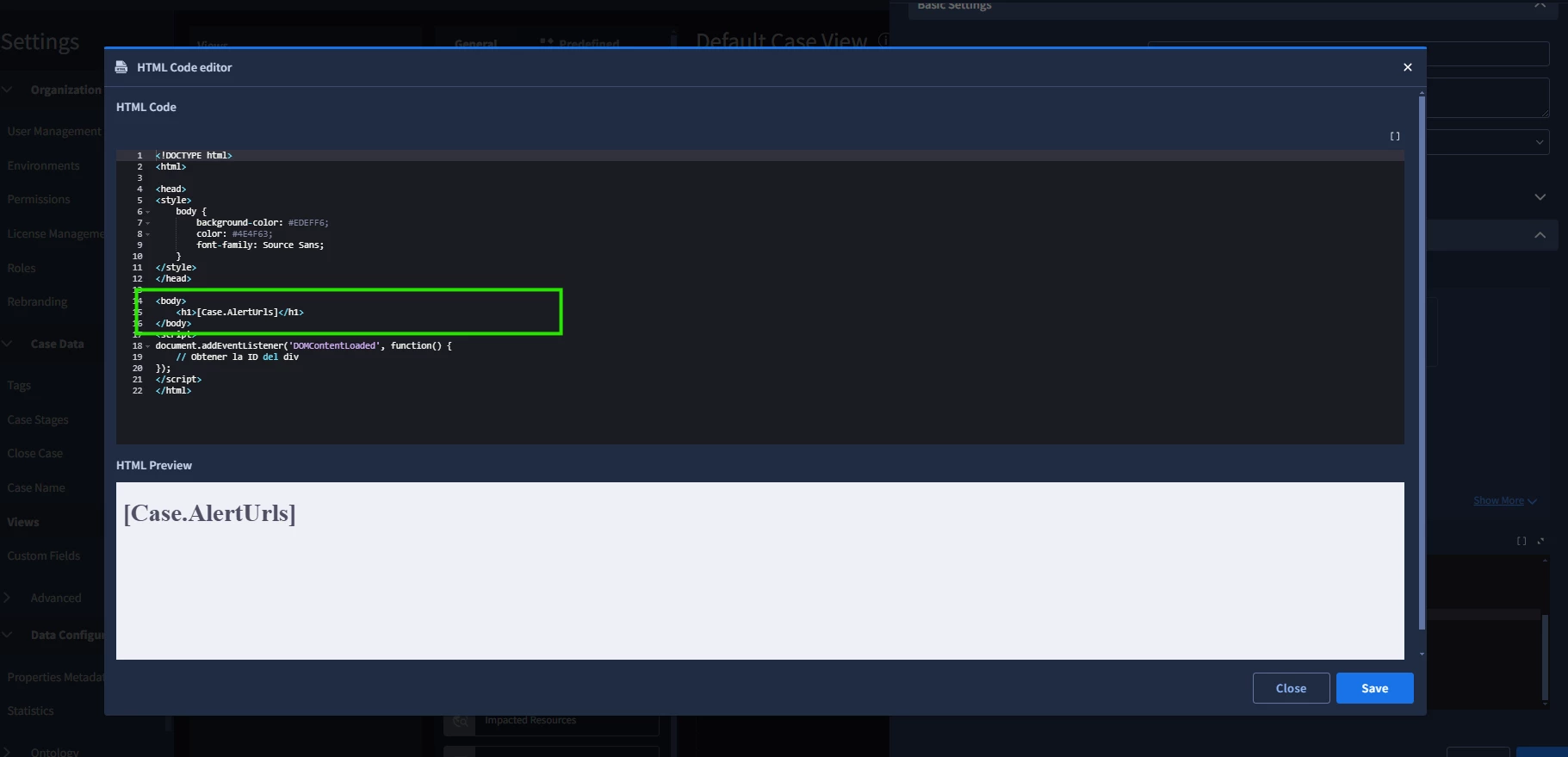
Hi again, Is it possible to paint an html table using a Case Context Values ? or a comment of a especific case?
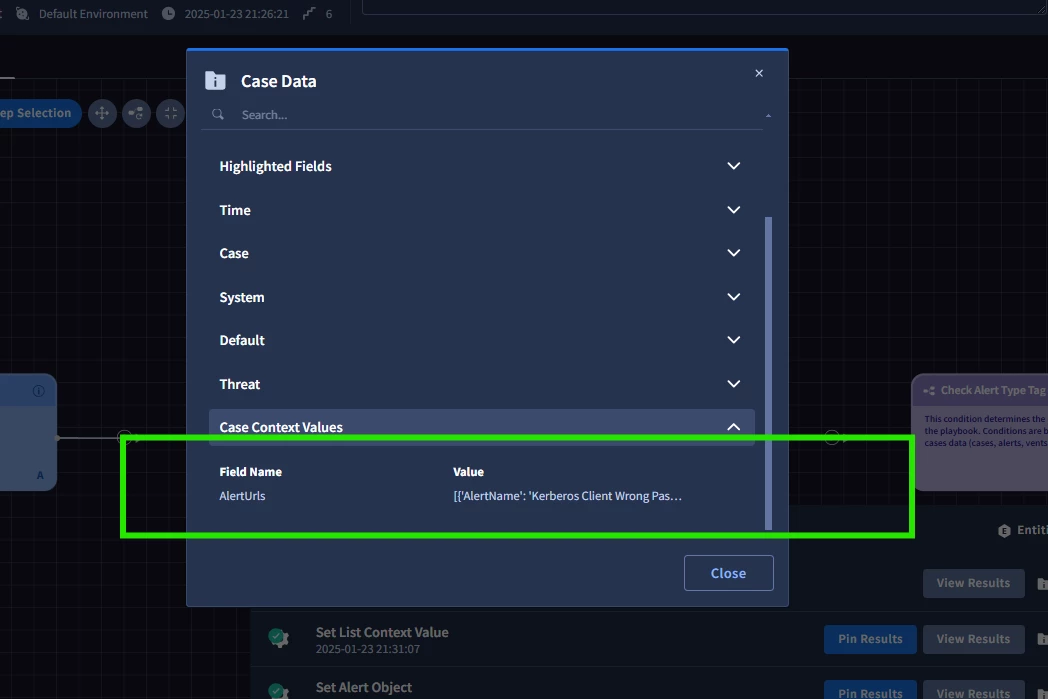
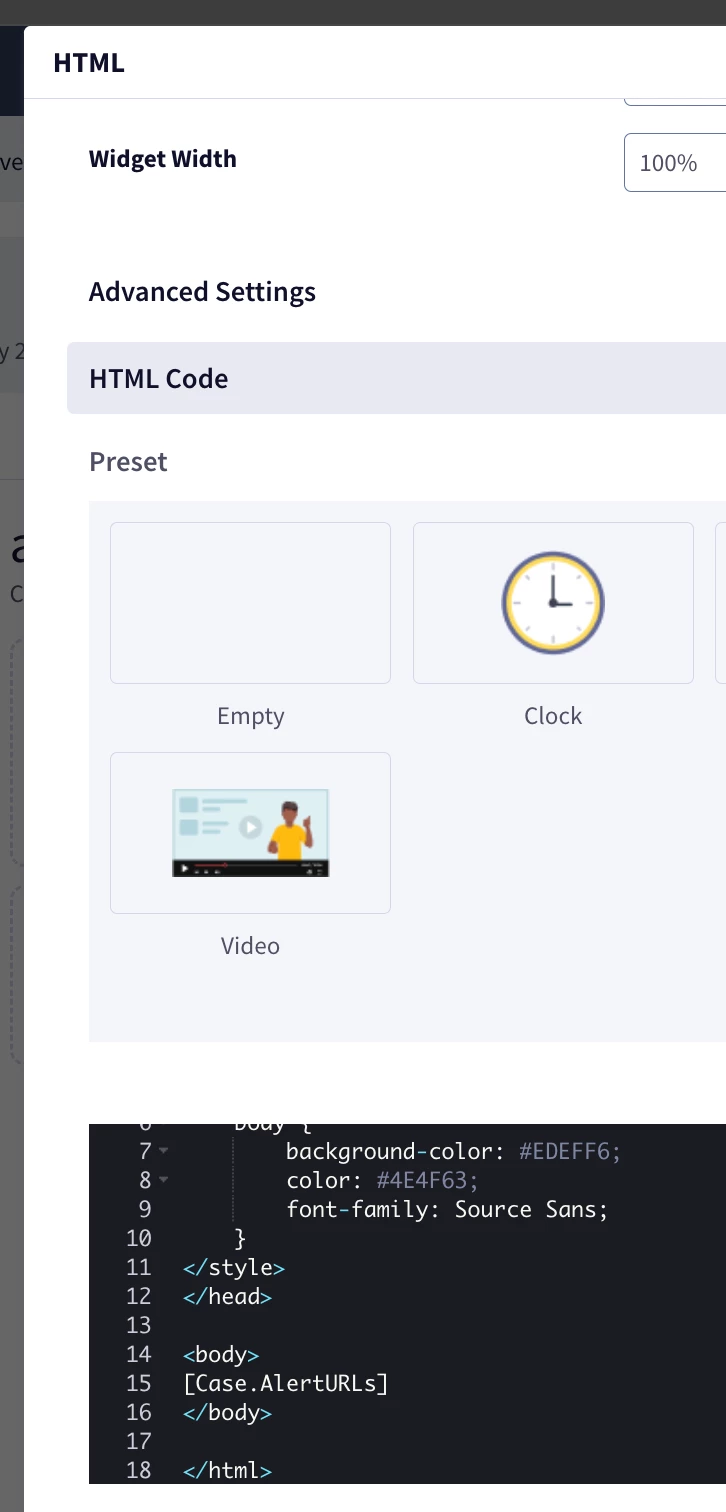
i have this playbook which has a variable set in the case of
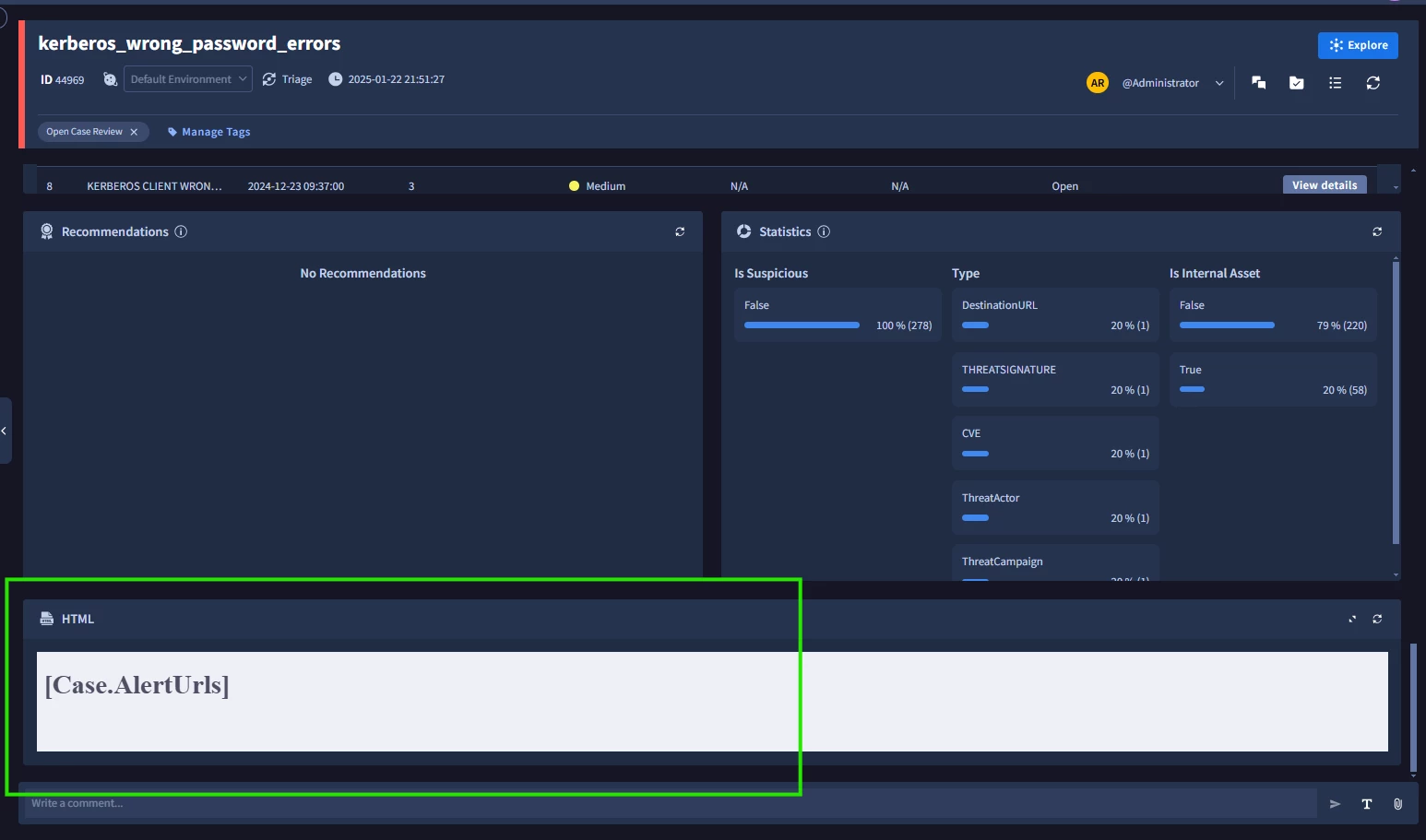
But when I try to retrieve the information from the Case.AlertUrls variable it does not show me any information.
Hi again, Is it possible to paint an html table using a Case Context Values ? or a comment of a especific case?
i have this playbook which has a variable set in the case of
But when I try to retrieve the information from the Case.AlertUrls variable it does not show me any information.
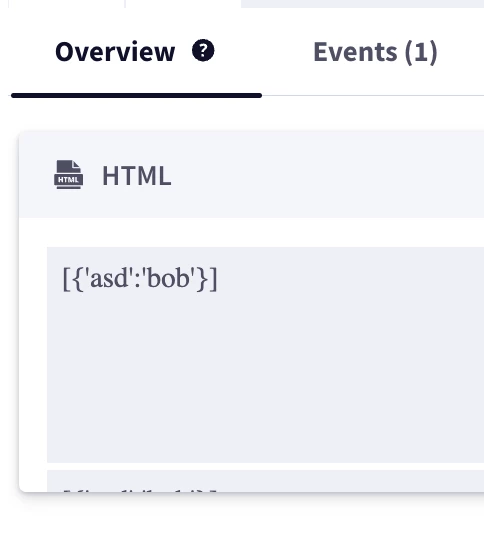
and this is the result
Hope your Help
¡Thanks!
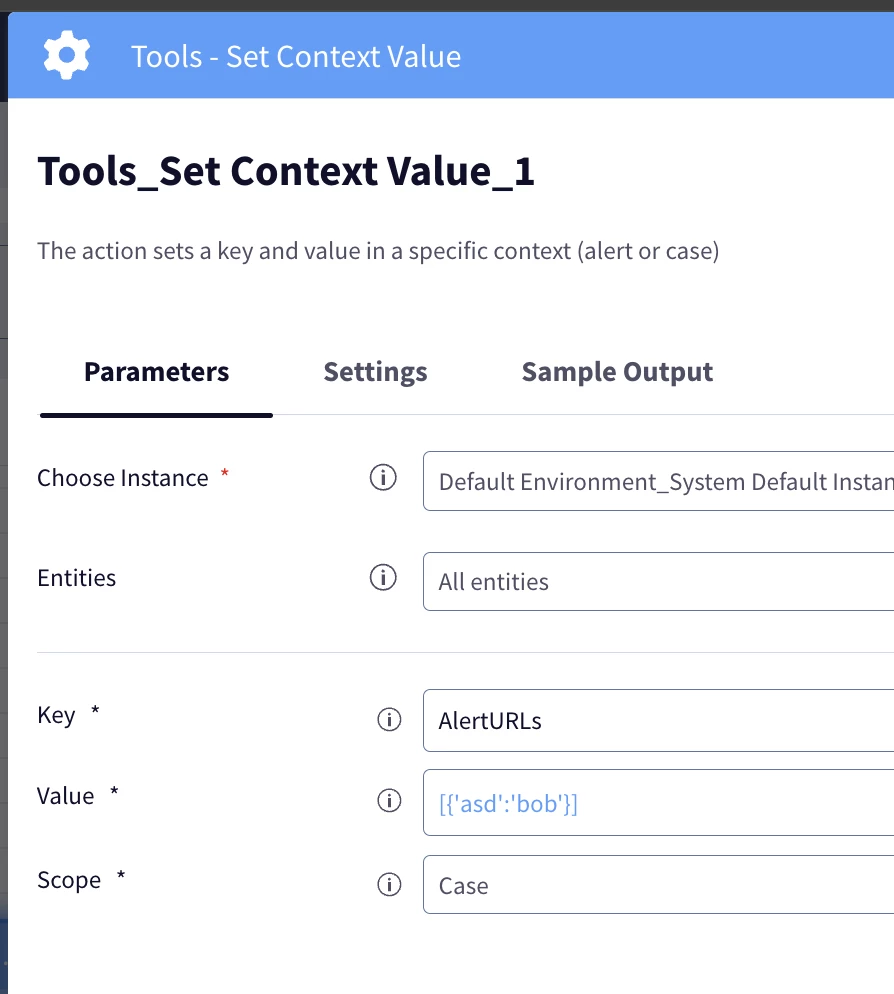
Here is a sample
The first image you have showing the data exists, this is in s simulated case. The image of it not working is a real case. Is there a chance they have different data in and therefore theHTML is not parsing to a value ?
HTML can only read data from the playbook/Actions, they cannot perform actions or provide input it is a 1 way process. So there is no way for HTML table to provide info.
You have to architect the playbook in a way that the info is created regardless of HTML tables
I`m trying to build a widget with multiple tabs (like in VT), each tab will present different JSON result.
This works for me only for single JSON, not multiple
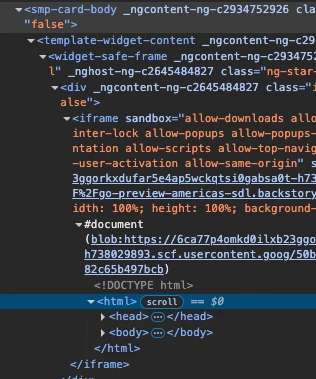
Yes this is 'normal' HTML/JS I suggest using browser devtools to load the page and inspect the html (you need to dig down several DOM Layers to find the BODY) and see how it parsed.
In this image, the top smp is the object in the HTML widget, I had to expand several layers to find the iframe and HTML to check how the JSON objects parsed into JS variables