



Google Threat Intelligence provides a robust platform for cybersecurity professionals to proactively identify, track, and mitigate sophisticated digital threats. Below are some examples which detail several advanced search queries designed to uncover hidden malicious infrastructure and deceptive file activities across global networks. Additionally, we’ve included the posts from the previous advanced IOC searches from November 2025 when this promotional campaign first launched.
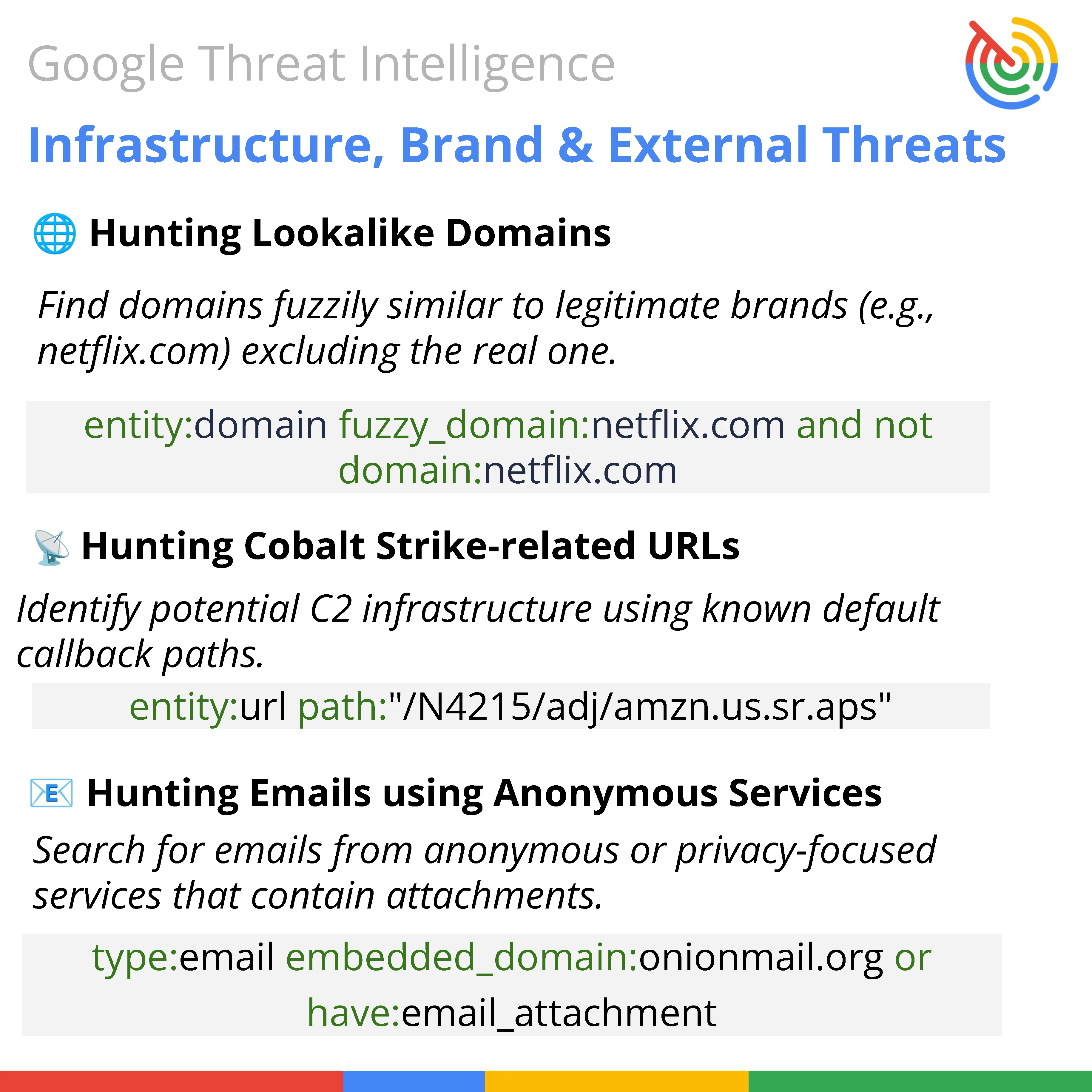
One of the primary capabilities highlighted in the document is the ability to hunt for infrastructure, brand, and external threats. By utilizing specific search syntax, analysts can detect lookalike domains that fuzzily mimic legitimate brands while filtering out the actual, legitimate domain. Furthermore, the platform enables the identification of potential Command and Control infrastructure by searching for known default callback paths associated with Cobalt Strike-related URLs. Security teams can also track suspicious email activity by isolating emails from anonymous or privacy-focused services that contain attachments.
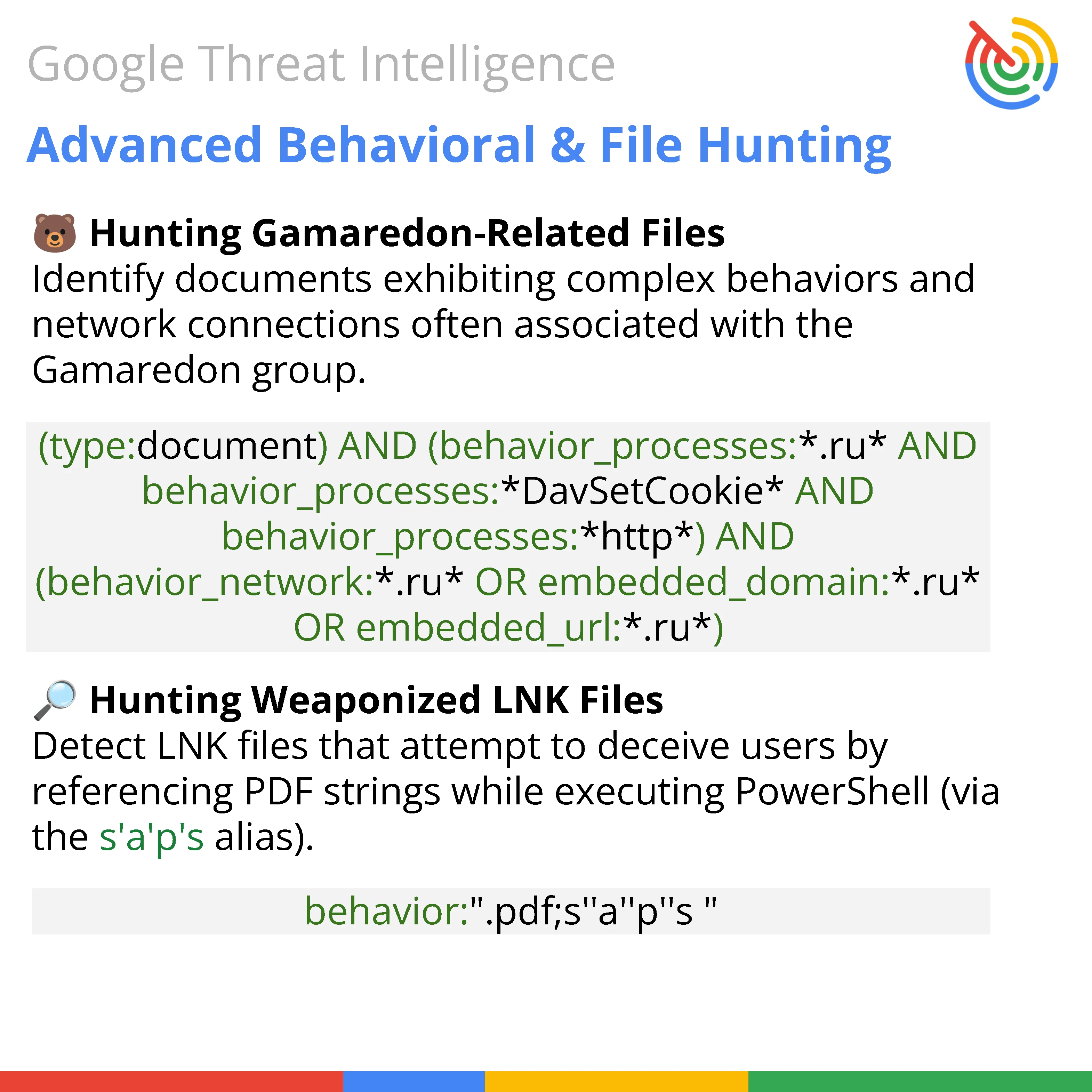
Beyond external infrastructure, the platform excels at advanced behavioral and file hunting. Analysts can deploy complex, multi-variable queries to isolate Gamaredon-related files, specifically targeting documents that exhibit precise behavioral processes and network connections tied to specific top-level domains. Additionally, the search parameters allow defenders to flag weaponized LNK files that attempt to deceive users by referencing PDF strings while simultaneously executing hidden PowerShell commands.
These advanced search functionalities serve as a powerful toolset for the cybersecurity community to dive deep into threat landscapes. Analysts can seamlessly pivot from an initial search result to uncover related malicious files, infrastructure, threat actors, campaigns, or specialized tools. By leveraging these structured queries, organizations can significantly sharpen their threat hunting skills, gain granular visibility into complex adversary behaviors, and maximize the protective capabilities offered by Google Threat Intelligence.
Additional Resources and Links:
Month of Google TI Search - Day 4 & 5 Recap: Advanced Behavioral & File Hunting
Month of Google TI Search - Day 6 Recap: Hunting Trusted Domain Abuse
Month of Google TI Search - Day 7 Recap: Unmasking Obfuscated PowerShell Downloaders
Month of Google TI Search - Day 8 Recap: Hunting Potential New C2 Servers
Month of Google TI Search - Day 9 Recap: Hunting Recently Created DGA Domains
Month of Google TI Search - Day 10 Recap: Hunting Emerging Stealer Malware via PDB Paths
Month of Google TI Search - Day 11 Recap: Hunting Detection Gaps via High-Confidence Sandbox Reports
Month of Google TI Search - Day 12 Recap: Hunting Malicious Email Settings in Configurations
Month of Google TI Search - Day 13 Recap: Hunting Malware with Valid Signatures
Month of Google TI Search - Day 14 Recap: Hunting Cobalt Strike C2 by User-Agent
Month of Google TI Search - Day 16 Recap: Hunting the Gamaredon Threat Actor
